CM Saini backs E20 petrol as years of science, not haste

Synopsis
Haryana CM Nayab Singh Saini defended India's E20 petrol rollout on 30 July 2026, calling it the result of years of scientific testing — including 40,000-plus km of trials — and a phased progression from E15 through E19 before the April 2025 national launch.
Key Takeaways
E20 petrol — blending 20% ethanol with petrol — was rolled out nationally in April 2025 after a phased programme.
Testing covered more than 40,000 kilometres across varied road and weather conditions before national implementation.
The rollout followed a deliberate sequence: E15 → E19 → E20 , not a single overnight switch.
India's National Policy on Biofuels, 2018 set the framework; the E20 deadline was advanced from 2030 to 2025 in 2021.
The programme targets reduced crude-oil imports, lower tailpipe emissions, and stronger demand for sugarcane farmers .
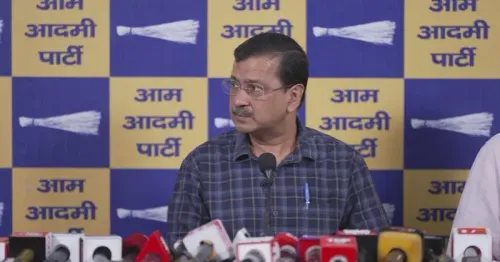
Haryana CM Nayab Singh Saini publicly defended the programme's scientific rigour on 30 July 2026 .
India's nationwide switch to E20 petrol — fuel blended with 20% ethanol — did not happen overnight, and Haryana Chief Minister Nayab Singh Saini wants every driver in the country to know exactly why. In a post on Thursday, 30 July 2026, Saini laid out the deliberate, phased journey that brought India to this milestone — from early E15 trials, through E19, and finally to a full E20 rollout across the nation in April 2025.
From E15 to E20: a decade of deliberate steps
Saini's post underlines a point often lost in the noise: the road to E20 was built one test kilometre at a time. He states that E20 fuel was put through 40,000-plus kilometres of trials across varying road conditions and weather before it was cleared for national use. The progression — E15 se shuruaat, phir E19 (starting with E15, then E19) — reflects the structured logic of India's Ethanol Blended Petrol Programme, which has steadily raised the ethanol share in petrol over more than a decade.
The policy backbone for this push was laid by the National Policy on Biofuels, 2018, which set the targets and the framework. Then, in 2021, the Government of India pulled the timeline forward sharply — advancing the E20 deadline from 2030 to 2025 — signalling that energy security had become an urgent national priority, not a long-range aspiration.
Why ethanol blending matters beyond the fuel pump
The stakes here run well past cleaner exhaust. Every percentage point of ethanol blended into petrol is a percentage point less of imported crude oil — a direct saving on India's foreign exchange bill. Ethanol in India is produced largely from sugarcane and its by-products, meaning higher blending targets translate into stronger demand signals for farmers, particularly in cane-growing states. Oil marketing companies have had to upgrade storage and dispensing infrastructure; automobile manufacturers have had to certify engines for higher ethanol tolerance.
The April 2025 national rollout brought all of this together — supply chain, engine compatibility, and pump-level distribution — at scale, across every state simultaneously.
What the E20 era means for vehicle owners
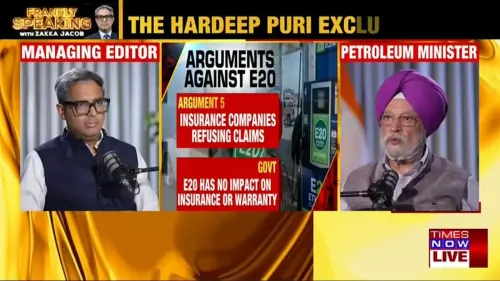
For the average motorist, the immediate question is compatibility. Most vehicles manufactured after 2017-18 have been progressively engineered to handle higher ethanol blends, but the rollout has prompted continued monitoring of mileage performance and engine wear across different vehicle categories and climate zones. The government's phased approach was designed precisely to pre-empt these concerns — the 40,000-kilometre test programme Saini cites was conducted under diverse conditions to stress-test real-world outcomes before any pump in the country dispensed E20 to an unsuspecting commuter.
India's ethanol blending story is one of the most consequential — and least glamorous — energy transitions underway in the world's most populous nation. CM Saini's post is a reminder that the quiet science behind a fuel nozzle can carry the weight of national strategy.
Point of View
And defending its scientific rigour ahead of any public scepticism about engine performance or fuel efficiency is a pre-emptive move. The emphasis on 40,000-km testing and phased progression is designed to insulate the programme from the 'rushed policy' charge that has dogged other fuel transitions globally. Broader pattern: as India's E20 era enters its first full year, the messaging from state leaders will be critical in managing ground-level adoption, particularly in states with older vehicle fleets. The political economy here — farmers, oil companies, auto manufacturers, and consumers all in the frame — makes E20 one of the more complex multi-stakeholder rollouts any government has managed in recent memory.
NationPress
30 Jul 2026
Frequently Asked Questions
What is E20 petrol and when did India launch it?
E20 petrol is fuel blended with 20% ethanol and 80% petrol. India launched it nationally in April 2025 after a phased testing programme that moved through E15 and E19 blends.
Is E20 petrol safe for my car engine?
Most vehicles manufactured from around 2017-18 onward have been progressively engineered to handle higher ethanol blends. The government conducted over 40,000 km of road tests across varied conditions before the national E20 rollout.
Why is India promoting ethanol blending in petrol?
India blends ethanol into petrol to cut dependence on imported crude oil, reduce tailpipe emissions, and create demand for domestically produced ethanol — much of it from sugarcane — supporting farmers in the process.
What was India's ethanol blending policy before E20?
India's National Policy on Biofuels 2018 set a framework for progressive blending. The country moved through E10 and E15 standards before reaching E19 and then E20. In 2021, the government advanced the E20 target date from 2030 to 2025.
What did Haryana CM Nayab Singh Saini say about E20 petrol?
On 30 July 2026, CM Saini stated that E20 petrol is not a hasty decision but the result of years of scientific testing, including trials over 40,000-plus kilometres under different road and weather conditions, with a phased rollout from E15 to E19 to E20.