CM Saini Challenges Punjab Govt: Who Actually Buys Farmers' Crops at MSP?
Synopsis
Haryana CM Nayab Singh Saini publicly challenged the Punjab government on October 9, 2026, asking which crop it buys at MSP and asserting that paddy and wheat — the region's two dominant crops — are procured by the Central Government, not the state.
Key Takeaways
CM Nayab Singh Saini challenged the Punjab government on October 9, 2026 over its MSP procurement claims.
He stated that paddy (jiri) and wheat (gehun) are procured at MSP by the Central Government , not the Punjab state government.
Both crops form the core of agricultural procurement in the Punjab-Haryana belt , bought largely through central agencies like the Food Corporation of India .
The challenge is aimed at the AAP-led Punjab government , which has prominently claimed credit for farmer welfare and MSP support.
The post arrives during the kharif procurement season , when farmers are actively bringing paddy to mandis.
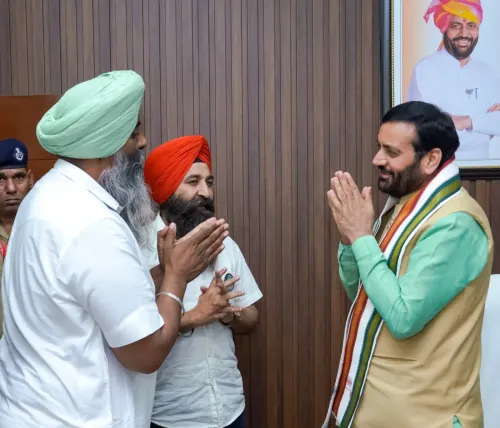
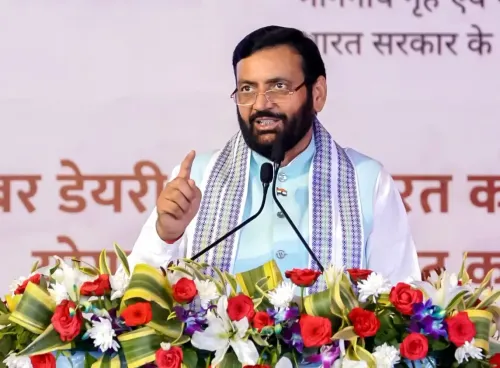
A sharp political question cut through the farm-policy debate on Friday, October 9, 2026, when Haryana Chief Minister Nayab Singh Saini turned the spotlight on the Punjab government, asking pointedly which crops it is actually procuring at the Minimum Support Price — and answering his own question with a pointed reminder that it is the Central Government that buys paddy and wheat.
Posting in Hindi, CM Saini wrote: 'Kaun si fasal Punjab sarkar MSP par khareed rahi hai? Jiri aur gehun ki fasal to Kendra sarkar khareed rahi hai.' — ('Which crop is the Punjab government buying at MSP? It is the Central Government that is buying the paddy and wheat crop.')
The MSP Procurement Fault Line Between Delhi and Chandigarh
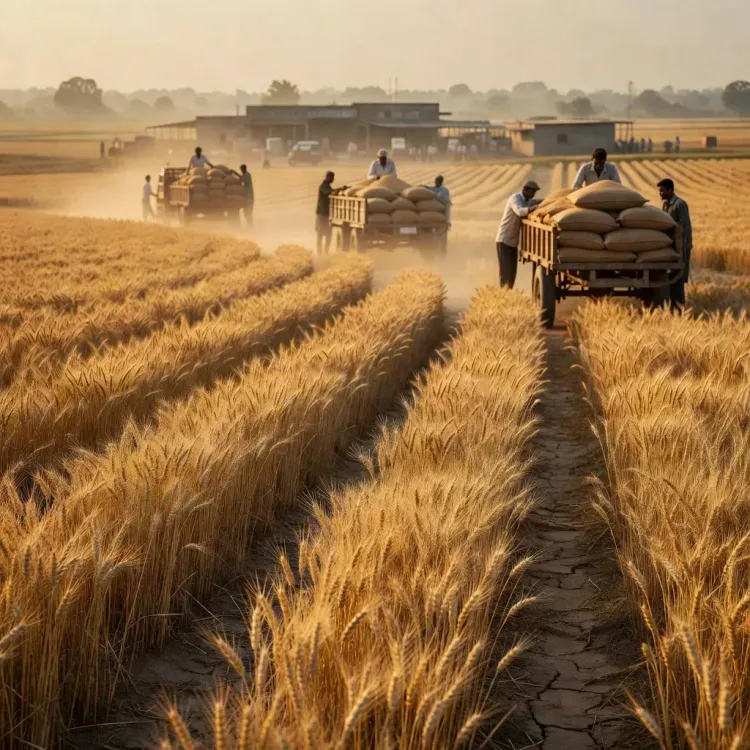
The question is pointed and well-timed. Paddy (kharif) and wheat (rabi) together account for the overwhelming bulk of farmer procurement in Punjab and neighbouring Haryana. Both crops are procured under the Central Government's price support scheme, with agencies like the Food Corporation of India (FCI) and state nodal agencies operating on behalf of New Delhi's mandate and budget.
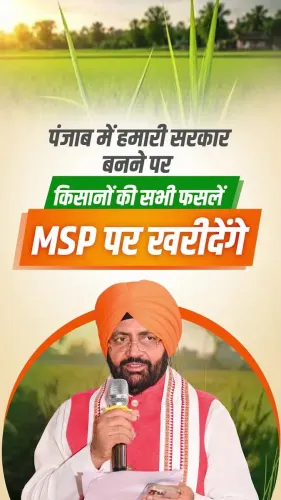
The political subtext here is direct: the ruling Aam Aadmi Party (AAP) government in Punjab has frequently invoked farmer welfare and MSP guarantees in its political messaging. CM Saini, a BJP leader, is publicly pressing the AAP administration to name a single major crop it is independently procuring at MSP — drawing a contrast between rhetoric and ground reality.
Why the Distinction Between State and Central Procurement Matters
Under India's agricultural procurement architecture, the Central Government announces MSP for 23 crops each year, but actual physical procurement at that price — especially at scale — happens almost entirely for wheat and rice, funded and coordinated by the Centre. States can set up their own procurement for other crops, but the financial muscle and infrastructure for the two staples sit firmly with New Delhi.
By framing his challenge as a simple question, Saini is not just scoring a political point — he is surfacing a structural truth about how India's food-security apparatus actually works, and where credit (and responsibility) should be assigned when it does.
With the kharif procurement season now underway, the answer to that question has immediate, practical weight for millions of farmers across the two states.
Point of View
He forces the Punjab government to either name a crop it procures independently — or concede that the Centre's machinery underpins the MSP system both states depend on. The exchange also highlights a structural tension in Indian agriculture: MSP is announced by the Centre for 23 crops, but meaningful procurement at scale exists for barely two, leaving the gap as fertile ground for political contestation. If Punjab cannot answer the question convincingly, it cedes the narrative on a topic central to its electoral identity.
NationPress
9 Oct 2026
Frequently Asked Questions
Which crops does the Central Government buy at MSP in Punjab?
The Central Government primarily procures paddy (kharif) and wheat (rabi) at MSP in Punjab through agencies like the Food Corporation of India . These two crops form the bulk of Punjab's agricultural output sent to government mandis.
What did Haryana CM Nayab Saini say about Punjab and MSP?
CM Nayab Singh Saini asked on October 9, 2026 , which crop the Punjab government is actually buying at MSP, arguing that paddy and wheat — the two dominant crops — are procured by the Central Government, not by Punjab.
Does the Punjab state government buy any crops at MSP?
While the Punjab government can establish procurement for crops beyond paddy and wheat, large-scale MSP procurement for the two staples is financed and organised by the Central Government . CM Saini's challenge invites Punjab to name a specific crop it procures independently.
What is the kharif procurement season and why does it matter?
The kharif procurement season typically begins in October , when farmers bring harvested paddy to government mandis for MSP purchase. It is one of the most politically and economically significant periods for farmers in Punjab and Haryana .
Why is MSP a political issue between BJP and AAP?
MSP (Minimum Support Price) is central to farmer-welfare politics in north India. The AAP government in Punjab has built its agrarian messaging around farmer support, while BJP leaders like CM Saini argue the Centre's machinery — not state governments — delivers actual procurement at MSP scale.