CM Saini cites World Bank report on India lifting 49.6 cr out of poverty
Synopsis
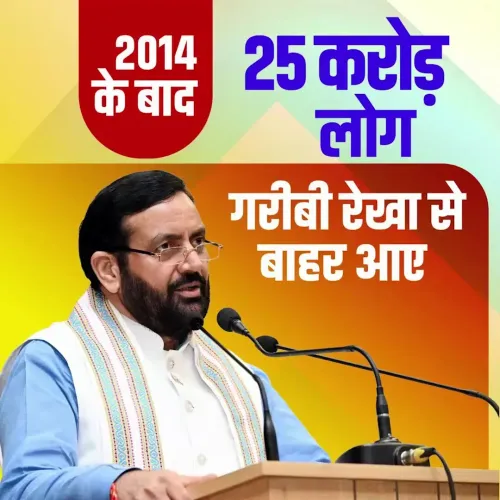
Haryana Chief Minister Nayab Singh Saini cited a World Bank October 2026 report on 31 October, stating that 49.6 crore Indians escaped poverty between 2011 and 2023 and extreme poverty fell from 27.1 per cent to 2.6 per cent, attributing the achievement to PM Modi's Antyodaya-driven governance.
Key Takeaways
A World Bank October 2026 report is cited as showing approximately 49.6 crore Indians exited poverty between 2011 and 2023 .
India's extreme poverty rate reportedly fell from 27.1 per cent to 2.6 per cent over that twelve-year period.
Haryana CM Nayab Singh Saini linked the figures directly to PM Narendra Modi 's Antyodaya governance philosophy.
The post continues a pattern of state-level BJP leaders citing international data to corroborate central welfare claims.
NITI Aayog's MPI 2023 and the Pradhan Mantri Garib Kalyan Anna Yojana (2020) form part of the policy backdrop behind the numbers.
The next major check on the trend will be NITI Aayog's forthcoming MPI and a projected World Bank update in 2027 .
A World Bank report released in October 2026 has handed Indian political leaders a striking data point: between 2011 and 2023, roughly 49.6 crore people in India exited poverty, and the extreme poverty rate collapsed from 27.1 per cent to just 2.6 per cent. Haryana Chief Minister Nayab Singh Saini seized on those numbers on Saturday, 31 October 2026, framing them as proof that Prime Minister Narendra Modi's governance model is delivering tangible results for India's poorest citizens.
What the World Bank figures actually say
The figures CM Saini cited are drawn from a World Bank October 2026 poverty report. The headline claim is stark: extreme poverty — typically measured at consumption below a defined international threshold — dropped by nearly 25 percentage points over twelve years, with close to half a billion Indians crossing out of that category. If verified in full, it would represent one of the largest single-country poverty reductions in recorded economic history.
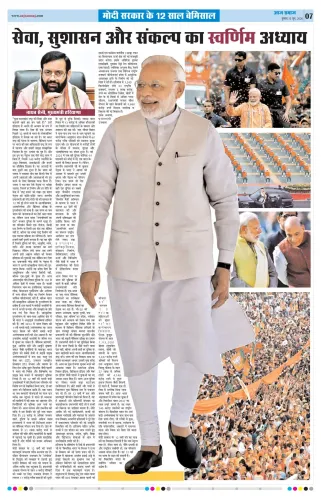
In his post, Saini wrote: 'Garib ke jeevan mein badlaav laana, use samman ke saath aatmanirbhar banaana aur uske sapnon ko nayi udaan dena hi sachche sushasan ka uddeshya hai' — 'Transforming the life of the poor, making them self-reliant with dignity, and giving new flight to their dreams — that is the true purpose of good governance.' He directly attributed the progress to Prime Minister Narendra Modi and the Antyodaya principle of prioritising the last person in the line.
Antyodaya and the policy machinery behind the numbers
The political philosophy of Antyodaya — a concept rooted in serving the poorest of the poor — has been a recurring rhetorical anchor for the BJP-led central government since 2014. Behind the rhetoric sits a suite of direct-benefit programmes: free food grain distribution under Pradhan Mantri Garib Kalyan Anna Yojana (launched 2020), the PMJDY banking inclusion drive, direct LPG subsidy transfers, and housing schemes targeting rural and urban poor alike.
NITI Aayog's Multidimensional Poverty Index report in 2023 had already flagged significant poverty reduction between 2013-14 and 2019-21, making the World Bank's updated consumption-based figures an independent corroboration of the same directional trend. International validation carries particular weight in policy debates because it sidesteps disputes over the methodology of domestic surveys.
Saini's amplification of a central narrative
This is a well-worn playbook in BJP state-level communications: a chief minister at the helm of a politically contested state uses an international data point to reinforce the central government's welfare credentials. Haryana, where Saini leads the government, has its own stack of poverty-linked beneficiary schemes operating in parallel with central programmes. The tweet signals alignment, not just celebration.
The broader pattern is consistent. International reports — whether from the World Bank, the IMF, or the UN — are routinely cited by Indian leaders when the numbers favour the government's narrative. Critics, in turn, point to debates around survey methodology, the definition of 'extreme poverty' thresholds, and whether consumption data captures wellbeing comprehensively. Those counter-arguments will now inevitably surface in response to this report as well.
The next scheduled update to watch: NITI Aayog's MPI and any follow-up World Bank poverty assessment expected in 2027 — which will test whether the downward trajectory continued through the most recent measured period.
Point of View
CM Saini attempts to place BJP's welfare record beyond the reach of partisan dispute. The 27.1-to-2.6 per cent poverty-rate figure, if it withstands methodological scrutiny, would be a generational achievement — but the choice to headline the World Bank rather than domestic survey data also implicitly acknowledges that India's own consumption statistics remain contested terrain. For the BJP, amplifying this figure in the run-up to any electoral cycle reinforces the Antyodaya narrative that has been central to its mass-welfare pitch since 2014. The counter-debate, predictably, will focus on whether the 'extreme poverty' threshold used captures the lived reality of India's most vulnerable households.
NationPress
31 Oct 2026
Frequently Asked Questions
What did the World Bank October 2026 report say about India's poverty?
According to the report cited by CM Nayab Singh Saini, approximately 49.6 crore Indians exited poverty between 2011 and 2023 , and the country's extreme poverty rate fell from 27.1 per cent to 2.6 per cent over that period.
What is Antyodaya and how does it relate to India's poverty reduction?
Antyodaya is the principle of prioritising the poorest and most marginalised citizens. The BJP-led central government has used it as the philosophical basis for welfare schemes including free food grain distribution, direct benefit transfers, and financial inclusion drives since 2014 .
What is Pradhan Mantri Garib Kalyan Anna Yojana?
Pradhan Mantri Garib Kalyan Anna Yojana was launched in 2020 to provide free food grains to vulnerable households across India, forming a key plank of the central government's poverty-relief response.
What has NITI Aayog said about poverty reduction in India?
NITI Aayog released a Multidimensional Poverty Index report in 2023 documenting significant poverty reduction between 2013-14 and 2019-21 , which aligns directionally with the World Bank's more recent consumption-based findings.
Why do Indian leaders cite World Bank poverty reports?
International reports from bodies like the World Bank are seen as independent validation that sidesteps domestic methodological disputes over survey design and poverty-line definitions, giving government welfare claims broader credibility in public debate.