CM Saini Hails Northeast as India's Rising Growth Engine
Synopsis
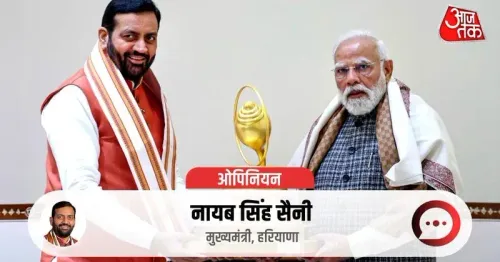
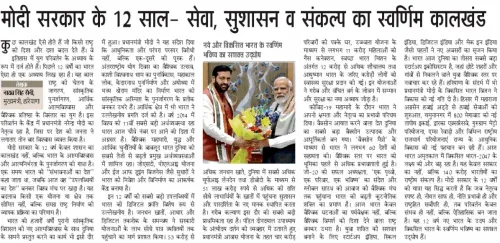
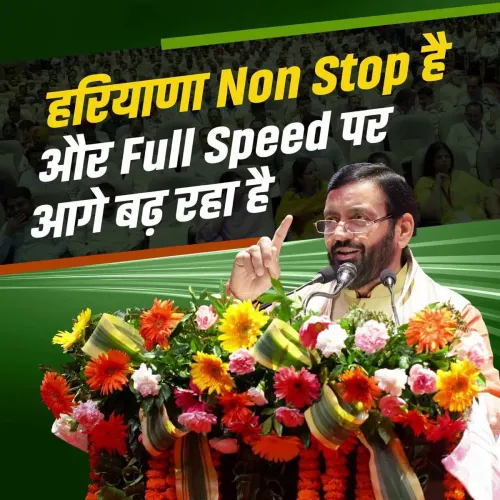
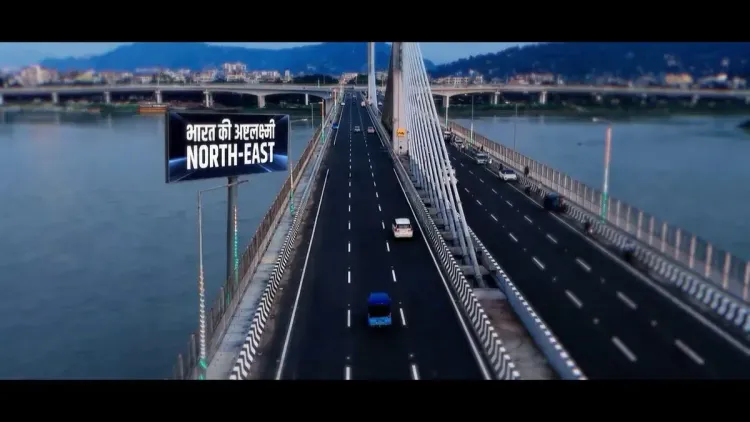
Haryana Chief Minister Nayab Singh Saini on 20 June 2026 hailed Northeast India's transformation from a remote periphery into the country's emerging growth engine, citing twelve years of rising connectivity and infrastructure investment under the BJP-led Act East Policy.
Key Takeaways
Nayab Singh Saini , Haryana Chief Minister, posted on 20 June 2026 praising Northeast India's development trajectory.
He described the Ashtlakshmi states as India's 'emerging growth engine', citing connectivity and infrastructure gains.
The hashtag #12YearsOfRisingNorthEast signals a BJP-coordinated commemoration of over a decade of Northeast-focused policy.
The Act East Policy , launched in 2014 , reoriented the Northeast as a strategic gateway to ASEAN markets.
Major programmes including Bharatmala and dedicated Northeast railway corridors have driven the physical infrastructure push.
Future indicators to watch include Union Budget allocations and measurable private investment in the eight northeastern states.
Haryana Chief Minister Nayab Singh Saini on Saturday, 20 June 2026, praised the transformation of Northeast India, declaring that the eight-state region has shed its image of remoteness and emerged as a symbol of development and opportunity. His remarks, posted on X under the hashtag #12YearsOfRisingNorthEast, mark what appears to be a BJP-led commemoration of over a decade of focused investment in the region.
Context
Saini's post, originally in Hindi, states: 'Poorvottar Bharat ab doori nahin, balki vikas aur avsakon ki pehchaan ban chuka hai' ('Northeast India is no longer defined by distance, but has become synonymous with development and opportunity'). He credited growing connectivity, stronger infrastructure, and accelerating growth for positioning the region as India's emerging growth engine. The hashtag signals a coordinated BJP effort to mark twelve years of what the party frames as a transformative policy push in the Northeast.
Policy Backdrop
The political foundation for this pivot was laid when the Act East Policy was formally unveiled in 2014, rebranding the older Look East approach and designating the Northeast as India's strategic bridge to Southeast Asia and ASEAN markets. Under Prime Minister Narendra Modi, large-scale road and rail programmes — including projects under Bharatmala and dedicated Northeast railway corridors — received sustained central funding aimed at overcoming the region's historic geographic isolation. The Northeast's borders with China, Myanmar, and Bangladesh have added a security dimension to what is also an economic integration drive.
The eight states collectively referred to as the Ashtlakshmi (Eight Lakshmis) — Arunachal Pradesh, Assam, Manipur, Meghalaya, Mizoram, Nagaland, Sikkim, and Tripura — have historically faced challenges of terrain, limited rail access, and thin economic linkages with the mainland. Successive governments sought to address this through transport corridors, but the post-2014 period saw a sharper, more centralised push backed by dedicated budgetary allocations.
Stakeholders and Impact
The primary beneficiaries of improved Northeast connectivity are the region's roughly 45 million residents, who gain better access to markets, healthcare, education, and employment. Infrastructure developers and logistics firms operating in the corridor stand to benefit from expanded road and rail networks. Diplomatically, a better-connected Northeast strengthens India's trade leverage with ASEAN nations, making the region a live gateway rather than a buffer zone.
The framing of the Northeast as a 'growth engine' also carries political weight for the BJP, which has expanded its electoral footprint across the region over the past decade and has a direct stake in showcasing developmental outcomes ahead of future state assembly cycles.
What's Next
Attention will now turn to progress reports on ongoing highway and rail projects in the region, as well as any new allocations in the next Union Budget that could further accelerate the connectivity agenda. Whether the momentum translates into measurable improvements in per-capita income and private investment in the Ashtlakshmi states will be the longer-term test of the policy's success.
Point of View
The party is attempting to convert a historically defensive policy posture into an aspirational brand. The invocation of the Ashtlakshmi identity and the Act East Policy in the same breath signals an effort to link cultural pride with economic ambition. Whether this messaging lands with voters will depend on how concretely residents feel the connectivity dividend in their daily lives.
NationPress
20 Jun 2026
Frequently Asked Questions
What did Haryana CM Nayab Singh Saini say about Northeast India?
Saini said Northeast India is no longer defined by distance but has become a symbol of development and opportunity, crediting improved connectivity and infrastructure over the past twelve years.
What is the Ashtlakshmi states reference in Saini's post?
'Ashtlakshmi' refers to the eight northeastern states — Arunachal Pradesh, Assam, Manipur, Meghalaya, Mizoram, Nagaland, Sikkim, and Tripura — framed collectively as eight forms of prosperity.
What is the Act East Policy and how does it relate to Northeast India?
The Act East Policy, launched in 2014, designates Northeast India as the country's strategic gateway to Southeast Asia and ASEAN markets, replacing the older Look East Policy with a more action-oriented framework backed by infrastructure funding.
What does #12YearsOfRisingNorthEast mean?
The hashtag marks what the BJP presents as twelve years of accelerated development in Northeast India since 2014, including road, rail, and connectivity projects under programmes like Bharatmala.
Why is Northeast India important for India's growth strategy?
The Northeast borders China, Myanmar, and Bangladesh, making it strategically significant. Improved connectivity there opens trade routes to ASEAN, addresses security concerns, and integrates a historically isolated region into the national economy.