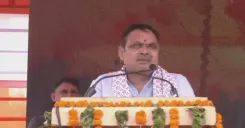
Giriraj Singh hails Modi's Ashtalakshmi vision for Northeast
Synopsis
Union Textiles Minister Giriraj Singh on 20 June 2026 lauded PM Modi's Ashtalakshmi concept, saying improved connectivity, investment, peace, and tourism have transformed Northeast India into a strong pillar of India's development story and a symbol of Viksit Bharat 2047 aspirations.
Key Takeaways
Giriraj Singh posted on 20 June 2026 praising PM Modi 's Ashtalakshmi vision for Northeast India.
The Ashtalakshmi framework covers eight states: Arunachal Pradesh, Assam, Manipur, Meghalaya, Mizoram, Nagaland, Sikkim , and Tripura .
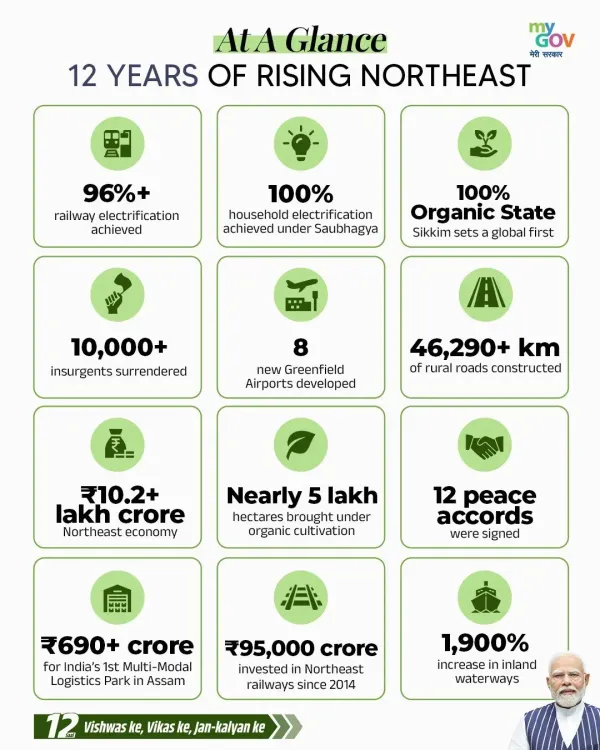
Better connectivity, rising investment, peace, and tourism were cited as key drivers of the region's transformation.
The Act East Policy (launched 2014 ) and higher DoNER budget allocations underpin the development push.
The post is tagged #12YearsOfRisingNorthEast and #ViksitBharat2047 , signalling a coordinated political messaging effort.
Flagship projects like the India-Myanmar-Thailand Trilateral Highway remain key benchmarks for the region's connectivity goals.
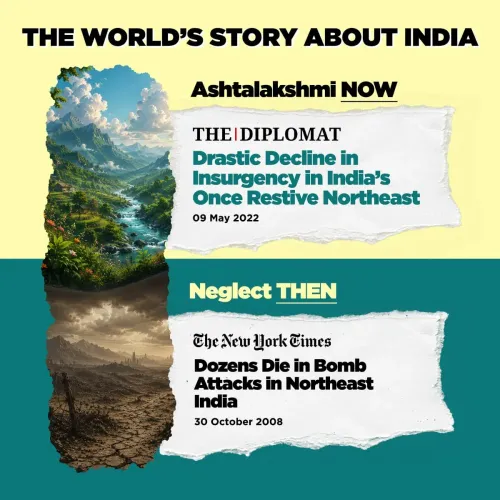
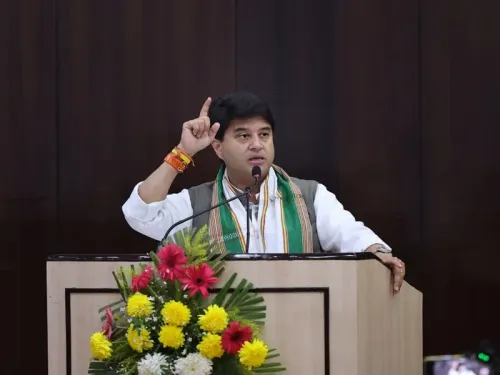
Union Textiles Minister Giriraj Singh on Saturday, 20 June 2026 praised Prime Minister Narendra Modi's 'Ashtalakshmi' concept, saying it has brought the eight northeastern states into the mainstream of India's development narrative through improved connectivity, rising investment, and expanding infrastructure.
Context
Posting in Hindi on X, Giriraj Singh wrote that Modi's Ashtalakshmi vision — 'अष्टलक्ष्मी की परिकल्पना' (the Ashtalakshmi concept) — has given Northeast India a new identity in the mainstream of development. He added that better connectivity, growing investment, peace, tourism, and the expansion of basic facilities have made the region a 'strong pillar of India's development story.'
The minister also noted that today the Northeast is no longer merely a geographical boundary but has emerged as a symbol of new India's aspirations, opportunities, and progress. His post carried the hashtags #12YearsOfRisingNorthEast and #ViksitBharat2047.
Policy Backdrop
The Ashtalakshmi framework refers to the eight northeastern states — Arunachal Pradesh, Assam, Manipur, Meghalaya, Mizoram, Nagaland, Sikkim, and Tripura — framed as eight forms of the goddess Lakshmi, symbolising prosperity and potential. The concept is part of a broader strategic shift, dating to 2014, away from treating the region primarily as a security buffer and towards positioning it as India's land bridge to ASEAN economies.
The Act East Policy, launched in 2014, anchored this pivot by prioritising road, rail, air, and digital connectivity projects across the region. Budgetary allocations for the Northeast were raised significantly from 2014 onward through the Ministry of Development of North Eastern Region (DoNER) and the North Eastern Council. Successive peace accords with former insurgent groups have also been cited as enabling conditions for investment and tourism growth.
Stakeholders and Impact
Residents of the eight northeastern states stand to benefit most directly from the infrastructure and investment push, which aims to reduce historical economic isolation and improve access to markets, healthcare, and education. The tourism and hospitality sectors have been highlighted as early gainers, given the region's biodiversity and cultural richness.
Investors and industry bodies tracking the region see the connectivity drive — including projects such as the India-Myanmar-Thailand Trilateral Highway and new rail links — as critical to unlocking the Northeast's role as a transit and trade corridor. The Viksit Bharat 2047 roadmap, which envisions India as a developed economy by the centenary of Independence, explicitly links regional infrastructure progress to national growth targets.
What's Next
Attention will now focus on completion timelines for flagship connectivity projects and whether fresh investment pledges emerge from upcoming DoNER review meetings or state budget cycles. The #12YearsOfRisingNorthEast hashtag suggests the ruling party is building a political narrative around a decade-plus record of Northeast development ahead of future electoral cycles.
If infrastructure milestones are met on schedule and peace conditions hold, the Northeast's positioning as India's eastern growth frontier and gateway to Southeast Asia could solidify further within the Viksit Bharat 2047 framework.
Point of View
Timed to the hashtag #12YearsOfRisingNorthEast. The framing deliberately shifts the region's identity from a conflict-prone periphery to an aspirational growth corridor, serving both policy communication and electoral positioning ahead of state assembly cycles in the Northeast. By anchoring the message to Viksit Bharat 2047, the party links near-term infrastructure progress to a long-horizon national vision, making accountability harder to pin to a single term. The minister's intervention also signals that senior cabinet figures beyond the DoNER portfolio are being mobilised to amplify the Northeast growth story.
NationPress
20 Jun 2026
Frequently Asked Questions
What is the Ashtalakshmi concept for Northeast India?
The Ashtalakshmi concept frames the eight northeastern states — Arunachal Pradesh, Assam, Manipur, Meghalaya, Mizoram, Nagaland, Sikkim, and Tripura — as eight forms of the goddess Lakshmi, symbolising their prosperity and development potential under PM Modi's vision.
What did Giriraj Singh say about Northeast India?
Giriraj Singh said on 20 June 2026 that PM Modi's Ashtalakshmi vision has brought Northeast India into the mainstream of development through better connectivity, investment, peace, tourism, and expanded basic facilities, making it a pillar of India's growth story.
What is Viksit Bharat 2047 and how does it relate to the Northeast?
Viksit Bharat 2047 is India's national vision to become a developed economy by the centenary of Independence in 2047. Northeast India's infrastructure and connectivity development is cited as a core pillar of this roadmap.
What is the Act East Policy and its role in Northeast development?
The Act East Policy, launched in 2014, aims to integrate Northeast India economically and strategically with Southeast Asia by improving road, rail, air, and digital connectivity, positioning the region as India's land bridge to ASEAN economies.
Which major infrastructure projects are planned for Northeast India?
Key projects include the India-Myanmar-Thailand Trilateral Highway and new rail links connecting the northeastern states, which are intended to boost trade, tourism, and regional integration with Southeast Asia.