Joshi: India's Renewable Energy a Global Benchmark for Southeast Asia
Synopsis
Union Minister Pralhad Joshi has declared India's renewable energy scale-up a global benchmark, highlighting solar and wind growth driven by competitive markets and strong policy as a model for Southeast Asia, under PM Modi's leadership.
Key Takeaways
Union Minister Pralhad Joshi called India's renewable energy journey a 'global benchmark' on June 20, 2026 .
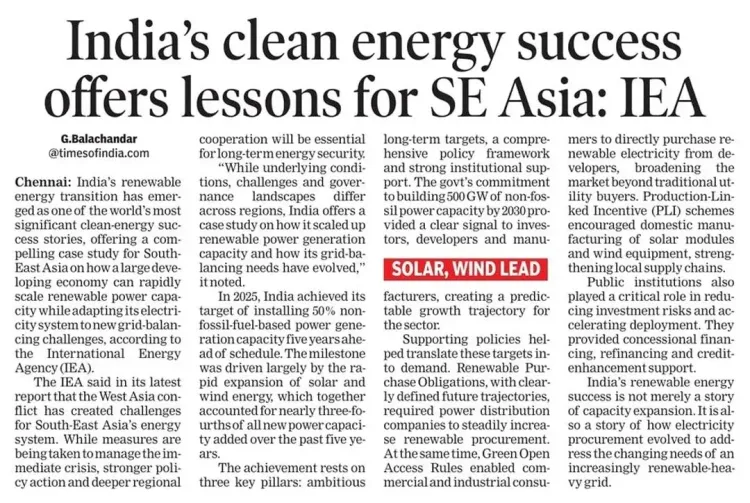
India's model — built on ambitious targets, competitive bidding, solar parks, and institutional support — is being positioned as a template for Southeast Asia .
India committed at COP26 (2021) to 500 GW of non-fossil fuel capacity by 2030 and net-zero by 2070 .
The International Solar Alliance , with over 120 member countries , is a key vehicle for India's clean energy diplomacy.
Competitive bidding and solar park policies introduced from 2014 onward drove private investment and record-low solar tariffs.
Follow-up India-ASEAN renewable energy working group outcomes and Ministry announcements on technology transfer will be closely watched.
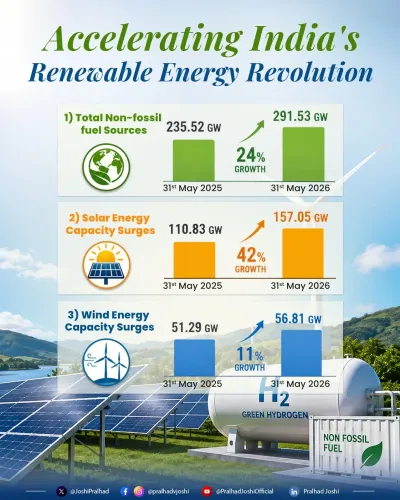
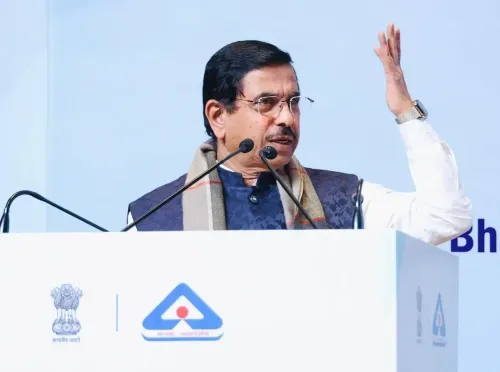
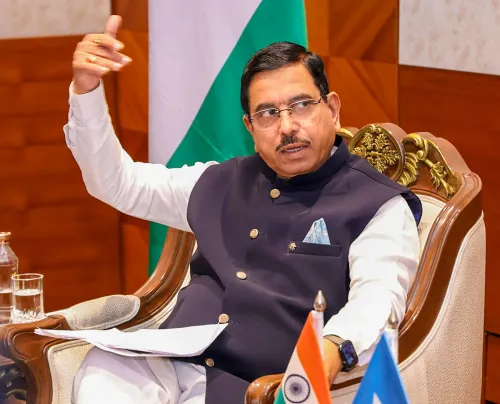
Union Minister of New and Renewable Energy Pralhad Joshi on Saturday, June 20, 2026, said India's renewable energy journey is 'emerging as a global benchmark,' pointing to the country's rapid scaling of solar and wind power as a model with 'valuable lessons for Southeast Asia.'
Context
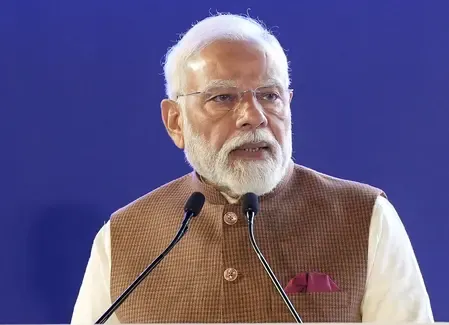
In his post on X, Joshi credited 'ambitious targets, strong policy support, robust institutions and innovative market reforms' for India's clean energy progress. He framed the country's transition as contributing not just to domestic goals but to 'global energy security and sustainable development,' attributing the momentum to the leadership of Prime Minister Narendra Modi.
The remarks come as Southeast Asia grapples with rapidly rising energy demand and the challenge of shifting away from coal-heavy grids. India has increasingly positioned itself as a provider of scalable policy templates for the region through platforms such as ASEAN energy dialogues and the International Solar Alliance (ISA).
Policy Backdrop
India's renewable push has deep institutional roots. The Jawaharlal Nehru National Solar Mission, launched in 2010 under the National Action Plan on Climate Change, laid the early groundwork for solar capacity expansion. From 2014 onward, the Ministry of New and Renewable Energy introduced competitive bidding frameworks and dedicated solar park policies that unlocked large-scale private investment in utility-scale projects.
At COP26 in Glasgow in 2021, India updated its Nationally Determined Contribution, committing to 500 GW of non-fossil fuel capacity by 2030 and net-zero emissions by 2070. These targets gave domestic and international investors a long-term policy signal that underpinned the acceleration Joshi referenced.
The International Solar Alliance, co-launched by India and France in 2015 and now counting over 120 member countries, has been a central vehicle for India to export its solar policy experience. The ISA's work on mobilising financing and standardising procurement models is directly relevant to the grid integration and capital access challenges facing Southeast Asian nations.
Stakeholders and Impact
For Indian renewable energy developers, the ministerial framing reinforces a policy environment supportive of continued capacity addition and opens potential export opportunities in technology, engineering services, and project development across Southeast Asia. India's combination of state-backed solar parks and competitive private auctions has produced some of the world's lowest solar tariffs, a track record that carries weight in regional energy negotiations.
Southeast Asian governments — many of which are ASEAN members navigating energy transition financing gaps — stand as the implied audience for India's model. India's Indo-Pacific outreach has increasingly incorporated energy security as a pillar, and Joshi's framing aligns with that diplomatic thread. The emphasis on 'innovative market reforms' signals that India is offering not just technology but institutional design lessons.
What's Next
Observers will watch for concrete follow-through from the Ministry of New and Renewable Energy, including any announcements on technology transfer arrangements, concessional financing mechanisms, or outcomes from India-ASEAN renewable energy working group sessions. Joshi's post signals a continued push to internationalise India's clean energy narrative ahead of future multilateral forums. Whether the diplomatic framing translates into binding cooperation agreements with Southeast Asian partners will be the key measure of impact.
Point of View
Weaving together domestic policy achievement and multilateral ambition. It reflects a consistent BJP government strategy of converting India's clean energy numbers into diplomatic currency, particularly in the Indo-Pacific where energy security is a live geopolitical contest. By invoking PM Modi's leadership, the post also serves a domestic political purpose — reinforcing the government's climate credentials ahead of any future multilateral commitments. The real test will be whether this narrative is backed by new institutional or financing commitments to ASEAN partners, or remains aspirational positioning.
NationPress
20 Jun 2026
Frequently Asked Questions
What did Pralhad Joshi say about India's renewable energy?
Joshi said India's renewable energy journey is 'emerging as a global benchmark,' citing rapid solar and wind scale-up through ambitious targets, strong policy support, and market reforms as offering valuable lessons for Southeast Asia.
What is India's renewable energy target by 2030?
India has committed to achieving 500 GW of non-fossil fuel energy capacity by 2030 , a pledge made at COP26 in Glasgow in 2021 , alongside a net-zero emissions target by 2070 .
What is the International Solar Alliance and how is India involved?
The International Solar Alliance (ISA) is a treaty-based organisation co-launched by India and France in 2015 to mobilise solar investments globally. It now has over 120 member countries and is a key platform through which India shares its solar policy experience.
Why is India's renewable energy model relevant to Southeast Asia?
Southeast Asian nations face rising energy demand and financing gaps in transitioning away from coal. India's combination of state-backed solar parks, competitive auctions, and institutional frameworks has produced scalable results that are seen as replicable in the region.
What policies drove India's solar and wind energy growth?
Key drivers include the Jawaharlal Nehru National Solar Mission (launched 2010 ), competitive bidding frameworks and dedicated solar park policies introduced from 2014 , and the broader National Action Plan on Climate Change , which together attracted large-scale private investment.