CM Saini Addresses National Horticulture Conference at Karnal
Synopsis
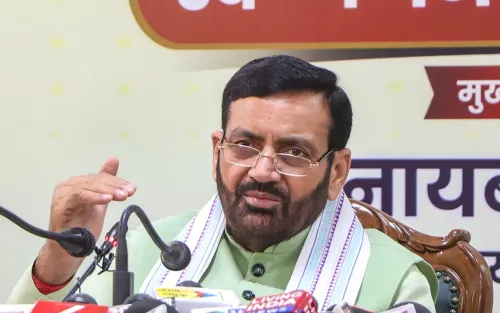
Haryana Chief Minister Nayab Singh Saini addressed a national horticulture conference at CSSRI Karnal on 28 May 2026, calling it a vital platform to chart the future of Indian agriculture and horticulture, with scientists and researchers attending from across the country.
Key Takeaways
CM Nayab Singh Saini addressed a national horticulture conference at CSSRI Karnal on 28 May 2026 .
Scientists, researchers, and agricultural experts from across India participated in the event.
The conference was described as a key platform to give new direction to agriculture and horticulture in India.
CSSRI Karnal is an ICAR institute specialising in soil salinity and water management for north-western India.
CM Saini referenced the Maharana Pratap Bagwani initiative in connection with the conference.
Follow-up policy announcements and budget allocations by the Haryana government are anticipated.
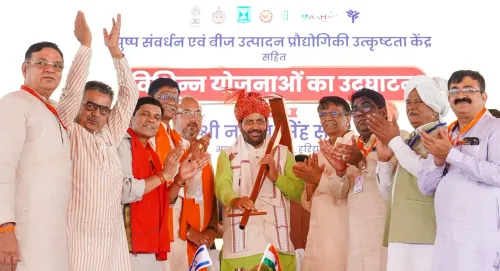
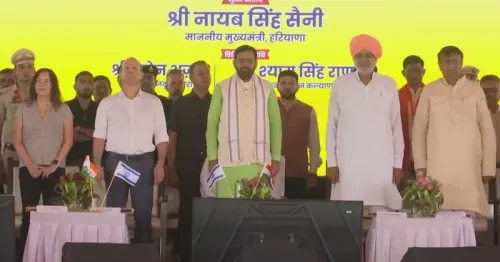
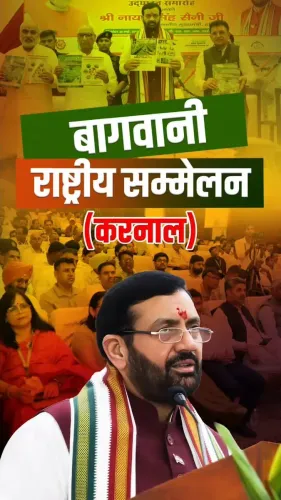
Haryana Chief Minister Nayab Singh Saini on Thursday, 28 May 2026 addressed a national conference on horticulture held at the campus of the ICAR-Central Soil Salinity Research Institute (CSSRI) in Karnal, bringing together scientists, researchers, and agricultural experts from across the country.
Context
Posting on X, CM Saini wrote — 'aaj Karnal mein CSSRI ke parisar mein aayojit bagwani se sambandhit rashtriya sammelan mein desh ke kone-kone se aaye vaigyanikon, shodhakartaon aur krishi visheshagyon ko sambodhit kiya' — ['Today I addressed scientists, researchers and agricultural experts who had come from every corner of the country at a national conference on horticulture held at the CSSRI campus in Karnal.']. He described the gathering as an important platform to give a new direction to the future of agriculture and horticulture in India.
The post also references the Maharana Pratap Bagwani initiative, though the full details of the scheme were truncated in the original post. The conference brought together domain specialists under one roof to deliberate on the sector's future.
Policy Backdrop
India's focus on horticulture as a driver of farmer income dates to the National Horticulture Mission, launched in 2005-06, which sought integrated development of fruit, vegetable, spice, and flower cultivation across the country. Successive central and state governments have built on that foundation, linking horticulture expansion to soil-health improvement and income diversification for farming households.
CSSRI Karnal, an institute under the Indian Council of Agricultural Research (ICAR), specialises in soil and water management, particularly addressing salinity challenges that affect large tracts of north-western India. Its research directly supports the expansion of horticulture in regions where conventional crops struggle.
Stakeholders and Impact
The primary beneficiaries of outcomes from such a conference are horticulture farmers across Haryana and neighbouring states, who stand to gain from improved varieties, salinity-tolerant cultivation techniques, and better post-harvest management protocols emerging from research deliberations. Agricultural scientists and extension workers are equally key stakeholders, as conference recommendations shape future research priorities and funding.
For Haryana specifically, horticulture diversification offers a pathway to reduce dependence on the water-intensive paddy-wheat cycle that has placed stress on the state's groundwater table. A high-level political presence at such forums signals state government commitment to translating research into on-ground policy.
What's Next
Observers will watch for follow-up state budget allocations or new horticulture scheme announcements by the Haryana government in the weeks after the conference. Details of the Maharana Pratap Bagwani initiative referenced by CM Saini are expected to be elaborated through official government communications. The recommendations of the assembled scientists and experts could also feed into state and central horticulture policy revisions ahead of the next crop season.
Point of View
Particularly as the paddy-wheat cycle continues to strain the state's groundwater resources. Invoking the Maharana Pratap Bagwani initiative — even if details remain to be fully disclosed — suggests the state is building a branded policy identity around farmer income enhancement. Politically, attending and addressing a gathering of national-level scientists reinforces the administration's technocratic credentials ahead of potential policy announcements. The broader pattern mirrors a pan-India trend of state governments using ICAR-affiliated platforms to legitimise and publicise their agricultural reform agendas.
NationPress
11 Oct 2026
Frequently Asked Questions
What was the national horticulture conference at CSSRI Karnal about?
The conference was a national-level gathering of scientists, researchers, and agricultural experts focused on the future of horticulture in India, held at the ICAR-CSSRI campus in Karnal on 28 May 2026.
Who is CSSRI Karnal and what does it do?
CSSRI, or the ICAR-Central Soil Salinity Research Institute, is based in Karnal, Haryana, and specialises in soil and water management solutions, particularly addressing salinity challenges that affect agriculture in north-western India.
What is the Maharana Pratap Bagwani scheme?
CM Saini referenced the Maharana Pratap Bagwani initiative at the conference, but full details of the scheme were not available in the post. Official government communications are expected to elaborate on it.
Why is horticulture important for Haryana farmers?
Horticulture offers Haryana farmers an alternative to the water-intensive paddy-wheat cycle, helping diversify income and reduce pressure on the state's groundwater resources.
What policy outcomes are expected after the Karnal horticulture conference?
Observers are watching for follow-up state budget allocations, new horticulture scheme details, and possible revisions to Haryana's agricultural policy based on recommendations from the assembled experts.