CM Saini launches 'Satark-Haryana' app to fight corruption
Synopsis
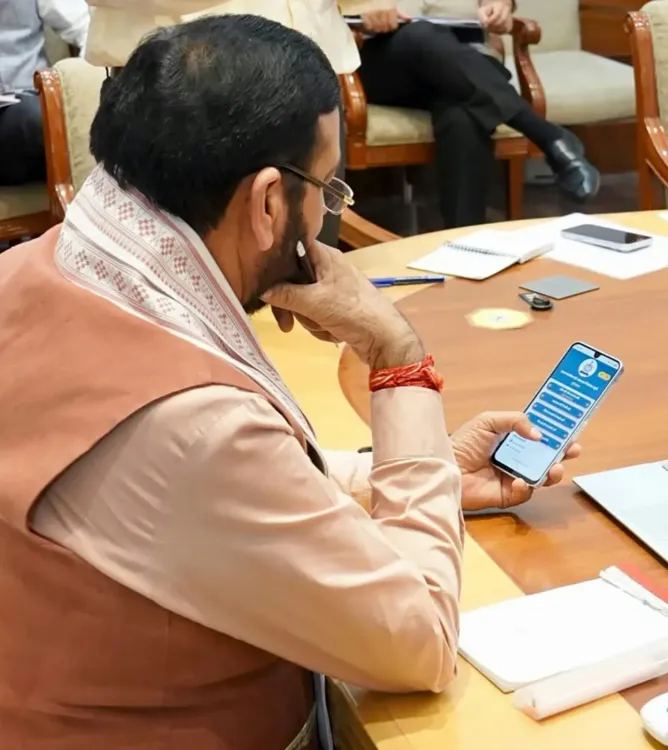
Haryana Chief Minister Nayab Singh Saini launched the 'Satark-Haryana' mobile app on 24 September 2026, giving citizens a direct digital channel to file corruption complaints with the State Vigilance and Anti-Corruption Bureau, reinforcing the BJP government's zero-tolerance anti-graft platform.
Key Takeaways
Satark-Haryana mobile app launched by Chief Minister Nayab Singh Saini on 24 September 2026 .
The app connects citizens directly to the State Vigilance and Anti-Corruption Bureau, Haryana for filing complaints and sharing information.
CM Saini described a 'transparent and corruption-free system' as 'the right of every citizen.' The launch reinforces the BJP 's zero-tolerance anti-corruption policy, a plank held by its state governments since 2014 .
The initiative aligns with India's broader Digital India push to deploy mobile-first e-governance tools for citizen access to vigilance bodies.
The app's real impact will hinge on the Bureau's responsiveness and the volume of actionable complaints it generates.
A corruption complaint used to mean paperwork, office visits, and the quiet fear of being ignored. Haryana Chief Minister Nayab Singh Saini is betting that a single mobile app can change that equation — launching 'Satark-Haryana' on Thursday, 24 September 2026, as a direct digital pipeline between citizens and the state's anti-graft machinery.
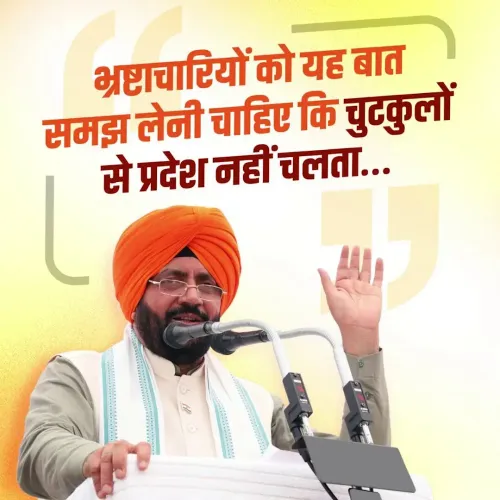
Announcing the launch on X, CM Saini wrote: 'पारदर्शी और भ्रष्टाचार-मुक्त व्यवस्था हर नागरिक का अधिकार है' — 'A transparent and corruption-free system is the right of every citizen.' The app allows residents of Haryana to route complaints and information directly to the State Vigilance and Anti-Corruption Bureau, Haryana, cutting out the intermediaries that have historically slowed — or silenced — such reports.
A direct line to the Vigilance Bureau
The State Vigilance and Anti-Corruption Bureau is Haryana's primary agency for probing graft and vigilance matters. Until now, citizens seeking to flag corruption faced multi-step processes that could deter all but the most determined complainants. The Satark-Haryana app repositions the Bureau as an entity the public can reach in seconds — from a phone, from a village, from anywhere in the state.
Saini framed the launch as a sharpening of his government's existing zero-tolerance policy: 'भ्रष्टाचार के विरुद्ध लड़ाई में प्रदेश के हर नागरिक का सहयोग जरूरी है' — 'The cooperation of every citizen of the state is essential in the fight against corruption.' The language is deliberate: this is positioned not as a government tool, but as a citizen weapon.
Haryana in a wider wave of anti-graft tech
Haryana is not moving in isolation. Multiple Indian states have introduced digital grievance and vigilance platforms over the past several years, riding the infrastructure built under the Digital India initiative. Mobile-first complaint systems lower the barrier of entry dramatically — no form, no queue, no travel to a district office. The logic is that higher complaint volume, even if it creates processing strain, generates the data trails that expose systemic patterns of corruption rather than isolated incidents.
The BJP's state governments have held zero-tolerance anti-corruption messaging as a core plank since 2014, and Saini — who took office in March 2024 — has consistently positioned clean governance as the defining promise of his administration. An app with the government's name attached is also a commitment that can be measured: either complaints are acted upon, or they are not.
What the app's success will actually look like
The real test of Satark-Haryana will not be its download count. It will be the Bureau's response rate, the proportion of complaints that result in inquiries, and whether complainants — particularly those from smaller towns and rural districts — feel safe enough to use it. Officials and whistleblowers alike know that anonymous or semi-anonymous digital channels can be powerful, but only if the backend follows through.
Haryana's citizens now have the tool. The Vigilance Bureau's inbox is open. What fills it — and what the state does next — will define whether this launch is a genuine governance shift or a well-designed icon on a home screen.
Point of View
Citizen-facing infrastructure — turning a political slogan into a downloadable product. For CM Saini, who has governed Haryana since March 2024 with clean-governance as a signature promise, the app creates a measurable accountability benchmark: complaint data will now exist, and its handling — or mishandling — becomes a matter of public record. Nationally, this fits a pattern of BJP-ruled states using Digital India architecture to signal governance seriousness ahead of electoral cycles. The harder question is whether the Vigilance Bureau has the capacity and the political insulation to act on what flows in.
NationPress
24 Sept 2026
Frequently Asked Questions
What is the Satark-Haryana app?
Satark-Haryana is a mobile application launched by Haryana Chief Minister Nayab Singh Saini on 24 September 2026 that allows citizens to file corruption complaints and share information directly with the State Vigilance and Anti-Corruption Bureau, Haryana.
Who launched the Satark-Haryana app?
The app was launched by Haryana Chief Minister Nayab Singh Saini as part of his government's zero-tolerance anti-corruption policy.
How do I report corruption using the Satark-Haryana app?
Citizens can download the Satark-Haryana app and use it to submit complaints or information about corruption directly to the State Vigilance and Anti-Corruption Bureau, Haryana.
What is the State Vigilance and Anti-Corruption Bureau Haryana?
It is the state government agency responsible for investigating corruption and vigilance matters in Haryana, and is now the designated recipient of complaints filed through the Satark-Haryana app.
Is Satark-Haryana part of Digital India?
While not exclusively a Digital India scheme, the app aligns with the broader Digital India push across Indian states to introduce mobile-first citizen grievance and anti-corruption tools for transparent administration.