CM Saini marks 6 years of Article 370 abrogation
Synopsis
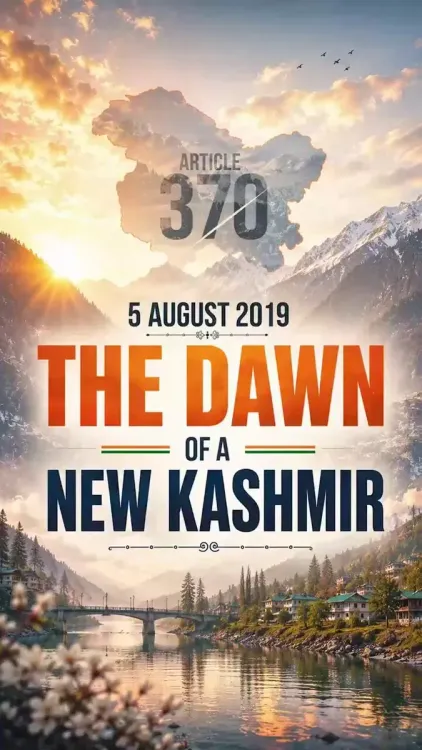
Haryana Chief Minister Nayab Singh Saini marked the sixth anniversary of the abrogation of Article 370 and 35A on 5 August, crediting PM Narendra Modi's leadership and invoking Dr. Shyama Prasad Mookerjee's decades-old vision of full constitutional integration of Jammu and Kashmir.
Key Takeaways
5 August 2019 : Parliament abrogated Article 370 and Article 35A , ending Jammu and Kashmir's special constitutional status.
The Jammu and Kashmir Reorganisation Act, 2019 created two union territories — Jammu and Kashmir and Ladakh — directly administered by the central government.
Shyama Prasad Mookerjee , founder of the Bharatiya Jana Sangh in 1951 , had long championed the slogan 'Ek Vidhan, Ek Nishan, Ek Pradhan' for full integration of the region.
Abrogation of Article 370 was a stated BJP manifesto commitment in both 2014 and 2019 general elections.
CM Saini's post frames the anniversary within the 'Ek Bharat, Shreshtha Bharat' national-unity narrative promoted by the Modi government.
Future assembly elections and central scheme implementation in both union territories remain key developments to watch.
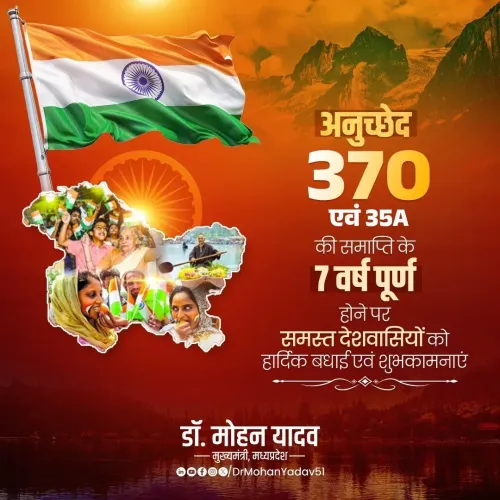
Six years ago today, a constitutional provision that had defined India's relationship with Jammu and Kashmir for seven decades was struck from the books in a single parliamentary session. On 5 August 2019, the government of Prime Minister Narendra Modi moved to abrogate Article 370 and Article 35A — and on the anniversary of that moment, Haryana Chief Minister Nayab Singh Saini marked the occasion with a pointed tribute to what he called a golden and transformative chapter in the nation's history.
The slogan that waited seven decades
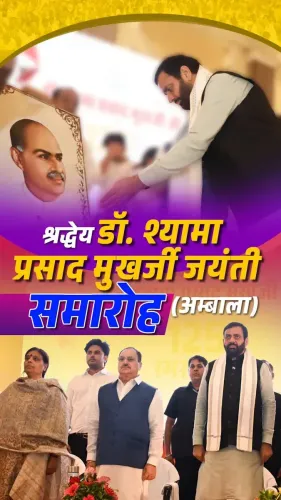
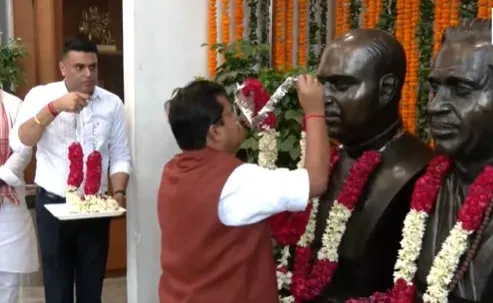
Saini's post invoked the name of Dr. Shyama Prasad Mookerjee, the politician who built his career around the demand for full constitutional integration of Jammu and Kashmir. Mookerjee's rallying cry — 'Ek Vidhan, Ek Nishan, Ek Pradhan' ('One Constitution, One Flag, One Prime Minister') — became the ideological cornerstone of the Bharatiya Jana Sangh, the party he founded in 1951, and later of its successor, the BJP. For more than six decades, that demand sat in manifestos and speeches. The 2019 abrogation, Saini argued, finally gave it constitutional form.
What the 2019 move actually changed
The abrogation was not simply a symbolic gesture. Parliament passed the Jammu and Kashmir Reorganisation Act, 2019, dissolving the state and creating two centrally administered union territories: Jammu and Kashmir (with a legislature) and Ladakh (without one). Article 370 had since 1949 granted the region its own constitution, a separate flag, and restrictions on property ownership by non-residents — provisions that critics argued kept the region outside the uniform application of Indian law. Article 35A, inserted by a presidential order in 1954, had defined who qualified as a 'permanent resident' with special rights. Both provisions were ended in a single day.
The BJP had made abrogation an explicit manifesto commitment in both 2014 and 2019. When it was finally executed, the move drew immediate international attention and sharp domestic debate — but it also represented the fulfilment of a promise the party had carried for the better part of its existence.
Saini's framing: mainstream, not margin
The Haryana Chief Minister's post framed the anniversary not as a political victory lap but as a statement about belonging. 'Today our Kashmir is moving forward rapidly, shoulder to shoulder with the country's progress and development in the mainstream,' he wrote, closing with 'Jai Hind!' and the hashtag #Article370. The language of 'Ek Bharat, Shreshtha Bharat' ('One India, Excellent India') — a Modi-era integration programme — ran through the message, tying the constitutional change to a broader national-unity narrative the BJP has consistently promoted since 2014.
The anniversary will be watched as much for what comes next as for what has passed: assembly elections, the pace of central scheme implementation, and the long-term administrative shape of both union territories remain live questions in Jammu, Srinagar, and Leh.
Seven decades of a constitutional exception, ended in a day — and six years on, the debate over what that day truly delivered is still very much open.
Point of View
Saini stitches together the party's founding DNA with its current leadership, reinforcing continuity of purpose. The framing of Kashmir as now part of the 'mainstream' is deliberate: it shifts the conversation from the contested politics of the abrogation itself toward a development-and-integration narrative the BJP prefers heading into any future electoral contest in the union territories. Whether that narrative holds will depend heavily on ground realities in Srinagar and Leh that remain genuinely contested.
NationPress
5 Aug 2026
Frequently Asked Questions
What was Article 370 and why was it abrogated?
Article 370 granted Jammu and Kashmir a special autonomous status under the Indian Constitution since 1949, including its own constitution and restrictions on property ownership by non-residents. It was abrogated on 5 August 2019 by the Modi government, which argued the provision prevented uniform application of Indian law and full national integration.
What happened to Jammu and Kashmir after Article 370 was removed?
The Jammu and Kashmir Reorganisation Act, 2019 split the former state into two union territories: Jammu and Kashmir (with a legislative assembly) and Ladakh (without one), both administered directly by the central government.
Who was Shyama Prasad Mookerjee and what was his connection to Article 370?
Dr. Shyama Prasad Mookerjee was the founder of the Bharatiya Jana Sangh in 1951 and a vocal opponent of Article 370. He championed the slogan 'Ek Vidhan, Ek Nishan, Ek Pradhan' — demanding that Jammu and Kashmir be governed under the same constitution, flag, and prime ministership as the rest of India.
Why is 5 August significant for the BJP?
5 August marks the day in 2019 when Parliament abrogated Article 370 — a commitment the BJP had carried in its election manifestos since 2014 . The party observes the anniversary as a milestone in its national-integration agenda.
What did Haryana CM Nayab Singh Saini say about Article 370 on its anniversary?
CM Saini called the abrogation 'a golden and transformative chapter in the country's history,' credited PM Modi's leadership, invoked Mookerjee's integration vision, and said Kashmir is now 'moving forward rapidly, shoulder to shoulder with the country's progress in the mainstream.'