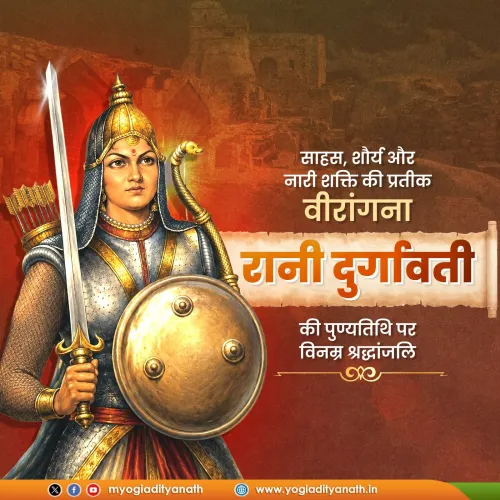
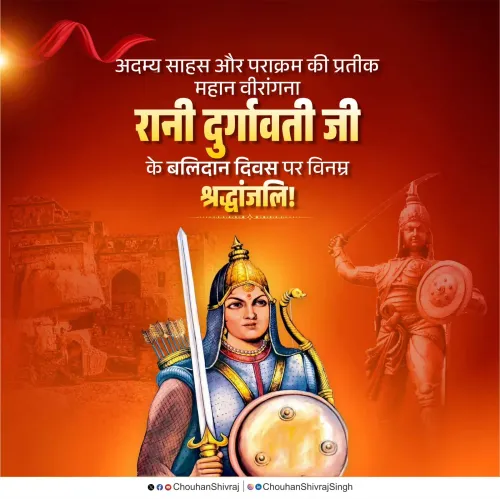
CM Saini pays tribute to Rani Durgavati on Balidan Diwas
Synopsis
Haryana Chief Minister Nayab Singh Saini on 24 June paid homage to Rani Durgavati, the 16th-century Gond queen who died resisting Mughal forces, calling her an unparalleled symbol of women's power and patriotism on her annual martyrdom anniversary.
Key Takeaways
Haryana CM Nayab Singh Saini posted a tribute to Rani Durgavati on her Balidan Diwas, 24 June 2026 .
Rani Durgavati died on 24 June 1564 in the Battle of Narrai, resisting Mughal Emperor Akbar's forces.
She ruled the Garha-Gond kingdom in central India and is regarded as a symbol of female martial courage.
In 2021 , the Government of India renamed Jabalpur Airport as Rani Durgavati Airport in her honour.
The tribute reflects a broader BJP practice of marking pre-colonial warrior anniversaries as pan-national occasions.
Saini described her courage and sacrifice as an 'indomitable' and 'ever-inspiring' force for the nation.
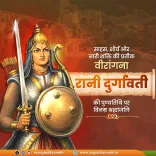
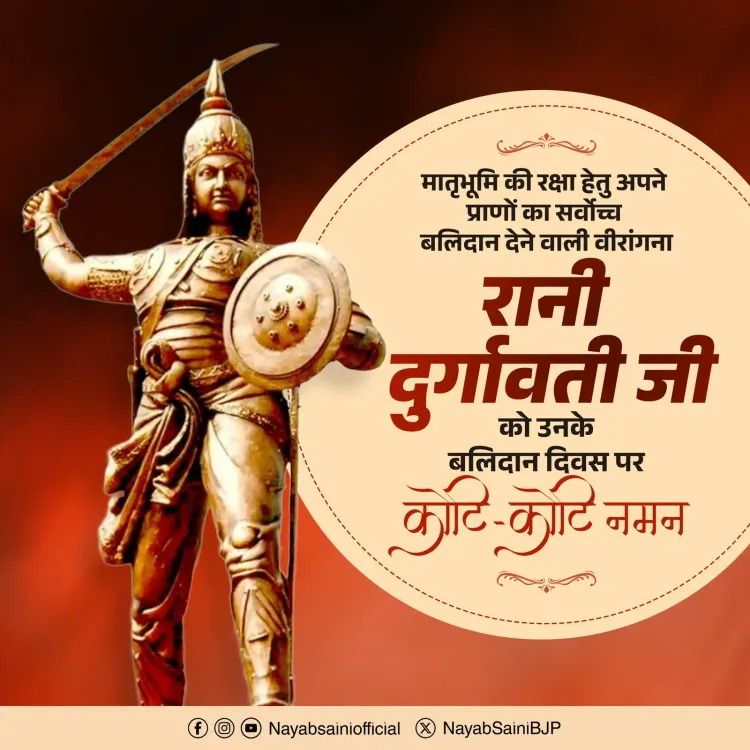
Haryana Chief Minister Nayab Singh Saini on Wednesday, 24 June paid tribute to Rani Durgavati, the 16th-century Gond queen who died in battle defending her kingdom, marking the warrior queen's Balidan Diwas (martyrdom anniversary) with a post on X.
Saini wrote, 'Matribhumi ki raksha hetu apne praanon ka sarvochch balidaan dene wali, naari shakti aur shaurya ki advitiya pratik mahan veerangana Rani Durgavati ji ke Balidan Diwas par unhe koti-koti naman' — translated: 'A crore salutes to the great warrior queen Rani Durgavati, the unparalleled symbol of women's power and valour, who made the supreme sacrifice of her life in defence of the motherland.' He added that her 'indomitable courage, sacrifice, and patriotism will always be an inspiration.'
Context
Rani Durgavati ruled the Garha-Gond kingdom in present-day central India and is remembered as one of the most formidable rulers to resist Mughal expansion under Emperor Akbar. She died on 24 June 1564 during the Battle of Narrai, choosing death over surrender after her forces were overwhelmed. She has since become a symbol of female martial courage and anti-colonial resistance in Indian historical memory.
Her legacy has been formally acknowledged by the Indian state: in 2021, the government renamed Jabalpur Airport as Rani Durgavati Airport, placing her among a select group of historical figures honoured through national infrastructure.
Policy Backdrop
Marking the death anniversaries of pre-colonial warrior figures has become a consistent feature of Indian political discourse, particularly on social media. Leaders across the spectrum invoke such figures to underscore themes of territorial defence, sacrifice, and national pride.
BJP functionaries have been especially active in linking tributes to historical women warriors to a broader narrative of indigenous resistance. Saini's post — issued from Haryana, a state geographically distant from Durgavati's native central Indian region — reflects how such commemorations transcend regional boundaries and are treated as pan-national occasions.
Stakeholders and Impact
Tribal communities of central India, particularly those with historical ties to the Gond kingdom, regard Rani Durgavati as a cultural and ancestral icon. Her anniversary is observed with ceremonies in Madhya Pradesh, the state where she ruled and fell in battle.
Women leaders and civil society groups frequently cite Durgavati as a historical precedent for female leadership and military command in India. Tributes from senior elected officials like Saini amplify the figure's relevance in contemporary political discourse.
What's Next
State governments — particularly in Madhya Pradesh — may organise local commemorative events or educational programmes around 24 June in coming years. Parliamentary references to historical women warriors could also surface during relevant legislative debates on women's empowerment or cultural heritage.
As Balidan Diwas becomes more widely observed across states, it signals a growing institutional interest in incorporating pre-colonial women's history into the mainstream national calendar.
Point of View
Posted from Haryana — a state with no direct historical connection to Rani Durgavati's Gond kingdom — illustrates how BJP leaders frame pre-colonial warrior figures as national rather than regional icons. The gesture fits a deliberate pattern of reclaiming women's martial history to reinforce a cultural-nationalist narrative. By invoking 'naari shakti' (women's power) alongside territorial sacrifice, the post also dovetails with the party's ongoing messaging around women's empowerment. The timing on a fixed calendar date signals the institutionalisation of such commemorations as routine political practice.
NationPress
24 Jun 2026
Frequently Asked Questions
Who was Rani Durgavati?
Rani Durgavati was a 16th-century queen of the Garha-Gond kingdom in central India who resisted Mughal expansion under Emperor Akbar and died in battle on 24 June 1564, making her a celebrated symbol of female courage and patriotism.
Why is 24 June observed as Rani Durgavati Balidan Diwas?
24 June marks the day in 1564 when Rani Durgavati died during the Battle of Narrai rather than surrender to Mughal forces, and the date is observed annually as her martyrdom or 'Balidan Diwas.'
What did Nayab Singh Saini say about Rani Durgavati?
Haryana Chief Minister Nayab Singh Saini called her the 'unparalleled symbol of women's power and valour' and said her indomitable courage, sacrifice, and patriotism 'will always be an inspiration.'
How has the Indian government honoured Rani Durgavati?
In 2021, the Government of India renamed Jabalpur Airport as Rani Durgavati Airport to formally recognise her historical legacy.
Why do BJP leaders regularly pay tribute to historical warrior figures?
BJP leaders routinely mark the anniversaries of pre-colonial warriors to reinforce themes of indigenous resistance, national pride, and cultural heritage, linking historical sacrifice to contemporary political narratives.