CM Saini transfers ₹1,582 cr to 50.20 lakh Haryana families via DBT
Synopsis
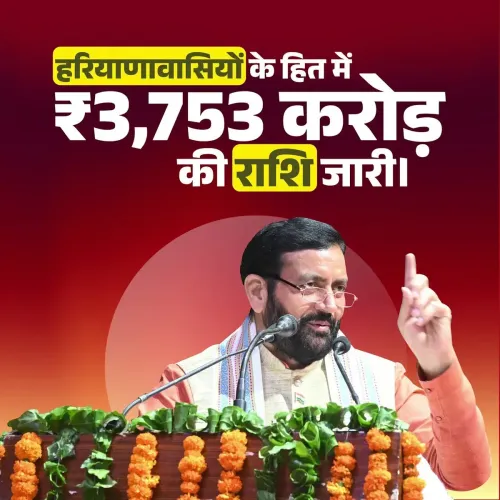
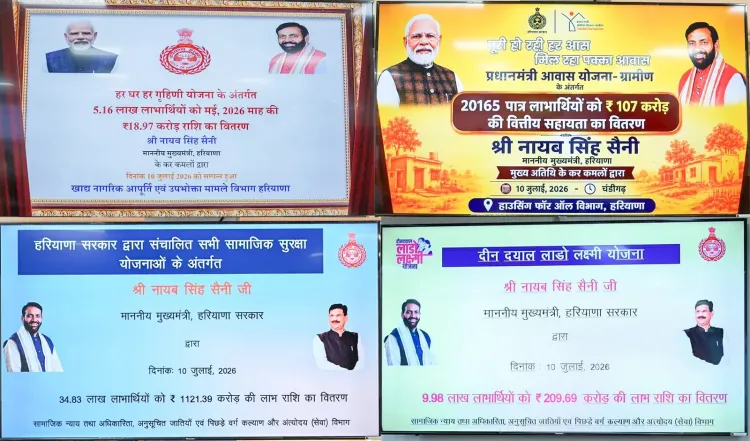
Haryana Chief Minister Nayab Singh Saini transferred over ₹1,582 crore to 50.20 lakh families in a single DBT disbursal on 10 July 2026, covering 19 schemes including social security pensions, PMAY-G, and girl-child support programmes.
Key Takeaways
₹1,582 crore+ was transferred in a single DBT disbursal by the Haryana government on 10 July 2026 .
50.20 lakh families across Haryana received direct bank transfers under 19 welfare schemes .
The disbursal covered 15 social security pension schemes for the elderly, widows, and differently abled persons.
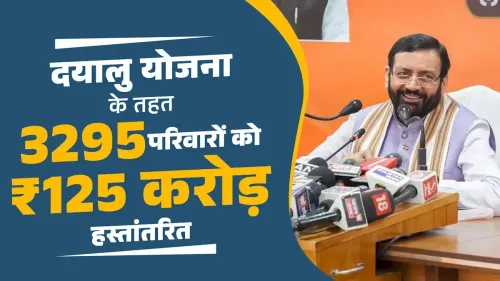
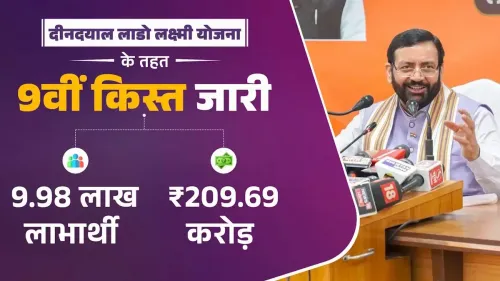
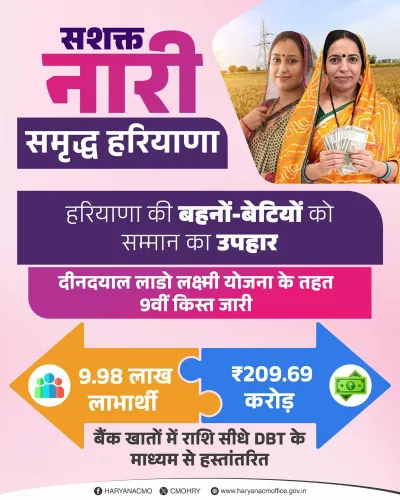
Girl-child scheme Deen Dayal Lado Laxmi Yojana , Dayalu Yojana , and Har Ghar-Har Grihini Yojana were also included.
Rural housing scheme Pradhan Mantri Awas Yojana (Gramin) formed part of the consolidated transfer.
CM Saini credited the initiative to PM Narendra Modi's guidance on transparent welfare delivery.
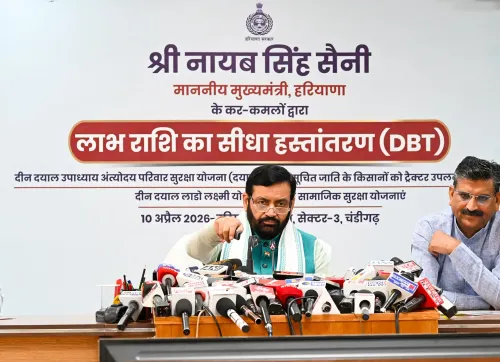
Haryana Chief Minister Nayab Singh Saini on Friday, 10 July 2026, announced the transfer of more than ₹1,582 crore directly into the bank accounts of 50.20 lakh families across the state, covering benefits under 19 public welfare schemes in a single disbursal from Chandigarh.
Posting on X, CM Saini stated: 'आज चंडीगढ़ से प्रदेश के 50.20 लाख परिवारजनों के बैंक खातों में 19 जनकल्याणकारी योजनाओं के तहत ₹1,582 करोड़+ की लाभ राशि ट्रांसफर की' ('Today, from Chandigarh, a benefit amount of over ₹1,582 crore under 19 public welfare schemes was transferred to the bank accounts of 50.20 lakh family members of the state').
Context
The single-day disbursal covered 15 social security pension schemes alongside four additional programmes: the Deen Dayal Lado Laxmi Yojana, the Dayalu Yojana, the Har Ghar-Har Grihini Yojana, and the Pradhan Mantri Awas Yojana (Gramin). All funds were routed through the Direct Benefit Transfer (DBT) mechanism, bypassing intermediaries and landing directly in Aadhaar-linked bank accounts of eligible beneficiaries. CM Saini described the transfer as 'a symbol of our commitment to transparency and good governance.'
Policy Backdrop
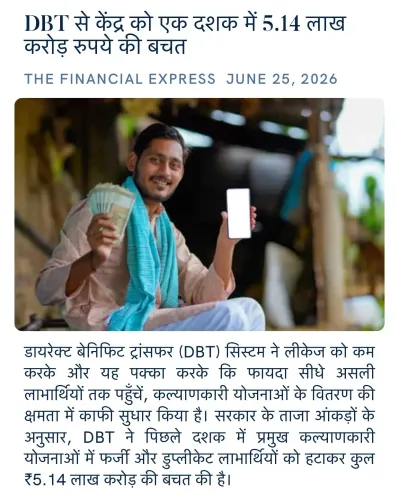
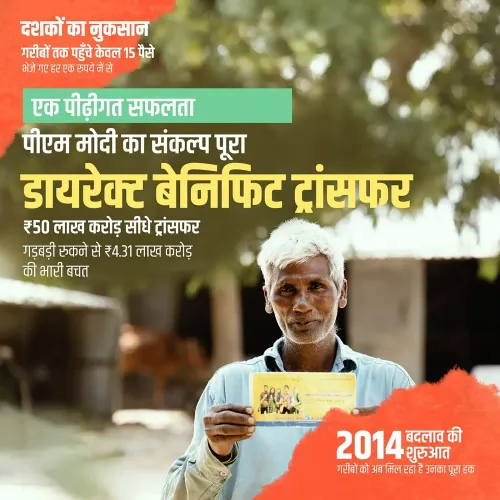
The DBT framework was institutionalised at the national level in 2013 and was significantly scaled up after 2014 through the Jan Dhan-Aadhaar-Mobile trinity championed by Prime Minister Narendra Modi. CM Saini acknowledged PM Modi's guidance as central to the state's effort to reach every eligible family. Pradhan Mantri Awas Yojana (Gramin), which forms part of this disbursal, was launched in 2015 to replace the earlier Indira Awas Yojana and provides enhanced unit assistance to below-poverty-line rural households for constructing pucca homes.
Haryana has maintained a network of social security pensions covering the elderly, widows, and persons with disabilities for several decades, with periodic revisions to coverage and amounts. The Deen Dayal Lado Laxmi Yojana specifically targets financial support for eligible girls linked to education, while the Dayalu Yojana and Har Ghar-Har Grihini Yojana extend the state's welfare net to additional vulnerable segments.
Stakeholders and Impact
The primary beneficiaries span multiple demographics: pension recipients including the elderly, widows, and differently abled persons; rural households seeking housing assistance under PMAY-G; and women and girls covered under the girl-child and homemaker-focused schemes. The scale of the transfer — 50.20 lakh families in a single disbursal — underscores the breadth of Haryana's state-run welfare architecture. By routing funds through DBT, the government aims to eliminate leakages that have historically reduced the effective value of welfare spending.
What's Next
Attention will now turn to the Haryana government's quarterly DBT dashboards, which are expected to reflect this disbursal in real-time accountability reports. Any revisions to scheme budgets in the 2026-27 state estimates will indicate whether the government plans to expand coverage or increase per-beneficiary amounts in subsequent tranches. The consolidation of 19 schemes into a single transfer event also signals a push toward administrative efficiency that could serve as a template for future multi-scheme disbursals in the state.
Point of View
50.20 lakh families, and over ₹1,582 crore — reflects the BJP's sustained political investment in visible, direct welfare delivery as an electoral asset in Haryana. By explicitly crediting PM Modi's guidance, CM Saini reinforces the party's dual-credit strategy: central policy architecture paired with state-level execution. The consolidation of disparate schemes into a single DBT event also serves an administrative logic, reducing disbursal cycles and generating a single, auditable data point for accountability. Whether this pace of transfer is sustained through the full financial year will be the true test of the government's governance claims.
NationPress
10 Jul 2026
Frequently Asked Questions
How much money did Haryana CM Nayab Singh Saini transfer under welfare schemes on 10 July 2026?
Haryana Chief Minister Nayab Singh Saini transferred more than ₹1,582 crore into the bank accounts of 50.20 lakh families across Haryana on 10 July 2026 through the Direct Benefit Transfer mechanism.
Which schemes were covered in Haryana's DBT transfer on 10 July 2026?
The transfer covered 19 schemes including 15 social security pension schemes, the Deen Dayal Lado Laxmi Yojana, the Dayalu Yojana, the Har Ghar-Har Grihini Yojana, and the Pradhan Mantri Awas Yojana (Gramin).
What is the Deen Dayal Lado Laxmi Yojana in Haryana?
The Deen Dayal Lado Laxmi Yojana is a Haryana government scheme that provides financial support to eligible girls, primarily linked to education and related needs.
What is Direct Benefit Transfer (DBT) and how does it work?
Direct Benefit Transfer is a central government mechanism that routes subsidies, pensions, and scheme benefits directly into beneficiaries' Aadhaar-linked bank accounts, reducing intermediary leakages. It was institutionalised in 2013 and scaled nationally after 2014.
Who are the beneficiaries of Haryana's social security pension schemes?
Haryana's social security pension schemes cover multiple vulnerable groups including elderly persons, widows, and persons with disabilities, with the state having run such programmes since at least the early 2000s.