CM Sai Hails DBT's 12-Year Welfare Transformation
Synopsis
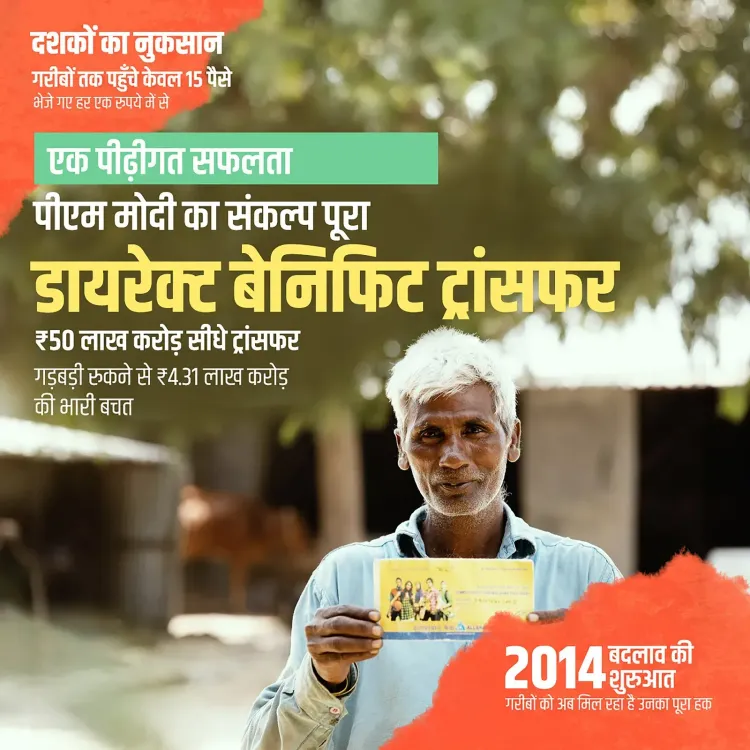
Chhattisgarh Chief Minister Vishnu Deo Sai marked 12 years of the Garib Kalyan agenda by praising Direct Benefit Transfer, calling it a transparency milestone that has eliminated middlemen and ensured rightful welfare funds reach poor families directly under PM Modi's leadership.
Key Takeaways
Chhattisgarh CM Vishnu Deo Sai posted on June 8, 2026 praising Direct Benefit Transfer (DBT) on its 12-year milestone under PM Modi.
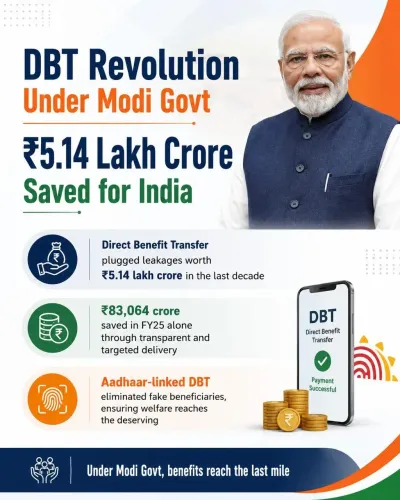
DBT was formally launched in 2013 and massively expanded post- 2014 using the JAM trinity of Jan Dhan, Aadhaar and Mobile connectivity.
The framework now covers over 300 central schemes , with official claims of savings of several lakh crore rupees by removing ghost beneficiaries.
The PAHAL LPG subsidy scheme (2014) was one of the first large-scale DBT implementations, reaching crores of households.
The post was tagged #12YearsOfGaribKalyan , marking twelve years since the BJP-led government accelerated welfare reforms from 2014 onward.
Concerns around exclusion errors for beneficiaries lacking Aadhaar-linked accounts remain an active area of parliamentary and policy scrutiny.
Chhattisgarh Chief Minister Vishnu Deo Sai on Monday, June 8, 2026, praised the Direct Benefit Transfer (DBT) framework under Prime Minister Narendra Modi, calling it a transformative force that has brought transparency and accountability to welfare delivery by routing funds directly into beneficiaries' bank accounts, bypassing intermediaries entirely.
Context
Posting under the hashtag #12YearsOfGaribKalyan [12 Years of Welfare for the Poor], CM Sai described DBT as having 'added a new chapter of transparency, accountability and trust to the welfare system' under what he called the 'visionary leadership' of PM Modi. He emphasised that 'the money rightfully belonging to the poor is now reaching their bank accounts directly, without any middleman.'
The post marks a political milestone — twelve years since the BJP-led central government took office in 2014 and accelerated DBT expansion across hundreds of welfare schemes.
Policy Backdrop
Direct Benefit Transfer was formally introduced by the Government of India in 2013 and scaled up significantly after 2014, with mandatory Aadhaar seeding enabling leak-proof identification of beneficiaries. The PAHAL LPG subsidy scheme, rolled out nationally in 2014, became one of the earliest and largest demonstrations of DBT in action.
The architecture rests on the JAM trinity — Jan Dhan bank accounts, Aadhaar biometric authentication, and Mobile connectivity — promoted from 2014–15 onward to enable direct transfers across subsidies, pensions and scholarships under multiple ministries. DBT has since been extended to over 300 central schemes, with official claims of cumulative savings of several lakh crore rupees through the elimination of ghost beneficiaries.
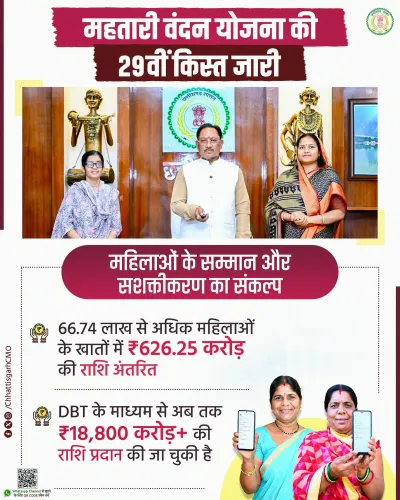
Chhattisgarh, governed by the BJP since December 2023 when CM Sai assumed office, has implemented DBT for both central and state welfare programmes targeting tribal communities, farmers and below-poverty-line households across the state.
Stakeholders and Impact
The primary beneficiaries of DBT are crores of poor families across India who receive subsidies, pensions, scholarships and agricultural support payments directly in their accounts without routing through local administrative layers that historically enabled leakage. For Chhattisgarh specifically — a state with a large tribal and rural population — direct transfers reduce dependence on intermediaries in geographically remote areas.
Critics of DBT have raised concerns about exclusion errors, where eligible beneficiaries without active Aadhaar-linked accounts are inadvertently left out. Parliamentary scrutiny on verification mechanisms and coverage gaps has been a recurring feature of budget and committee discussions at the national level.
What's Next
Attention will now turn to state-level DBT dashboards and any new central schemes announced in the next Union Budget that could widen coverage further. Political observers will also watch whether BJP-ruled states like Chhattisgarh release updated beneficiary and savings data to reinforce the anniversary narrative. The broader question of plugging remaining exclusion gaps — particularly for marginalised communities without seamless digital access — will continue to shape the policy debate around welfare delivery in India.
Point of View
Reinforcing the BJP's core 'transparent governance' narrative ahead of future electoral cycles. By invoking DBT — one of the most data-backed and publicly visible welfare delivery reforms — he anchors Chhattisgarh's BJP administration within the broader national Garib Kalyan brand. The framing of 'no middleman' is a direct ideological counter to the Congress-era criticism of leaky subsidy regimes, a contrast the BJP has consistently deployed since 2014. The post also signals that state-level BJP leaders are being mobilised to amplify the 12-year milestone in coordinated fashion across social media.
NationPress
23 Oct 2026
Frequently Asked Questions
What is Direct Benefit Transfer (DBT) in India?
Direct Benefit Transfer is a Government of India mechanism that transfers subsidies, pensions, scholarships and welfare payments directly into beneficiaries' Aadhaar-linked bank accounts, eliminating intermediaries. It was formally launched in 2013 and significantly expanded after 2014.
What is the #12YearsOfGaribKalyan hashtag about?
The hashtag marks 12 years since the BJP-led central government took office in 2014 and launched a series of pro-poor welfare initiatives collectively branded as Garib Kalyan, including DBT expansion, Jan Dhan accounts and food security programmes.
How has DBT benefited poor families in Chhattisgarh?
In Chhattisgarh, DBT has been used to deliver both central and state welfare payments — including agricultural support and social pensions — directly to rural and tribal beneficiaries, reducing dependence on local intermediaries in geographically remote areas.
What is the JAM trinity and how does it relate to DBT?
JAM stands for Jan Dhan bank accounts, Aadhaar biometric authentication, and Mobile connectivity. Promoted from 2014-15, the JAM trinity forms the technical backbone that enables DBT to reach beneficiaries accurately and in a verifiable manner.
What are the criticisms of Direct Benefit Transfer?
The main criticism is exclusion error — eligible beneficiaries who lack active Aadhaar-linked bank accounts or reliable mobile connectivity can be inadvertently left out of DBT-linked schemes. Parliamentary committees have periodically raised concerns about verification gaps and coverage failures.