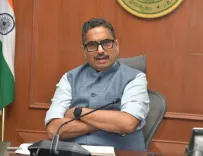
CM Samrat Choudhary Backs ITLA Launch as India's Transport Leap
Synopsis
Bihar CM Samrat Choudhary hailed the Cabinet's approval of the Integrated Transport and Logistics Authority (ITLA) on October 6, 2026, highlighting its 10-plus-year planning mandate, ₹500-crore project oversight, and a unified data repository drawing from FASTag, Vahan, and GPS sources.
Key Takeaways
The Union Cabinet approved the Integrated Transport & Logistics Authority (ITLA) on October 6, 2026 .
ITLA will oversee a 10-plus-year long-range national transport plan , going beyond short electoral cycles.
The authority will technically evaluate and monitor projects worth more than ₹500 crore .
An Integrated Transport Data Repository will pull live data from FASTag, Vahan, and GPS systems.
Bihar CM Samrat Choudhary endorsed the move as foundational to lower-cost, faster development across India.
The slogan 'एक नेटवर्क, एक दिशा, एक गति' — 'One network, one direction, one speed' — frames ITLA's unified mandate.
India's fragmented transport network just got a unified command centre — and Bihar Chief Minister Samrat Choudhary is calling it a turning point for the country's economic velocity. On Tuesday, October 6, 2026, Choudhary took to X to welcome the Union Cabinet's approval of the Integrated Transport & Logistics Authority (ITLA), describing it as a decisive step toward a smarter, more coordinated national transport system under Prime Minister Narendra Modi.
One Authority to Rule India's Road, Rail and Freight Maze
The post, written in Hindi, frames ITLA as the institutional backbone that India's logistics ecosystem has long needed. Choudhary wrote: 'बेहतर कनेक्टिविटी, तेज लॉजिस्टिक्स और स्मार्ट परिवहन' — 'Better connectivity, faster logistics and smart transport — the economy of a developed India will now find a new momentum.' The sentiment cuts to the chase: coordination, not just construction, is the new frontier.
At the heart of ITLA's mandate is a 10-plus-year long-range transport planning horizon — an unusually ambitious timeline that signals intent to move beyond electoral cycles. The authority will also conduct technical evaluation and monitoring of projects worth more than ₹500 crore, bringing centralised scrutiny to large-ticket infrastructure spending that has historically been siloed across multiple ministries.
FASTag, Vahan and GPS Feed the New Data Brain
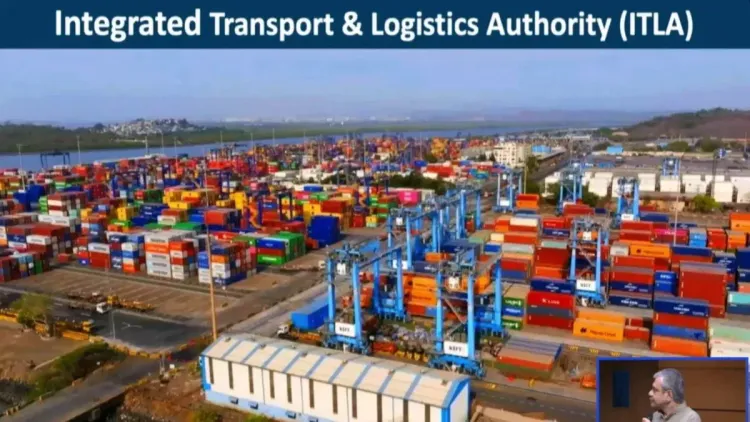
Perhaps the most consequential piece is the Integrated Transport Data Repository — a single data lake that will draw real-time inputs from FASTag toll transactions, the Vahan vehicle-registration platform, and GPS fleet-tracking systems. Think of it as a live nervous system for India's roads and freight corridors. When planners can see where goods are moving, where they are stalling, and why — bottlenecks become addressable facts rather than annual complaints.
Choudhary invoked a crisp slogan to crystallise the vision: 'एक नेटवर्क, एक दिशा, एक गति' — 'One network, one direction, one speed.' For a country where a truck historically spent nearly half its travel time at checkpoints and inter-state borders, the promise of integrated, data-driven logistics is not rhetorical. It is money — lower freight costs mean cheaper goods, wider markets, and stronger manufacturing competitiveness.
Why Bihar's Chief Minister Is Watching Closely
Choudhary's enthusiasm is not merely political loyalty. Bihar sits at the geographic heart of eastern India's supply chains, connecting the Indo-Gangetic Plain to ports, hill states, and neighbouring countries. Better logistics directly translates into faster movement of agricultural produce, industrial inputs, and consumer goods through a state that has long sought infrastructure parity with more industrialised peers. A smarter national transport authority — one that evaluates big projects and integrates data — could accelerate decisions that Bihar has been waiting on for years.
The Cabinet nod arrives under the #CabinetDecisions banner, signalling it is part of a broader Wednesday-afternoon announcements package. ITLA's full regulatory structure, staffing, and inter-ministerial coordination framework are yet to be detailed publicly, but the approval itself marks a structural shift — from ad-hoc cross-ministry committees to a standing, empowered body with a long-range planning mandate.
One network, one direction, one speed — the question now is whether the institutional plumbing can keep up with the slogan's ambition.
Point of View
Long-horizon planning authority. For the BJP, it is also a politically legible signal: the party can point to an institutional deliverable, not just a scheme, ahead of a dense electoral calendar. Choudhary's endorsement from Bihar is strategically notable — the state is both a BJP heartland and a logistics chokepoint where central infrastructure decisions carry direct economic consequence. The real test will be whether ITLA secures genuine inter-ministerial authority or becomes another consultative layer in an already crowded policy architecture.
NationPress
6 Oct 2026
Frequently Asked Questions
What is ITLA and what will it do in India?
ITLA — the Integrated Transport and Logistics Authority — is a newly Cabinet-approved body that will coordinate India's transport planning across modes, oversee projects worth more than ₹500 crore, and maintain a unified data repository using FASTag, Vahan, and GPS feeds.
When did the Cabinet approve ITLA?
The Cabinet approved ITLA on Tuesday, October 6, 2026 , as part of a set of decisions announced under the #CabinetDecisions tag.
What is the Integrated Transport Data Repository?
It is a centralised data platform that will aggregate real-time transport information from FASTag toll records, the Vahan vehicle-registration database, and GPS fleet-tracking systems to help planners identify and fix logistics bottlenecks.
Why did Bihar CM Samrat Choudhary welcome the ITLA approval?
Choudhary welcomed it because better national logistics coordination directly benefits Bihar, a state at the geographic centre of eastern India's supply chains that stands to gain from faster freight movement and lower transport costs.
How long is ITLA's planning horizon?
ITLA is mandated to work on a long-range transport plan spanning more than 10 years , an unusually extended timeline designed to ensure policy continuity beyond single electoral terms.