CM Samrat Choudhary announces 100 fast-track courts for Bihar

Synopsis
Bihar Chief Minister Samrat Choudhary announced on 4 July 2026 that 100 fast-track courts will be constituted in Bihar to expedite criminal case disposal and strengthen law-and-order, marking a significant push to address the state's long-standing judicial backlog.
Key Takeaways
Bihar Chief Minister Samrat Choudhary announced the constitution of 100 fast-track courts on 4 July 2026 .
The stated objective is swift disposal of criminal cases and effective crime control across Bihar .
The announcement marks the start of an administrative process; formal orders, funding, and infrastructure rollout are yet to follow.
Fast-track courts in India trace their origin to a central government scheme first sanctioned in 2000 under the Eleventh Finance Commission .
Specific case categories to be prioritised and the funding arrangement between the state and centre have not yet been disclosed.
Implementation will depend on judge appointments, budget allocations, and coordination with the Patna High Court .
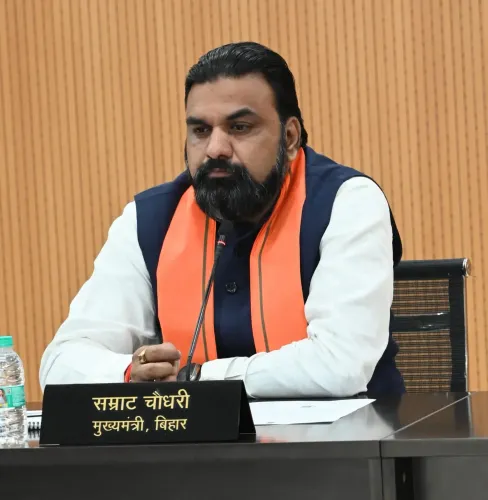
Bihar Chief Minister Samrat Choudhary announced on Saturday, 4 July 2026 that the state government will constitute 100 fast-track courts to ensure swift disposal of criminal cases and strengthen law-and-order control across Bihar.
Posting on X, the Chief Minister described the move as a 'big step towards effective crime control and speedy justice,' using the Hindi phrase त्वरित न्याय [swift justice] to frame the initiative's intent. The announcement signals a significant expansion of Bihar's judicial infrastructure aimed at reducing the state's historically high criminal case backlog.
Context
Bihar has long grappled with a substantial pendency of criminal cases, a challenge that has drawn sustained attention from both the state government and the judiciary. High case loads strain the regular court system, delaying justice for victims and prolonging pre-trial detention for accused persons. The Chief Minister's announcement positions this expansion as a direct administrative response to those structural pressures.
The state government's move to constitute 100 dedicated fast-track courts represents one of the larger single-round expansions of specialised judicial capacity announced at the state level in recent years. The formal process of constituting these courts — गठन की कार्रवाई की जाएगी [action will be taken for constitution] — is yet to be completed, indicating the announcement marks the beginning of an administrative process rather than an immediate rollout.
Policy Backdrop
Fast-track courts have been a recurring instrument of Indian criminal justice reform since the Eleventh Finance Commission first sanctioned the scheme in 2000, with central government funding extended to states to establish dedicated benches for expediting trial of pending criminal cases. The scheme was broadened nationally in 2011 and has since been renewed in successive phases, with states given flexibility to prioritise categories of offences based on local crime patterns.
Bihar's proposed expansion fits within this national framework, though the specific categories of criminal cases to be assigned to the new courts — whether heinous offences, cases involving women and children, or general criminal pendency — have not been specified in the Chief Minister's announcement. Funding arrangements between the state and the centre also remain to be detailed.
Stakeholders and Impact
The primary beneficiaries of fast-track courts are crime victims seeking timely resolution and accused persons facing prolonged pre-trial incarceration. A functional expansion of 100 courts would also require corresponding increases in judge appointments, support staff, and physical courtroom infrastructure — placing demands on both the state judiciary and the state budget.
For Bihar Police, faster case disposal reduces the administrative burden of producing undertrial prisoners for repeated hearings, potentially freeing investigative resources. Civil society groups working on prison reform and victim rights have consistently advocated for fast-track mechanisms as a means of reducing the state's undertrial population, which has historically been among the highest in India.
What's Next
The Chief Minister's announcement sets the stage for follow-up action in the coming months, including formal government orders, budget allocations, and coordination with the Patna High Court for judicial appointments. Observers will watch whether the next state assembly session or annual budget exercise translates the announcement into sanctioned posts and capital expenditure for courtroom infrastructure. The pace of implementation will be the clearest measure of the government's commitment to this initiative.
Point of View
But the gap between announcement and implementation — judges, infrastructure, budget lines — is where such initiatives have historically stalled. The framing of judicial expansion as a crime-control tool also reflects a deliberate conflation of executive and judicial capacity that is worth watching: fast-track courts reduce pendency, but their impact on crime rates is indirect and contested. The real test will be whether this announcement is backed by a formal government order and corresponding budget allocation within the current fiscal year.
NationPress
4 Jul 2026
Frequently Asked Questions
What are fast-track courts in India?
Fast-track courts are specialised courts set up to expedite trials of pending criminal cases. India first sanctioned the scheme in 2000 under the Eleventh Finance Commission, with central funding extended to states to establish dedicated benches for faster disposal of criminal cases.
How many fast-track courts is Bihar planning to set up?
Bihar Chief Minister Samrat Choudhary announced on 4 July 2026 that 100 fast-track courts will be constituted in the state to ensure swift disposal of criminal cases and strengthen law-and-order.
What types of cases will Bihar's new fast-track courts handle?
The Chief Minister's announcement did not specify which categories of criminal cases will be assigned to the 100 proposed fast-track courts. That detail is expected to be clarified in subsequent government orders.
Who is Samrat Choudhary?
Samrat Choudhary is the Chief Minister of Bihar and a senior leader of the Bharatiya Janata Party (BJP).
When will Bihar's fast-track courts become operational?
No specific implementation timeline has been announced. The Chief Minister's post indicated that the process of constituting the courts 'will be initiated,' suggesting formal orders, judicial appointments, and infrastructure work are still to follow.