CM Samrat Choudhary Backs New Rural Jobs Mission VB-G RAM G
Synopsis
Bihar Chief Minister Samrat Choudhary on 1 July 2026 endorsed the newly announced VB-G RAM G rural livelihood mission, crediting PM Modi's leadership and highlighting its 125-day statutory employment guarantee as a transformative step for crores of rural families and women across India.
Key Takeaways
Bihar CM Samrat Choudhary publicly endorsed the VB-G RAM G rural livelihood mission on 1 July 2026 .
The scheme proposes 125 days of statutory employment for rural households, up from the existing 100-day MGNREGA guarantee established in 2005 .
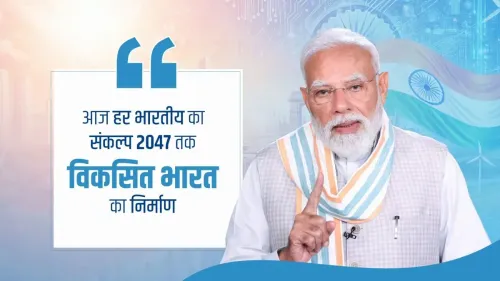
The mission is framed under the Viksit Bharat (Developed India) roadmap targeting national development by 2047 .
Women's empowerment and self-reliance ( आत्मनिर्भरता ) are cited as core objectives of the new scheme.
Formal operational guidelines, budgetary allocations, and any required legislative amendments are yet to be notified by the Union Ministry of Rural Development .
Bihar , with one of India's largest rural workforces, is among the states with the greatest stake in the scheme's implementation.
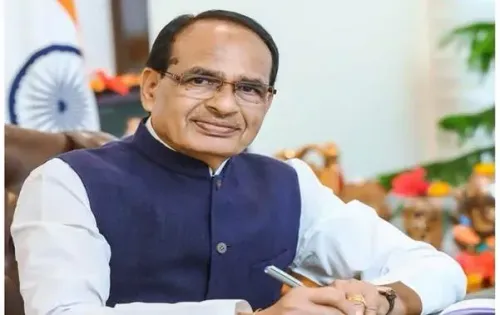
Bihar Chief Minister Samrat Choudhary on Wednesday, 1 July 2026 welcomed the central government's announcement of a new rural livelihood scheme — the Viksit Bharat–Guarantee for Employment and Livelihood Mission (Rural), abbreviated VB-G RAM G — calling it a historic and far-reaching decision for the empowerment of rural India.
Context
Posting on X in Hindi, CM Choudhary described the initiative as a product of Prime Minister Narendra Modi's 'visionary leadership' (दूरदर्शी नेतृत्व). He said the scheme would 'create new opportunities for dignified livelihoods, women's empowerment, and self-reliance in villages.' The Chief Minister specifically highlighted the provision of 125 days of statutory employment, which he said would bring 'new hope and new energy' to crores of rural families.
The scheme's name directly invokes the government's Viksit Bharat (Developed India) framework — the overarching roadmap targeting comprehensive national development by 2047. Choudhary concluded by stating that 'empowered villages are the strongest foundation of a developed India, and this initiative will give fresh momentum to that resolve.'
Policy Backdrop
India's foundational rural employment law, the Mahatma Gandhi National Rural Employment Guarantee Act (MGNREGA), enacted in 2005, legally guarantees up to 100 days of wage employment per year to rural households. The proposed VB-G RAM G scheme, as described by the Chief Minister, would extend that statutory entitlement to 125 days, representing a meaningful increase in the guaranteed work floor for rural workers.
Successive central governments have layered supplementary livelihood missions and skilling programmes atop the original MGNREGA architecture. The explicit focus on women's empowerment and self-reliance (आत्मनिर्भरता) in the new scheme aligns with a long-standing policy emphasis on anchoring rural growth in women's economic participation and village-level enterprise.
Stakeholders and Impact
Rural households across India stand as the primary beneficiaries. An extension from 100 to 125 days of guaranteed employment would translate into additional weeks of assured income for families whose livelihoods depend on public works and agricultural wage labour. Women in rural areas are specifically named as a target group, consistent with MGNREGA's historical record of high female participation.
Bihar, one of India's most populous states with a large rural workforce, would be among the states with the greatest stake in the scheme's rollout. CM Choudhary's public endorsement signals that the state government intends to actively align with the central initiative.
What's Next
Attention will now turn to formal notifications from the Union Ministry of Rural Development detailing the scheme's operational guidelines, eligibility criteria, and wage structures. Budgetary allocations — either through a supplementary demand or the next Union Budget — will determine the scale at which the mission can be implemented. Any legislative changes needed to the principal MGNREGA statute would require parliamentary approval. State governments, including Bihar, will be expected to issue corresponding rollout plans once the central framework is formalised.
Point of View
If legislated, would mark the most substantial expansion of India's rural employment guarantee since MGNREGA's inception in 2005. For a state like Bihar — with deep rural poverty and a large agricultural labour base — the scheme carries both electoral and developmental weight. The emphasis on women's empowerment also signals continuity with a broader BJP governance pitch of linking welfare delivery to gender inclusion.
NationPress
1 Jul 2026
Frequently Asked Questions
What is the VB-G RAM G scheme announced in India?
VB-G RAM G stands for Viksit Bharat–Guarantee for Employment and Livelihood Mission (Rural), a central government scheme aimed at providing 125 days of statutory employment to rural households, with a focus on women's empowerment and self-reliance in villages.
How is VB-G RAM G different from MGNREGA?
MGNREGA, enacted in 2005, guarantees up to 100 days of rural wage employment per year. VB-G RAM G, as described by Bihar CM Samrat Choudhary, proposes to extend this entitlement to 125 days, adding 25 more days of assured work for rural families.
What did Bihar CM Samrat Choudhary say about the new rural jobs scheme?
CM Choudhary called VB-G RAM G a 'historic and far-reaching decision,' saying it would create new opportunities for dignified livelihoods and women's empowerment in villages, and that empowered villages are the strongest foundation of a developed India.
What is the Viksit Bharat mission?
Viksit Bharat, meaning 'Developed India,' is the central government's stated development roadmap targeting comprehensive national growth by 2047, with a strong emphasis on rural infrastructure, employment, and self-reliance.
When was the VB-G RAM G scheme announced?
Bihar Chief Minister Samrat Choudhary welcomed the scheme on 1 July 2026, attributing it to the leadership of Prime Minister Narendra Modi. Formal central government notifications detailing rollout guidelines are yet to be issued.