CM Samrat Choudhary flags off e-buses under PM E-Bus Seva in Bihar
Synopsis
Bihar CM Samrat Choudhary flagged off electric buses under PM E-Bus Seva Yojana and BSRTC deluxe buses at Patna on 25 July 2026, extending modern, GPS- and CCTV-equipped public transport to six Bihar cities including Patna, Muzaffarpur and Gaya.
Key Takeaways
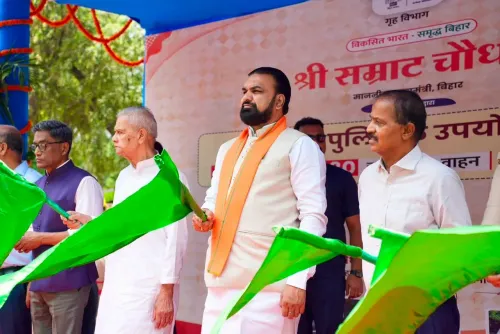
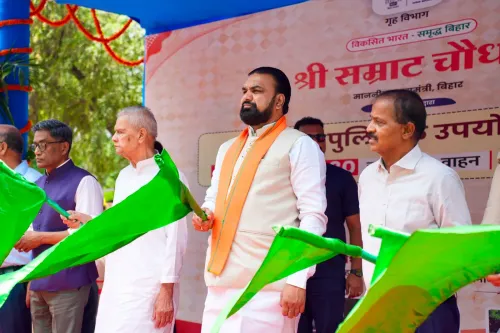
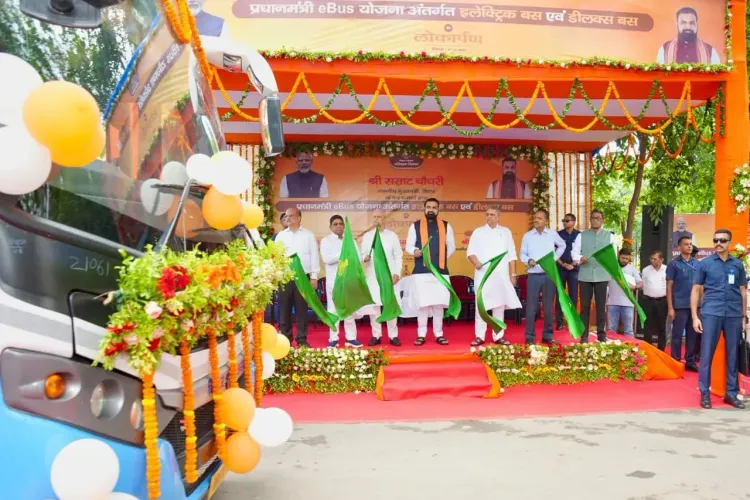
Bihar CM Samrat Choudhary flagged off electric and deluxe buses at Veterinary College Ground, Patna on 25 July 2026 .
Buses are deployed under the PM E-Bus Seva Yojana , approved by the Union Cabinet in August 2023 to roll out 10,000 electric buses across India.
Services will cover six cities : Patna, Muzaffarpur, Gaya, Bhagalpur, Darbhanga and Purnia .
All buses are equipped with CCTV, e-ticketing, GPS tracking and live location technology.
Special facilities have been provided for women, elderly and differently-abled passengers .
The launch is part of Bihar's broader infrastructure push under BSRTC 's fleet modernisation programme.
Bihar Chief Minister Samrat Choudhary on Saturday, 25 July 2026, flagged off electric buses under the Prime Minister E-Bus Seva Yojana along with Bihar State Road Transport Corporation (BSRTC) deluxe buses at the Veterinary College Ground in Patna, marking a significant push for modern public transport across the state.
Context
Posting on X, CM Choudhary announced the launch, stating that the buses would bring 'aadhunik, surakshit aur paryavaran anukool sarvajanik parivahan' (modern, safe and environment-friendly public transport) to six major cities: Patna, Muzaffarpur, Gaya, Bhagalpur, Darbhanga and Purnia. The flagging-off ceremony at the iconic Veterinary College Ground in the state capital brought together the launch of both centrally supported electric buses and state-operated deluxe coaches under a single event.
All buses launched are equipped with CCTV cameras, e-ticketing systems, GPS tracking and live location features. Special provisions have also been made for women, elderly and differently-abled passengers, the Chief Minister noted.
Policy Backdrop
The PM E-Bus Seva Yojana was approved by the Union Cabinet in August 2023 with an aim to deploy 10,000 electric buses across Indian cities, reducing urban emissions and modernising ageing public transport fleets. Bihar's inclusion in the scheme reflects the Centre's push to extend green mobility beyond metros and into Tier-2 cities.
BSRTC, the state-owned corporation responsible for inter-city and urban bus services in Bihar, has been progressively upgrading its fleet with technology-enabled features such as GPS and CCTV as part of broader state infrastructure expansion. The addition of deluxe buses alongside electric variants signals a dual-track approach to fleet modernisation.
India's broader electric public transport drive has been supported through schemes such as FAME (Faster Adoption and Manufacturing of Hybrid and Electric Vehicles) and now PM E-Bus Seva, both aimed at cutting vehicular emissions in urban corridors.
Stakeholders and Impact
Urban commuters across six cities stand to benefit directly from the expanded and modernised bus network. The integration of e-ticketing and live GPS tracking is expected to improve operational transparency and reduce revenue leakage for BSRTC.
The dedicated provisions for women, senior citizens and persons with disabilities align with national accessibility mandates and address a long-standing gap in Bihar's public transport infrastructure. For a state where private vehicle ownership remains uneven across income groups, reliable public buses carry outsized social significance.
What's Next
Attention will now turn to the pace of rollout across the six designated cities and whether additional districts will be brought under the scheme in subsequent phases. Possible integration with the Patna Metro and other multimodal transport hubs could further amplify the scheme's urban mobility impact. The success of the CCTV and live-tracking infrastructure will also be a key metric for BSRTC's operational credibility going forward.
Point of View
With CM Choudhary positioning himself as the face of a Centre-backed green infrastructure push. By covering six cities simultaneously, the BJP government signals scale rather than a token pilot, though the actual rider experience will determine whether the optics translate into lasting political capital. The emphasis on safety features for women and accessibility for the disabled is consistent with a national BJP template that targets these demographics in welfare-linked announcements. How quickly the fleet reaches full operational capacity — and whether BSRTC can sustain the technology infrastructure — will be the real test of this initiative's policy substance.
NationPress
25 Jul 2026
Frequently Asked Questions
What is the PM E-Bus Seva Yojana?
The PM E-Bus Seva Yojana is a Union Cabinet-approved scheme from August 2023 aimed at deploying 10,000 electric buses across Indian cities to modernise public transport and reduce urban emissions.
Which cities in Bihar will get electric buses under this scheme?
The electric and deluxe buses launched on 25 July 2026 will operate in six Bihar cities: Patna, Muzaffarpur, Gaya, Bhagalpur, Darbhanga and Purnia.
What facilities do the new BSRTC and PM E-Bus Seva buses have?
All buses are equipped with CCTV cameras, e-ticketing, GPS tracking and live location features. Special provisions for women, elderly and differently-abled passengers have also been included.
Who flagged off the electric buses in Patna?
Bihar Chief Minister Samrat Choudhary flagged off the buses at the Veterinary College Ground in Patna on 25 July 2026.