CM Samrat Choudhary Hails India's Zero Tolerance on Terror
Synopsis
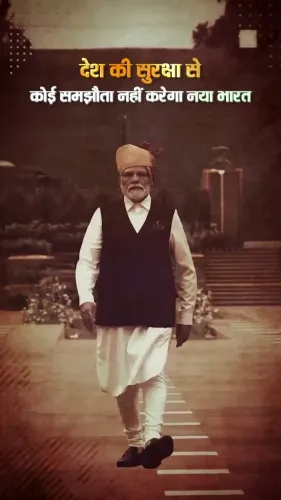
Bihar Chief Minister Samrat Choudhary saluted Indian security forces on November 18, 2026, praising a successful counter-terrorism campaign and reaffirming PM Modi's Zero Tolerance doctrine, crediting the leadership of both Modi and Home Minister Amit Shah.
Key Takeaways
Bihar Chief Minister Samrat Choudhary posted on X on November 18, 2026 , saluting Indian security forces for a successful counter-terrorism campaign.
He explicitly named Prime Minister Narendra Modi and Home Minister Amit Shah as the political architects behind the operation's success.
The post invokes India's Zero Tolerance policy on terrorism, a doctrine in force since at least the 2016 surgical strikes following the Uri attack.
The specific operation referenced has not been publicly identified in official briefings; the operational detail remains unconfirmed.
Choudhary's post underscores how BJP state leaders actively amplify the central government's national security narrative.
The post salutes the soldiers' 'indomitable courage, valour, and coordinated efforts' — framing the military achievement as a matter of national pride.
India's resolve against terrorism has no expiry date — and Bihar Chief Minister Samrat Choudhary made that case loudly on Wednesday, November 18, 2026, saluting the security forces behind what he called a successful counter-terrorism campaign and crediting the political leadership that ordered it.
Posting on X in Hindi, CM Choudhary wrote: 'आतंकवाद के विरुद्ध भारत का संकल्प अटल है।' ('India's resolve against terrorism is unshakeable.') He added that those who challenge the country's peace and security 'now have no safe haven left' — invoking the government's declared Zero Tolerance policy on terror in direct terms.
Modi and Shah named as architects of the campaign
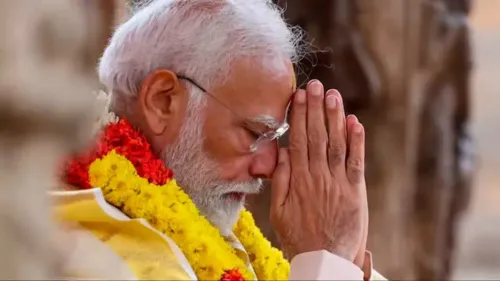
Choudhary attributed the operation's success explicitly to Prime Minister Narendra Modi's 'skilled leadership' and Union Home Minister Amit Shah's 'firm resolve.' The pairing is deliberate: Modi sets the strategic posture while Shah, as the minister responsible for internal security and counter-terrorism coordination, oversees the operational machinery. Together, Choudhary argued, they have committed India to dismantling 'every network of terror.'
The post carries a tone of institutional pride rather than political point-scoring — the longest passage is a salute to the soldiers themselves, whose 'indomitable courage, valour, and coordinated efforts' demonstrated the Zero Tolerance doctrine in action. 'उनके पराक्रम को नमन।' ('I bow to their valor.') The closing line — 'जय हिंद!' — is a standard patriotic sign-off, but in this context it reads as a full stop on a statement about national security rather than a ceremonial pleasantry.
Zero Tolerance: a doctrine with teeth since 2016
The phrase 'Zero Tolerance on terrorism' is not new — it has anchored Indian security discourse since at least 2016, when India carried out surgical strikes across the Line of Control following the Uri attack. The doctrine was reinforced in February 2019 with the Balakot airstrike after the Pulwama attack, and later that year with the abrogation of Article 370, which the government framed in part as a structural blow to separatist and terrorist networks in Jammu and Kashmir.
What Choudhary's post does not specify — and what official briefings have yet to publicly confirm — is the exact operation or campaign being saluted. The reference to a 'successful campaign' is the signal; the operational detail remains in official channels. That gap is worth watching: when government press briefings follow, they will fill in what a senior ruling-party chief minister has already declared a victory.
A Bihar CM in the national security conversation
It is notable that the voice here belongs to a state chief minister, not a defence or home ministry spokesperson. Choudhary's post is a reminder that for the BJP's federal leadership, counter-terrorism is a unifying national narrative — one that state leaders are expected to amplify, not leave to Delhi alone. A grateful nation, he wrote, is proud of its brave security sentinels: 'कृतज्ञ राष्ट्र को अपने वीर सुरक्षा प्रहरियों पर गर्व है।'
The soldiers on the ground delivered the result. The political architecture — a decade-long doctrine, legislative changes, and a chain of command from the Prime Minister to the paramilitary — built the conditions for it. That, in essence, is the argument Samrat Choudhary is making from Patna to the national stage.
Point of View
Not merely a central-government talking point. The unanswered question is what specific campaign triggered the post; when official details emerge, they will be received against a backdrop that senior party figures have already framed as a vindication of decade-long policy.
NationPress
18 Nov 2026
Frequently Asked Questions
What did Bihar CM Samrat Choudhary say about terrorism on November 18 2026?
Choudhary posted on X praising Indian security forces for a successful counter-terrorism campaign, declaring that those who challenge India's peace and security 'now have no safe haven,' and crediting PM Modi's leadership and Home Minister Amit Shah's resolve.
What is India's Zero Tolerance policy on terrorism?
India's Zero Tolerance policy on terrorism refers to the government's declared stance of pursuing and dismantling terrorist networks without compromise, backed by actions including the 2016 surgical strikes, the 2019 Balakot airstrike, and legislation targeting terror financing and networks.
What is Amit Shah's role in India's counter-terrorism operations?
As Union Home Minister, Amit Shah oversees internal security, counter-terrorism coordination, and related legislation, making him the key cabinet-level figure responsible for the operational framework of domestic and cross-border counter-terrorism actions.
Which operations define India's Zero Tolerance approach to terrorism?
Key milestones include the 2016 surgical strikes across the Line of Control after the Uri attack, the February 2019 Balakot airstrike following the Pulwama attack, and the abrogation of Article 370 in Jammu and Kashmir in 2019.
Why is a Bihar chief minister commenting on national security?
BJP state chief ministers routinely amplify the party's central government narrative on national security as part of a coordinated political strategy; it positions counter-terrorism as a shared national achievement rather than a Delhi-centric talking point.