CM Samrat Choudhary Launches Bihar Vigilance Week, Announces Anti-Graft Courts

Synopsis
Bihar Chief Minister Samrat Choudhary inaugurated Vigilance Awareness Week at Gyan Bhawan, Patna on 2 July 2026, announcing Special Vigilance Courts in new divisions, vigilance police stations in every district, witness transport allowances, and zero-tolerance action against corruption at all levels including ministers and legislators.
Key Takeaways
Special Vigilance Courts will be established in all newly formed divisions of Bihar for fast-track disposal of corruption cases.
A Vigilance Police Station will be set up in every district, with Vigilance Outposts in every sub-division.
Government witnesses in criminal and economic offence cases will receive transport allowance to encourage participation in trials.
The Economic Offences Unit and Vigilance Investigation Bureau will be upgraded with modern, specialist-based methods.
Properties confiscated from corrupt individuals will be repurposed to run schools .
Zero-tolerance action will apply to anyone involved in corruption, including ministers and legislators , without discrimination.
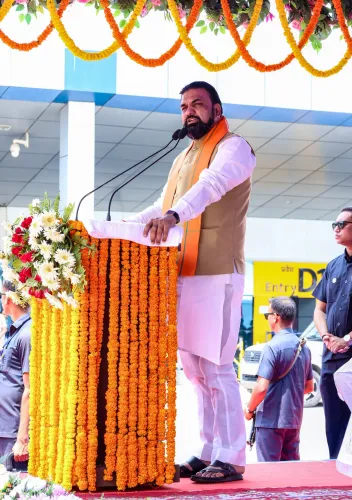
Bihar Chief Minister Samrat Choudhary on Thursday, 2 July 2026, inaugurated the Bihar Vigilance Awareness Day and Vigilance Awareness Week at Gyan Bhawan, Patna, announcing a sweeping set of institutional reforms aimed at accelerating action against corruption across the state.
Context
Addressing the gathering, CM Choudhary announced the establishment of Special Vigilance Courts in all newly formed divisions of the state — fast-track judicial bodies intended to ensure swift disposal of corruption cases. He also declared that a Vigilance Police Station would be set up in every district, and Vigilance Outposts (OPs) would be created in every sub-division, significantly deepening the state's anti-corruption infrastructure at the grassroots level.
The Chief Minister stated that the government would provide transport allowance to government witnesses in criminal and economic offence cases — a practical step to reduce witness attrition, which has long hampered prosecution in corruption trials.
Policy Backdrop
India has observed Vigilance Awareness Week annually since 2000 under the framework of the Central Vigilance Commission, with the primary goal of promoting preventive vigilance and public integrity. Bihar's state-level observance aligns with this national tradition while layering additional institutional capacity on top of existing statutes such as the Prevention of Corruption Act.
CM Choudhary announced that the Economic Offences Unit and the Vigilance Investigation Bureau would be strengthened with modern, specialist-based operational methods — signalling a technology-led upgrade to agencies that have historically operated with conventional investigative tools. Several other states have pursued similar institutional layering in recent years to improve conviction rates in corruption cases.
Stakeholders and Impact
The reforms carry direct implications for government officials, elected representatives, and ordinary citizens across Bihar. In a pointed statement, CM Choudhary made clear that strict action would be taken without discrimination against anyone involved in corruption — explicitly including mantriyon, vidhayakon evam sheersh se lekar nichle star tak (ministers, legislators, and individuals from the top to the bottom of the hierarchy).
A particularly striking announcement was the initiative to run schools in properties confiscated from corrupt individuals — a symbolic and practical repurposing of ill-gotten assets for public good. Witnesses in criminal and economic offence cases will also benefit directly from the new transport allowance provision, potentially improving their participation in proceedings.
What's Next
The key test will be the operationalisation timeline for the new vigilance police stations, sub-divisional outposts, and special courts across Bihar's districts and divisions. Observers will watch whether case disposal rates in corruption matters improve measurably once the new institutional framework is in place.
The use of confiscated premises for school operations will also require coordinated follow-through between the vigilance and education departments. CM Choudhary's explicit inclusion of elected officials in the zero-tolerance mandate sets a high political benchmark — one that will be scrutinised closely in the months ahead as the new institutions begin functioning.
Point of View
Police infrastructure, and witness support mechanisms simultaneously. The explicit inclusion of ministers and legislators in the zero-tolerance mandate is politically significant, as it raises the cost of selective enforcement and sets a public accountability standard the government will be judged against. The school-in-confiscated-property initiative is a reputational signal as much as a policy measure, framing anti-corruption action as directly generative of public good. Whether these announcements translate into operational institutions will determine whether this marks a genuine inflection point in Bihar's governance trajectory or remains a well-publicised intent.
NationPress
2 Jul 2026
Frequently Asked Questions
What is Bihar Vigilance Awareness Week?
Bihar Vigilance Awareness Week is an annual state-level observance aimed at promoting integrity and public awareness against corruption, aligned with the national Vigilance Awareness Week observed since 2000 under the Central Vigilance Commission.
What did CM Samrat Choudhary announce at the Bihar Vigilance Awareness Week 2026?
CM Samrat Choudhary announced the establishment of Special Vigilance Courts in new divisions, vigilance police stations in every district, vigilance outposts in every sub-division, transport allowance for government witnesses, upgrades to the Economic Offences Unit and Vigilance Investigation Bureau, and a plan to run schools in confiscated properties.
Where was Bihar Vigilance Awareness Week 2026 inaugurated?
The event was inaugurated at Gyan Bhawan in Patna, a prominent state government auditorium used for official functions.
Will Bihar's anti-corruption action apply to politicians and ministers?
Yes. CM Samrat Choudhary explicitly stated that strict action would be taken without discrimination against anyone involved in corruption, including ministers and legislators at all levels.
What is the Special Vigilance Court in Bihar?
Special Vigilance Courts are proposed fast-track judicial bodies to be set up in Bihar's newly created divisions to ensure swift disposal of corruption and vigilance cases.