Bihar CM Samrat Choudhary Vows Zero Tolerance on Crimes Against Women
Synopsis
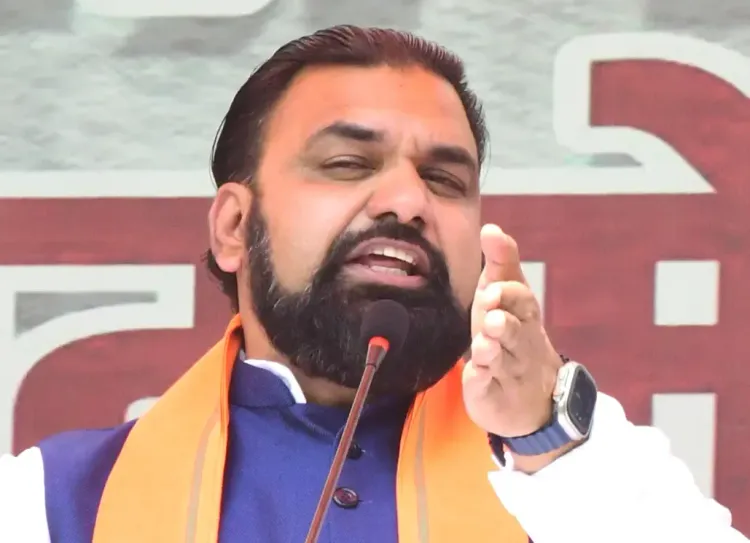
Bihar CM Samrat Choudhary, during the Assembly trust vote, pledged CMO-level oversight of police stations and block offices, zero tolerance on crimes against women, Rs 8 lakh road accident compensation, and block-level model schools — outlining one of Bihar's most comprehensive grassroots governance agendas in recent memory.
Key Takeaways
Bihar CM Samrat Choudhary announced CMO-level direct oversight of block offices, Anchal revenue offices, and police stations during the Bihar Legislative Assembly Vote of Confidence on April 25, 2025 .
The Chief Minister issued a zero-tolerance warning on crimes against women, stating Bihar Police will pursue perpetrators regardless of where they hide.
Road accident fatality compensation has been enhanced to Rs 8 lakh — Rs 4 lakh from insurance companies and Rs 4 lakh from the Bihar state government .
The government plans to establish model schools at the block level and modernise district schools, with approximately 5 lakh teachers already recruited.
Digital governance reforms including the Bihar Land Portal , e-Mutation , and e-Mapi systems are being expanded to improve land administration transparency.
The announcements signal a governance roadmap focused on administrative accountability, women's safety, welfare measures, and education reforms across Bihar.
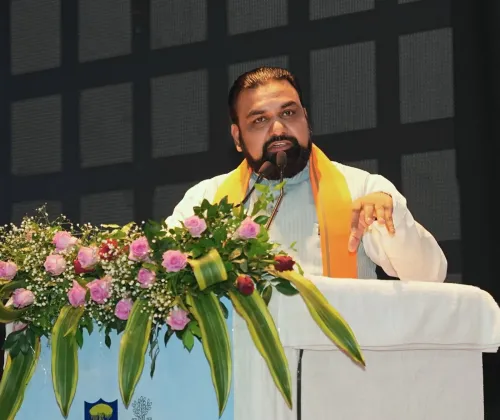
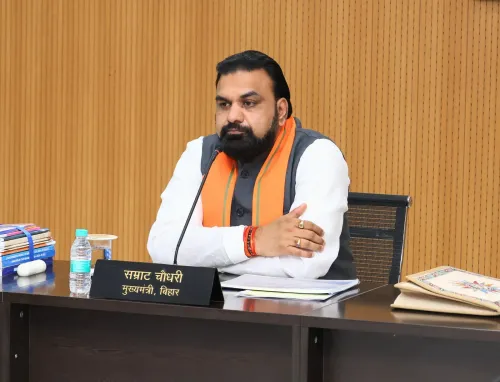
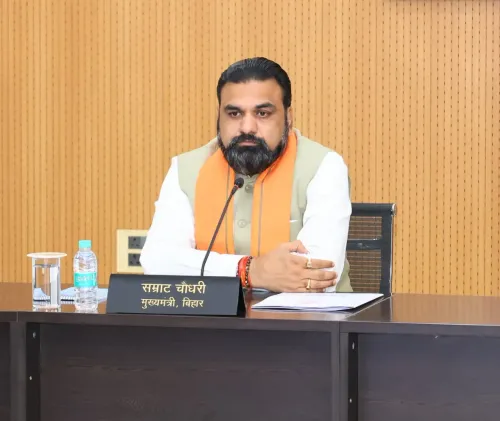
Patna, April 25: Bihar Chief Minister Samrat Choudhary delivered a sweeping governance pledge on Friday, April 25, during the Vote of Confidence in the Bihar Legislative Assembly, promising iron-fisted action against crimes targeting women and announcing direct Chief Minister's Office (CMO) supervision over block offices, revenue circles, and police stations across the state. The address laid out an ambitious administrative roadmap aimed at transforming grassroots governance in one of India's most populous states.
CMO to Directly Oversee Block, Anchal, and Police Station Administration
Choudhary announced that his office will exercise complete operational control over three critical administrative units — block offices, Anchal (revenue) offices, and police stations. This centralised oversight model is designed to eliminate bureaucratic delays, ensure timely delivery of public services, and fix accountability at the ground level.
The move is significant because historically, these three tiers have been the most common points of citizen grievance in Bihar — from delayed land mutation to slow police response. By bringing them under direct CMO watch, the government is signalling a structural shift in how state administration functions.
He reiterated that citizens will no longer face unnecessary delays in accessing essential government amenities — a promise that, if implemented, could meaningfully impact daily life for millions of rural residents.
Zero Tolerance Warning on Atrocities Against Women
In one of the most forceful statements of his address, CM Choudhary issued a stark warning to perpetrators of crimes against women. "Anyone who commits atrocities against women will be tracked down by our police, even if they hide in the deepest depths of the earth. No one will be spared," he declared before the assembly.
He reaffirmed full confidence in the Bihar Police, stating that strict and swift action will be taken against criminals — particularly those who target women. This comes amid persistent concerns about women's safety in the state, where high-profile cases have repeatedly drawn national attention and demands for systemic reform.
Notably, Bihar has faced scrutiny over its crime-against-women statistics in recent years, with advocacy groups and opposition parties frequently citing National Crime Records Bureau (NCRB) data to challenge the government's law-and-order narrative. The CM's firm stance during the trust vote signals a deliberate attempt to reframe the state's image on this front.
Rs 8 Lakh Compensation for Road Accident Fatalities
In a significant welfare announcement, Choudhary revealed enhanced compensation of Rs 8 lakh for families of road accident victims. Under the revised framework, Rs 4 lakh will be disbursed by insurance companies and an additional Rs 4 lakh will be contributed directly by the Bihar state government.
The decision came in direct response to repeated demands from Members of the Legislative Assembly (MLAs) who had pressed the government to strengthen financial support for bereaved families. Bihar consistently ranks among the states with the highest road accident fatalities in India, making this compensation hike a practically consequential measure for thousands of families each year.
"We have now ensured that families affected by road accidents receive proper compensation through both insurance and government support," the Chief Minister stated.
Education Reforms: Model Schools, Teacher Recruitment, and Nitish Kumar's Vision
Referencing the broader vision of former Chief Minister Nitish Kumar, Choudhary outlined plans to establish model schools at the block level, modernise district-level schools, and strengthen the state's public education infrastructure from the ground up.
He set an aspirational benchmark — building public schools of such quality that "even children of officials and ministers will voluntarily choose government schools." The statement is a pointed acknowledgement of a long-standing irony: government officials who shape public education policy routinely enroll their own children in private institutions.
The Bihar government has already recruited approximately 5 lakh teachers, one of the largest teacher recruitment drives in the state's history. Choudhary pledged to continue strengthening the education ecosystem, building on this foundation.
Digital Governance and Land Reform Initiatives
The Chief Minister also highlighted ongoing digital governance reforms, including the Bihar Land Portal, e-Mutation services, and e-Measurement (e-Mapi) systems — all aimed at reducing corruption and delays in land-related transactions, a historically contentious area in the state.
These technology-driven reforms, if scaled effectively, could reduce citizen dependence on middlemen and local bureaucrats — directly addressing one of the most common sources of public grievance in rural Bihar. The integration of digital tools with CMO-level oversight could create a more transparent and accountable administrative chain.
As the newly sworn-in government consolidates its position following the trust vote, all eyes will be on whether these commitments translate into measurable outcomes on the ground — particularly on women's safety, road accident compensation disbursement, and the pace of school modernisation across Bihar's districts in the months ahead.
Point of View
Yet NCRB data and ground realities have repeatedly told a different story. The Rs 8 lakh road accident compensation is a tangible, verifiable commitment — and it will be an early litmus test of this government's follow-through. If the digital land reforms and school modernisation agenda are executed with even half the ambition displayed in this address, Bihar's governance trajectory could genuinely shift — but accountability, not rhetoric, will be the real measure.
NationPress
20 Sept 2026
Frequently Asked Questions
What did Bihar CM Samrat Choudhary announce during the Vote of Confidence?
Bihar CM Samrat Choudhary announced CMO-level direct oversight of block offices, Anchal revenue offices, and police stations to ensure grassroots accountability. He also pledged zero tolerance on crimes against women, Rs 8 lakh compensation for road accident fatalities, and block-level model schools.
What is the new road accident compensation amount announced in Bihar?
The Bihar government has enhanced road accident fatality compensation to Rs 8 lakh — Rs 4 lakh from insurance companies and Rs 4 lakh from the state government. This decision was taken following repeated demands from MLAs to strengthen financial support for victims' families.
How will the Bihar CMO oversee police stations and block offices?
Chief Minister Samrat Choudhary announced that the Chief Minister's Office will directly monitor block offices, Anchal (revenue) offices, and police stations to ensure timely public service delivery and administrative accountability. The move is aimed at eliminating bureaucratic delays at the grassroots level.
What are Bihar's education reform plans announced by CM Choudhary?
CM Choudhary announced plans to establish model schools at the block level, modernise district schools, and strengthen public education infrastructure, referencing Nitish Kumar's vision. The government has already recruited approximately 5 lakh teachers and plans to continue expanding the education system.
What digital governance reforms has the Bihar government introduced?
The Bihar government has introduced the Bihar Land Portal, e-Mutation services, and e-Measurement (e-Mapi) systems to digitise land-related transactions and reduce corruption. These reforms aim to reduce citizen dependence on middlemen and improve transparency in revenue administration.