CM Samrat Choudhary pays tribute to Birsa Munda on Jayanti
Synopsis
Bihar Chief Minister Samrat Choudhary marked Janjatiya Gaurav Divas on November 15 with a tribute to Birsa Munda, hailing the tribal freedom fighter's courage and sacrifice as an enduring inspiration for future generations.
Key Takeaways
Bihar CM Samrat Choudhary posted a tribute to Birsa Munda on November 15, 2026 — his birth anniversary.
Birsa Munda (born 1875 ) led the Ulgulan uprising in the Chota Nagpur region against British colonial rule and died at 25 in Ranchi Jail .
The Union government declared November 15 as Janjatiya Gaurav Divas in 2021 to honour tribal contributions to India's freedom struggle.
CM Choudhary described Munda as 'a great freedom fighter, a people's hero and pride of tribal society.' BJP leaders routinely mark this day as part of a sustained Adivasi voter outreach across Bihar , Jharkhand and other states.
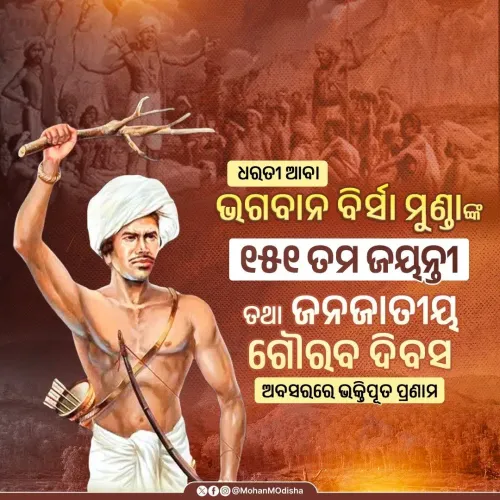
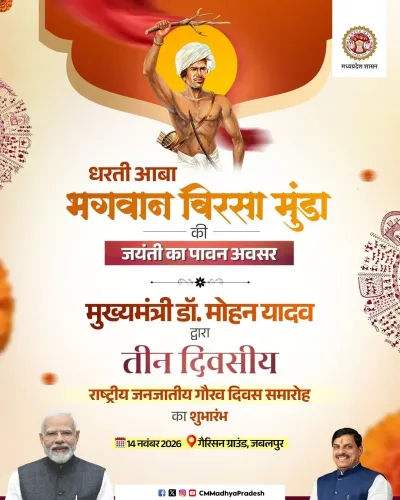
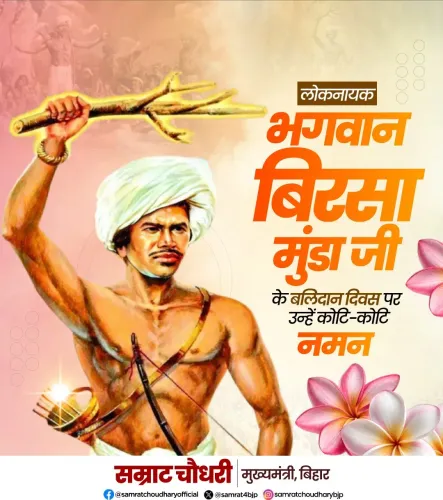
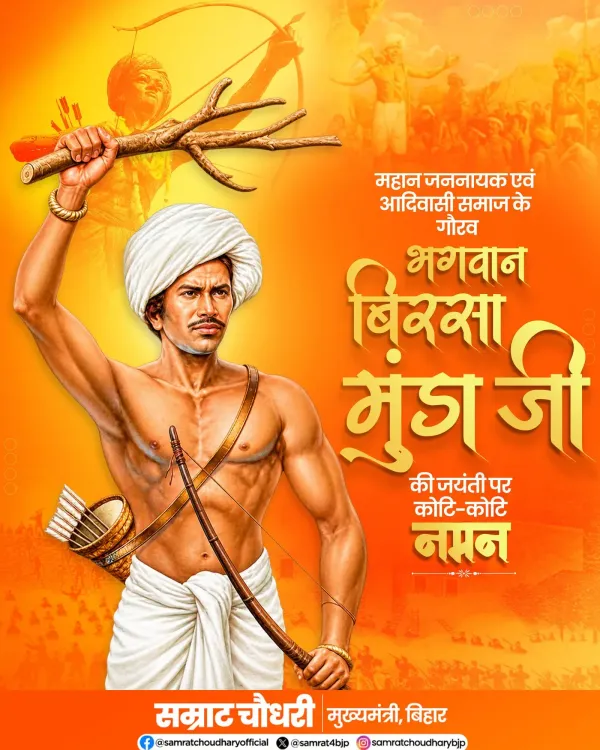
On Janjatiya Gaurav Divas, November 15, Bihar Chief Minister Samrat Choudhary offered his reverence to Birsa Munda — the tribal icon whose defiance of British rule in the late 19th century made him a living legend for India's Adivasi communities.
Posting on X in Hindi, CM Choudhary described Munda as a 'mahan swatantrata senani, jannayak evam janjatiya samaj ka gaurav' — 'a great freedom fighter, a people's hero and pride of tribal society' — and offered 'koti-koti naman', a crore-fold salute. He wrote that Munda's 'struggle, sacrifice and indomitable courage for the nation and society will continue to inspire generations to come.'
Who was Birsa Munda — and why November 15 matters
Birsa Munda was born on November 15, 1875, in the Chota Nagpur region of present-day Jharkhand. He led the Ulgulan — the Great Tumult — a fierce Munda tribal uprising against British land-grab policies and missionary encroachment in the 1890s. Arrested in 1900, he died in Ranchi Jail at just 25 years of age, but his legend endured as the bedrock of Adivasi identity and resistance in the subcontinent.
Recognising that legacy, the Union government in 2021 declared November 15 as Janjatiya Gaurav Divas — National Tribal Pride Day — to honour the contributions of tribal communities to India's freedom struggle. The date anchors the annual national conversation on Adivasi history and rights.
BJP's sustained tribal outreach — from Delhi to Patna
CM Choudhary's tribute is part of a consistent pattern: BJP leaders across states use Birsa Munda Jayanti as an occasion to foreground tribal icons within the mainstream independence narrative. For Bihar — which shares deep historical and demographic ties with neighbouring Jharkhand, carved out of it in 2000 — the day carries particular resonance, with significant Adivasi populations in districts like Gaya, Jamui and Lakhisarai. The annual commemoration has become a visible pillar of the party's sustained outreach to Adivasi voters across the eastern Indian belt.
Birsa Munda's face now graces the Parliament's Central Hall after Prime Minister Modi unveiled his portrait there in 2022, a symbolic moment that cemented his place alongside the founding figures of the republic. His memory is no longer just regional folklore — it is national currency.
Whether the Bihar government follows today's tribute with concrete welfare announcements tied to tribal development will be the real signal to watch before the day is out.
Point of View
With its pockets of significant Adivasi population and proximity to Jharkhand, such public reverence doubles as political signalling to a constituency the party has actively courted. The gesture also reflects how Birsa Munda has been elevated from a regional hero to a national founding figure, his portrait now installed in Parliament's Central Hall. The real test of intent, however, lies in whether the symbolic tributes are followed by substantive tribal welfare policy announcements.
NationPress
15 Nov 2026
Frequently Asked Questions
Why is November 15 celebrated as Janjatiya Gaurav Divas?
November 15 is celebrated as Janjatiya Gaurav Divas because it is the birth anniversary of tribal freedom fighter Birsa Munda. The Union government declared this national day in 2021 to honour the contributions of tribal communities to India's independence struggle.
Who was Birsa Munda?
Birsa Munda was a tribal leader born on November 15, 1875, in the Chota Nagpur region. He led the Munda uprising known as the Ulgulan against British land policies and died at age 25 in Ranchi Jail in 1900. He is revered as a symbol of Adivasi resistance.
What did Bihar CM Samrat Choudhary say about Birsa Munda?
CM Samrat Choudhary described Birsa Munda as a great freedom fighter, a people's hero and the pride of tribal society. He said Munda's struggle, sacrifice and indomitable courage for the nation and society will continue to inspire generations to come.
What is Samrat Choudhary's political role?
Samrat Choudhary is the Chief Minister of Bihar and a senior leader of the Bharatiya Janata Party (BJP).
How does the BJP mark Birsa Munda Jayanti every year?
BJP leaders and governments across states issue public tributes on Birsa Munda Jayanti, observed as Janjatiya Gaurav Divas. This is part of a sustained political outreach to Adivasi communities in states like Bihar, Jharkhand and others in eastern India.