CM Samrat Choudhary pays tribute to Gopal Hari Deshmukh on death anniversary
Synopsis
Bihar Chief Minister Samrat Choudhary honoured 19th-century Maharashtra social reformer Gopal Hari Deshmukh on his death anniversary, praising him as a luminous symbol of truth, courage, and national spirit whose ideas on social awareness remain eternally relevant.
Key Takeaways
Bihar CM Samrat Choudhary paid tribute to Gopal Hari Deshmukh on his death anniversary on October 9, 2026 .
Deshmukh, known as Lokahitawadi , was a pioneering 19th-century Maharashtra social reformer and rationalist thinker.
CM Choudhary described Deshmukh as a 'luminous symbol of truth, courage, and national spirit.' The tribute highlights the cross-regional reverence Deshmukh commands among Indian political leaders today.
Deshmukh's legacy centres on social awareness, opposition to superstition, and advocacy for education and gender equality.
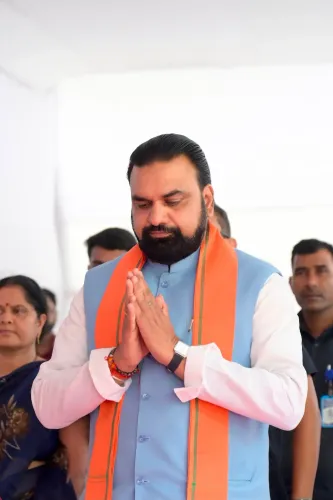
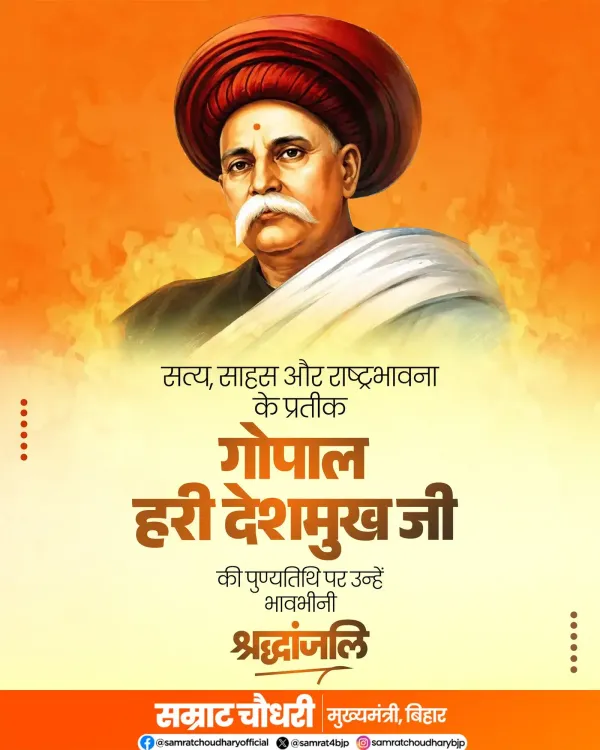
On the death anniversary of Gopal Hari Deshmukh — revered as a bold symbol of truth, courage, and national consciousness — Bihar Chief Minister Samrat Choudhary offered his heartfelt homage on Friday, October 9, 2026, calling Deshmukh's ideas and contributions to social awareness and national interest eternally memorable.
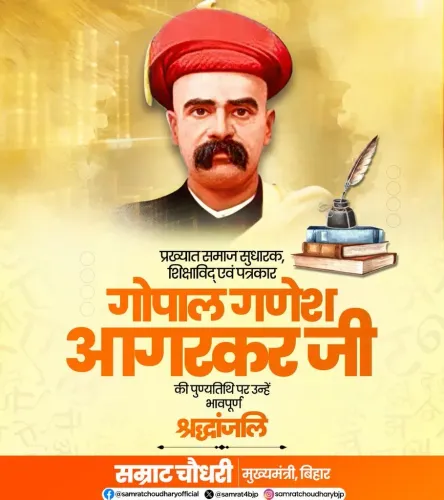
In his post, CM Choudhary wrote: 'Satya, saahas aur rashtrabhaavna ke prakhar pratik Gopal Hari Deshmukh ji ki punyatithi par unhe vinamra shraddhanjali.' — ('A humble tribute to Gopal Hari Deshmukh, the luminous symbol of truth, courage, and national spirit, on his death anniversary. His thoughts and contributions towards social awareness and national interest will always be remembered.')
Who was Gopal Hari Deshmukh?
Gopal Hari Deshmukh, widely known by his pen name Lokahitawadi, was a pioneering 19th-century Maharashtra social reformer, thinker, and writer. He championed rationalism, opposed superstition, and advocated strongly for education, gender equality, and social uplift at a time when such positions demanded real personal courage.
His writings — particularly his celebrated series of essays — laid intellectual groundwork for the broader social reform movement that would shape modern Indian society. He remains a revered figure in Maharashtra's reform tradition, remembered alongside contemporaries who challenged entrenched orthodoxy in the name of reason and public welfare.
A Bihar CM's salute to a Maharashtra reformer
That a Chief Minister rooted in Bihar's political landscape chose to publicly honour a Maharashtrian reform icon speaks to the cross-regional resonance that 19th-century social reformers continue to hold in Indian public life. For leaders across the BJP, invoking figures like Deshmukh serves as a reminder of the civilisational breadth of India's reform inheritance — one that stretches well beyond any single state or community.
CM Choudhary's tribute is brief but deliberate: the three attributes he highlights — truth, courage, and national spirit — are precisely the qualities Deshmukh embodied when he used his pen to challenge the social order of colonial India.
Point of View
The CM signals a pan-Indian ideological identity that transcends regional boundaries. Deshmukh's emphasis on reason, nation, and social awakening maps neatly onto the vocabulary BJP leaders frequently deploy. Such commemorations, while ceremonial in form, are rarely accidental in political timing or symbolic content.
NationPress
9 Oct 2026
Frequently Asked Questions
Who was Gopal Hari Deshmukh?
Gopal Hari Deshmukh, pen name Lokahitawadi, was a pioneering 19th-century Maharashtra social reformer, rationalist writer, and thinker who advocated for education, gender equality, and the end of superstition in colonial India.
Why is Gopal Hari Deshmukh remembered?
He is remembered for his influential reform essays, his championing of reason over orthodoxy, and his contributions to social awareness that helped shape the modern Indian reform movement.
What did Bihar CM Samrat Choudhary say about Gopal Hari Deshmukh?
CM Choudhary called Deshmukh a 'luminous symbol of truth, courage, and national spirit' and said his thoughts and contributions to social awareness and national interest will always be remembered.
When is Gopal Hari Deshmukh's death anniversary?
Gopal Hari Deshmukh's death anniversary falls on October 9, marked annually by tributes from political and social figures across India.
Who is Samrat Choudhary?
Samrat Choudhary is the Chief Minister of Bihar and a senior BJP leader, currently serving as the head of the Bihar state government.