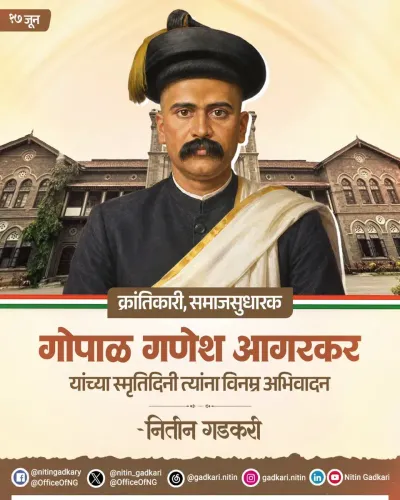
CM Samrat Choudhary Pays Tribute to Gopal Ganesh Agarkar
Synopsis
Bihar Chief Minister Samrat Choudhary marked the Punyatithi of Gopal Ganesh Agarkar on 17 June 2026, saluting the 19th-century Maharashtra reformer's lasting contributions to education, social reform and rationalist journalism.
Key Takeaways
Bihar Chief Minister Samrat Choudhary posted a tribute to Gopal Ganesh Agarkar on his death anniversary on 17 June 2026 .
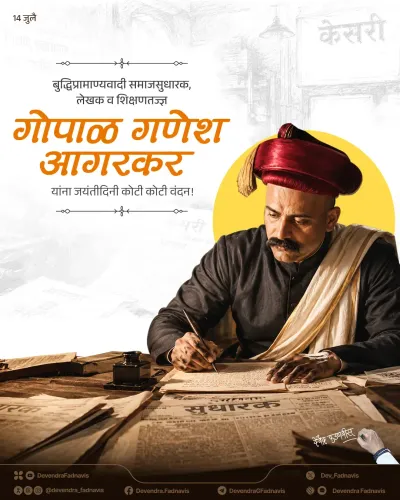
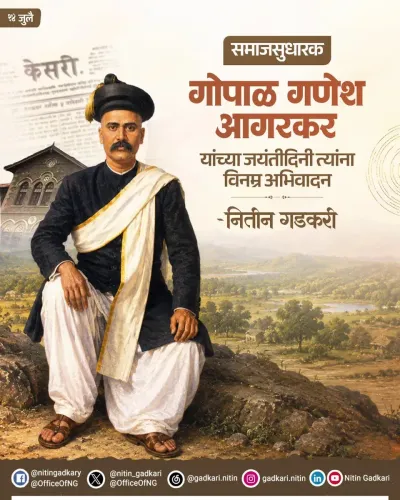
Gopal Ganesh Agarkar (1856–1895) was a co-founder of the Deccan Education Society and editor of the Marathi journal Sudharak .
Agarkar championed rationalism, women's education and caste reform in 19th-century Maharashtra .
The tribute is part of a wider pattern of BJP leaders linking party governance to pre-independence reform legacies.
No new Bihar government scheme or event was announced in connection with the tribute.
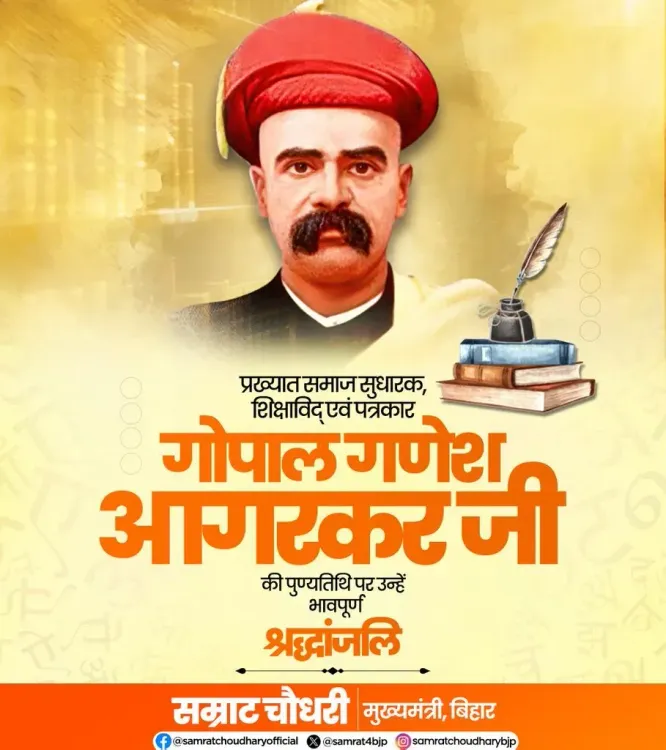
Bihar Chief Minister Samrat Choudhary on Wednesday, 17 June 2026, paid homage to Gopal Ganesh Agarkar on his death anniversary (Punyatithi), honouring the 19th-century Maharashtra social reformer, educationist and journalist for his enduring contributions to rationalist thought and social equality.
Posting in Hindi, CM Choudhary wrote: 'On the death anniversary of the eminent social reformer, educationist and journalist Gopal Ganesh Agarkar, I offer my humble tribute. His invaluable contribution in the fields of education, social reform and awareness will always be remembered. His progressive ideas continue to show society a new direction even today.'
Context
Gopal Ganesh Agarkar (1856–1895) was one of the most consequential voices of the 19th-century Maharashtra reform movement. He co-founded the Deccan Education Society alongside Bal Gangadhar Tilak and championed rationalism, women's education, and the dismantling of caste-based discrimination at a time when such positions carried significant social risk.
Agarkar edited the Marathi journal Sudharak ('Reformer'), through which he argued that social reform must precede political independence — a stance that placed him in philosophical tension with Tilak's priority of swaraj first. His legacy remains a touchstone for educators and progressive thinkers across India.
Policy Backdrop
Indian elected representatives across party lines regularly observe the Punyatithis of 19th-century reformers, situating contemporary governance within a lineage of pre-independence progressive thought. For BJP leaders in particular, such tributes form part of a broader cultural outreach that links party governance to figures associated with education reform and social uplift.
Bihar, a state with historically significant movements around social justice and educational access, has seen successive governments invoke reformist legacies to frame education and welfare policy. CM Choudhary's tribute reflects this established pattern of political commemoration.
Stakeholders and Impact
Agarkar's intellectual legacy is of particular relevance to students, educators and civil society organisations working on gender equity and caste reform in India. His advocacy for universal education and rational inquiry continues to inform curriculum debates and social reform discourse in Maharashtra and beyond.
Tributes from senior political figures help sustain public awareness of reformers whose contributions risk being overshadowed by more widely commemorated contemporaries. CM Choudhary's post amplifies Agarkar's profile among a younger, digitally connected audience in Bihar and across the country.
What's Next
While no direct link to a new Bihar government scheme or event has been announced alongside this tribute, the broader political calendar — including upcoming education budget discussions at the state level — may see references to 19th-century reform legacies. Observers will watch whether such commemorations translate into programmatic announcements around education access or social equity in the months ahead.
Agarkar's Punyatithi serves as an annual occasion for institutions associated with the Deccan Education Society and Maharashtra's reform tradition to renew focus on his vision — a conversation that senior leaders across India increasingly choose to join.
Point of View
Given ongoing debates about educational access in Bihar. The tribute signals that the ruling dispensation in Patna is attentive to Maharashtra's reform heritage, potentially ahead of coalition or outreach considerations. Whether the symbolism translates into substantive education policy will be the measure by which observers assess its political weight.
NationPress
15 Sept 2026
Frequently Asked Questions
Who was Gopal Ganesh Agarkar?
Gopal Ganesh Agarkar (1856–1895) was a prominent Maharashtra social reformer, educationist and journalist who co-founded the Deccan Education Society with Bal Gangadhar Tilak and edited the Marathi reform journal Sudharak. He advocated for rationalism, women's education and the abolition of caste discrimination.
Why did Bihar CM Samrat Choudhary pay tribute to Agarkar?
CM Choudhary posted a tribute on 17 June 2026 to mark Agarkar's Punyatithi (death anniversary), honouring his contributions to education, social reform and journalism. Such commemorations by elected leaders are a common way of aligning governance with progressive reform legacies.
What is the Deccan Education Society and what was Agarkar's role?
The Deccan Education Society was founded in 1884 in Pune by Gopal Ganesh Agarkar, Bal Gangadhar Tilak and others to promote modern education in Maharashtra. Agarkar served as a key intellectual force within the society, prioritising social reform alongside academic advancement.
What did Agarkar argue in the journal Sudharak?
In Sudharak, Agarkar argued that social reform — including the removal of caste barriers and the education of women — must take precedence over the political goal of independence, a position that distinguished him from contemporaries like Tilak who placed swaraj first.
Is there a new Bihar government scheme linked to this tribute?
No new Bihar government scheme or official event has been announced in connection with CM Choudhary's tribute to Agarkar on 17 June 2026. The post is a commemorative tribute on the reformer's death anniversary.