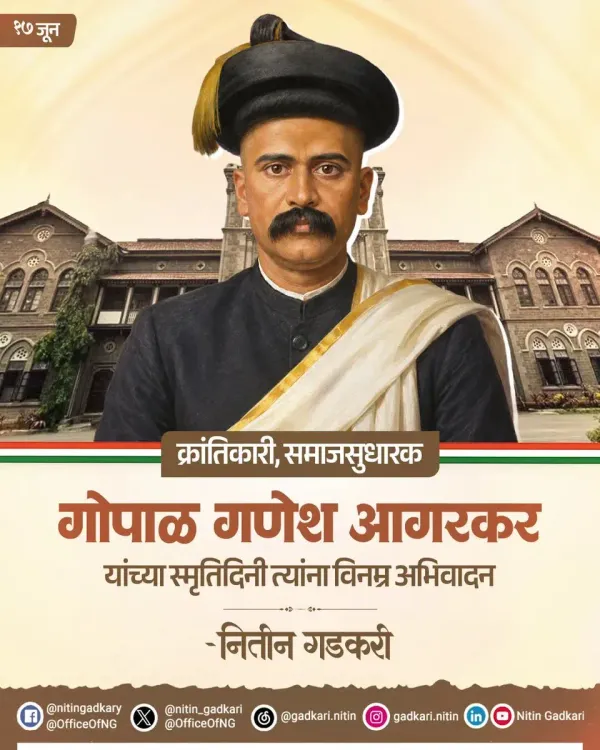
Gadkari pays tribute to reformer Gopal Ganesh Agarkar
Synopsis
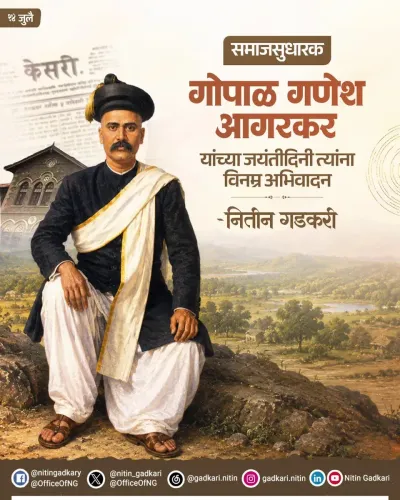
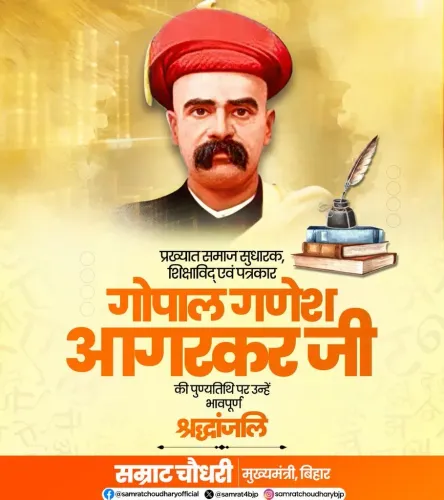
Union Minister Nitin Gadkari on 17 June 2026 paid tribute to 19th-century Maharashtrian reformer Gopal Ganesh Agarkar on his death anniversary, honouring his legacy of social equality, gender parity, and scientific rationalism in a Marathi post on X.
Key Takeaways
Union Minister Nitin Gadkari posted a tribute to Gopal Ganesh Agarkar on his death anniversary on 17 June 2026 .
The tribute was written in Marathi and highlighted Agarkar's values of social equality, gender equality, and scientific thinking.
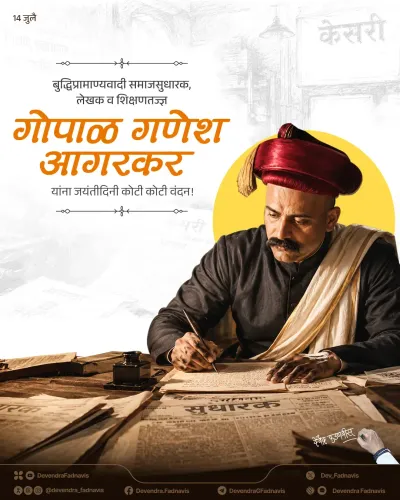
Gopal Ganesh Agarkar (1856–1895) co-founded the Deccan Education Society and launched the reformist journal Sudharak .
Agarkar advocated social reform — including caste abolition and women's rights — as a prerequisite for political freedom.
Senior BJP leaders from Maharashtra regularly invoke 19th-century reformers as part of the party's regional outreach strategy.
Commemorative events are expected in Pune and Nagpur around the anniversary.
Union Road Transport and Highways Minister Nitin Gadkari on Wednesday, 17 June 2026, paid homage to Gopal Ganesh Agarkar, the 19th-century Maharashtrian social reformer, on his death anniversary, honouring his legacy of social equality, gender parity, and scientific rationalism.
Context
Gadkari posted his tribute in Marathi, writing: 'क्रांतिकारी समाजसुधारक गोपाळ गणेश आगरकर यांच्या स्मृतिदिनी त्यांना विनम्र अभिवादन' ('A humble salute to revolutionary social reformer Gopal Ganesh Agarkar on his death anniversary'). He noted that Agarkar's contributions to the history of modern Maharashtra rest on the foundational values of social equality, gender equality, and scientific thinking.
The post marks Agarkar's smrutidinam (death anniversary), a day observed by reformist circles and cultural organisations across Maharashtra each year.
Who Was Gopal Ganesh Agarkar?
Gopal Ganesh Agarkar (1856–1895) was one of the most consequential social reformers of 19th-century Maharashtra. He co-founded the Deccan Education Society alongside Bal Gangadhar Tilak and others, with a mission to provide affordable, quality education to ordinary Indians. He later launched the Marathi journal Sudharak, which became a platform for his advocacy of rationalism, caste reform, and women's rights.
Unlike many of his contemporaries who prioritised political independence first, Agarkar argued that social reform — dismantling caste hierarchy and superstition — was a prerequisite for genuine freedom. His emphasis on reason over tradition placed him in a distinct intellectual lineage that continues to shape Maharashtra's public discourse.
Policy Backdrop and Political Context
Senior BJP leaders from Maharashtra have periodically issued tributes to 19th-century reformers including Agarkar, Jyotirao Phule, and Shahu Maharaj, framing the party's regional outreach around themes of social equity and rationalism that predate political independence. These gestures are part of a broader effort to engage with Maharashtra's non-Congress reformist legacy.
Gadkari, a senior BJP figure from Nagpur, has a long record of using social media to mark anniversaries of regional historical personalities, reinforcing his identity as a Maharashtra-rooted leader even while serving in a national cabinet role.
Stakeholders and Impact
Agarkar's legacy holds particular resonance for Maharashtrian civil society, academic institutions, and social reform organisations that trace their intellectual lineage to the rationalist tradition he championed. Commemorations on his death anniversary typically draw participation from educational bodies, Dalit and women's rights groups, and progressive cultural organisations across Pune and Nagpur.
Tributes from sitting Union ministers lend national visibility to state-level commemorative observances, reinforcing the continued relevance of 19th-century reformers in contemporary Indian political culture.
What's Next
State-level commemorative events in Pune and Nagpur are expected around Agarkar's anniversary, and his legacy may feature in Maharashtra assembly discussions on social reform curricula and educational policy. As BJP continues to consolidate its presence in Maharashtra ahead of future electoral cycles, the invocation of reformist icons is likely to remain a recurring feature of the party's regional communication strategy.
Point of View
Anti-caste reformer, a senior BJP figure signals ideological breadth in a state where the reformist tradition is a live electoral variable. Maharashtra's political culture has long contested ownership of the Phule-Ambedkar-Agarkar legacy, and BJP's consistent engagement with these anniversaries is part of a deliberate effort to occupy that space. The tribute carries no policy announcement and is therefore low in immediate news value, but it contributes to a cumulative narrative of the party's Maharashtra identity. Analysts will watch whether such messaging translates into concrete policy positions on social reform education or reservation frameworks in the state.
NationPress
24 Sept 2026
Frequently Asked Questions
Who was Gopal Ganesh Agarkar?
Gopal Ganesh Agarkar (1856–1895) was a Maharashtrian social reformer, educationist, and journalist who co-founded the Deccan Education Society and launched the journal Sudharak. He championed social equality, women's education, and scientific rationalism, arguing that social reform must precede political independence.
Why did Nitin Gadkari pay tribute to Agarkar?
Gadkari paid tribute on Agarkar's death anniversary, 17 June 2026, honouring his contributions to modern Maharashtra's history in the areas of social equality, gender parity, and scientific thinking. The post was part of his regular practice of marking anniversaries of regional historical figures on social media.
What is the Deccan Education Society?
The Deccan Education Society was co-founded by Gopal Ganesh Agarkar and Bal Gangadhar Tilak in the 1880s with the aim of providing affordable, quality education to ordinary Indians. It remains an active educational institution in Pune today.
What was Agarkar's journal Sudharak?
Sudharak was a Marathi-language journal launched by Gopal Ganesh Agarkar to advocate for rationalism, caste reform, and women's rights in 19th-century Maharashtra. It positioned Agarkar as a leading voice for social reform over political agitation.
Why do BJP leaders from Maharashtra tribute 19th-century reformers?
Senior BJP figures from Maharashtra regularly pay tribute to reformers like Agarkar, Phule, and Shahu Maharaj as part of a broader strategy to engage with the state's non-Congress reformist legacy and signal the party's commitment to social equity themes that predate independence.