CM Samrat Choudhary shares PM Modi's words on temple heritage revival
Synopsis
Bihar CM Samrat Choudhary shared PM Modi's remarks on his spiritual ties to major Jyotirlingas and the launch of renovation work at a 1,000-1,200-year-old Brahma-Vishnu-Mahesh heritage site, extending the government's temple restoration programme.
Key Takeaways
Bihar CM Samrat Choudhary posted PM Modi's remarks on 8 July 2026 highlighting the government's temple heritage revival agenda.
PM Modi cited personal connections to Hatkeshwar Mahadev in his birthplace Vadnagar , Somnath in Gujarat, and Kashi Vishwanath in Varanasi.
Renovation of a site over 1,000 to 1,200 years old linked to Brahma, Vishnu and Mahesh has been initiated.
Major completed or ongoing projects include Kedarnath reconstruction (post-2013 floods), Kashi Vishwanath Dham Corridor (launched 2018) and Mahakaleshwar Corridor in Ujjain (initiated 2017–2019).
The initiative extends the government's religious tourism infrastructure investment across Gujarat, Uttar Pradesh, Uttarakhand and Madhya Pradesh .
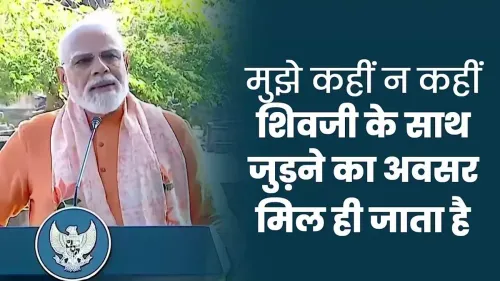
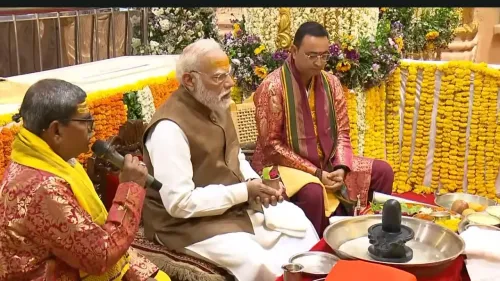
Bihar Chief Minister Samrat Choudhary on Wednesday, 8 July 2026, shared a video on X featuring remarks by Prime Minister Narendra Modi reflecting on his personal and political connection to major Shaivite pilgrimage sites across India, and on the cultural heritage renovation work being undertaken at an ancient site associated with Brahma, Vishnu and Mahesh, believed to be over 1,000 to 1,200 years old.
Context
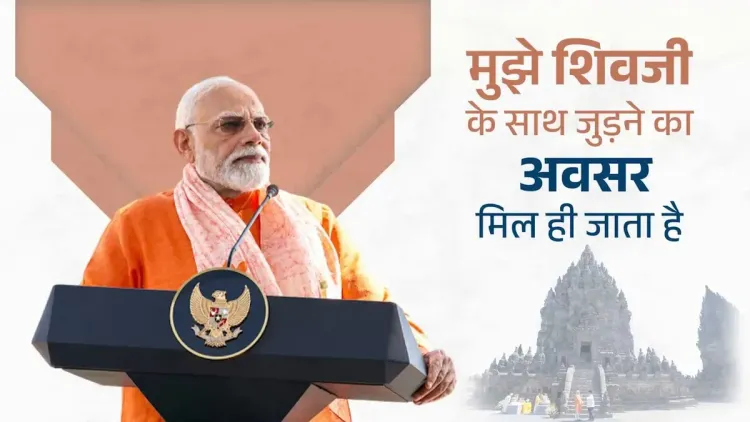
The post quotes PM Modi speaking about his spiritual and administrative ties to several prominent Jyotirlingas. Translated from Hindi, Modi is quoted as saying: 'Ye mera saubhagya hai ki kahin na kahin mujhe Shivji ke saath judne ka avsar mil hi jaata hai' ('It is my good fortune that I always find an opportunity to connect with Lord Shiva in some way or the other'). He traces this connection from his birthplace Vadnagar in Gujarat, home to the Hatkeshwar Mahadev temple, to his political constituency of Varanasi, seat of the Kashi Vishwanath Mahadev.
Modi also references the Somnath Temple in Gujarat — the first among the twelve Jyotirlingas — and notes his 'direct responsibility' in its development. The remarks were made at a site where renovation of a 1,000 to 1,200-year-old cultural heritage linked to the trinity of Brahma, Vishnu and Mahesh is being initiated.
Policy Backdrop
The statement fits within a sustained central government focus on restoring and developing major temple complexes since 2014. The Kedarnath Temple in Uttarakhand — devastated by the 2013 floods — has been a flagship reconstruction project backed by the central government. The Kashi Vishwanath Dham Corridor project was launched in 2018, significantly expanding the precinct around the Varanasi temple.
In Ujjain, Madhya Pradesh, the Mahakaleshwar Corridor development was initiated around 2017–2019, transforming the area around one of the most visited Jyotirlingas. Together, these projects represent a broader pattern of religious tourism infrastructure investment spanning Gujarat, Uttar Pradesh, Uttarakhand and Madhya Pradesh.
Stakeholders and Impact
Hindu devotees and the heritage tourism sector are the primary stakeholders in these restoration efforts. Large-scale corridor and renovation projects at Jyotirlinga sites have historically led to increased footfall, improved pilgrim facilities and a boost to local economies dependent on religious tourism.
The latest site — where an ancient Brahma-Vishnu-Mahesh cultural heritage is being revived — adds another node to the government's temple-circuit development agenda, though its precise location was not specified in the post.
What's Next
The commencement of renovation work at this ancient site signals a potential expansion of the central government's temple heritage programme beyond the established Jyotirlinga corridor projects. Observers will watch for formal announcements on the site's location, funding allocation and projected timelines.
Further integration of Bihar-based heritage sites into national temple tourism circuits remains a possibility, given CM Samrat Choudhary's evident alignment with the cultural heritage agenda being championed at the national level.
Point of View
The post reinforces a well-established BJP electoral and cultural communication strategy that frames governance as spiritual stewardship. The timing of a new heritage renovation announcement — layered on top of Kedarnath, Kashi and Mahakal — suggests the government is broadening its temple-circuit portfolio ahead of potential electoral cycles. For Bihar CM Samrat Choudhary, sharing such content signals ideological solidarity with the national leadership while keeping his own profile visible in the party's cultural-nationalist discourse. The pattern points to temple heritage becoming an increasingly institutionalised pillar of infrastructure policy, not merely a symbolic gesture.
NationPress
8 Jul 2026
Frequently Asked Questions
What did PM Modi say about Jyotirlingas in Samrat Choudhary's post?
PM Modi spoke about his personal and political connections to several Jyotirlingas — including Hatkeshwar Mahadev in Vadnagar, Somnath in Gujarat, and Kashi Vishwanath in Varanasi — and announced the start of renovation work at a 1,000-1,200-year-old Brahma-Vishnu-Mahesh heritage site.
What is the Kashi Vishwanath Dham Corridor?
The Kashi Vishwanath Dham Corridor is a large-scale development project launched in 2018 to expand and modernise the precinct around the Kashi Vishwanath Temple in Varanasi, one of the twelve Jyotirlingas and PM Modi's parliamentary constituency.
Which Jyotirlinga is being renovated as part of the latest announcement?
The post does not specify a named Jyotirlinga; instead it refers to a 1,000-1,200-year-old site associated with Brahma, Vishnu and Mahesh whose renovation work has been initiated. The precise location was not disclosed in the post.
What is Bihar CM Samrat Choudhary's connection to this temple heritage issue?
Bihar CM Samrat Choudhary shared PM Modi's remarks on X on 8 July 2026, aligning his social media presence with the central government's cultural heritage and temple restoration agenda.
Which major temple projects has the central government undertaken since 2014?
Key projects include the Kedarnath Temple reconstruction in Uttarakhand following the 2013 floods, the Kashi Vishwanath Dham Corridor in Varanasi launched in 2018, and the Mahakaleshwar Corridor in Ujjain initiated around 2017–2019.