CM Samrat Choudhary to Launch Major Health Push in Bihar
Synopsis
Bihar CM Samrat Choudhary will inaugurate 105 new ICU beds, 70 ventilator-equipped ICUs, 11 PPP pathology hubs, 221 sample collection centres, and dialysis at 25 sub-divisional hospitals on 22 July 2026, alongside the newly built Guru Gobind Singh Sadar Hospital in Patna City.
Key Takeaways
105 new ICU beds and 70 ventilator-equipped ICU units will be launched across Bihar on 22 July 2026 .
The newly constructed building of Guru Gobind Singh Sadar Hospital (District Hospital), Patna City will be formally inaugurated.
11 PPP-model pathology hubs and 221 sample collection centres will be activated to improve diagnostic access statewide.
Dialysis services will be introduced at 25 sub-divisional hospitals , reducing the burden on patients in rural and semi-urban areas.
The initiative aims to strengthen specialist medical services at district hospitals so residents can access modern care within their own districts.
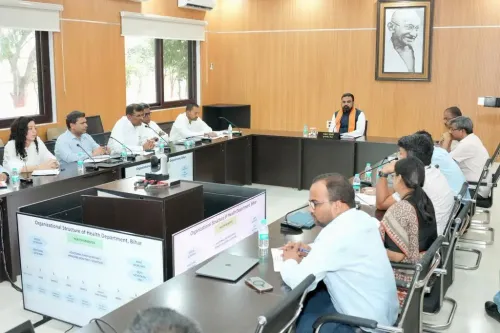
Bihar Chief Minister Samrat Choudhary announced on Tuesday, 22 July 2026, that a sweeping expansion of public healthcare infrastructure will be inaugurated across the state, beginning with the newly constructed building of Guru Gobind Singh Sadar Hospital (District Hospital) in Patna City.
In a post on X, the Chief Minister stated that the launch will introduce modern health facilities and services at the hospital, while simultaneously rolling out 105 new ICU beds, 70 ventilator-equipped ICU units, 11 PPP-model pathology hubs, 221 sample collection centres, and dialysis services at 25 sub-divisional hospitals across Bihar.
Context
The announcement covers a multi-pronged expansion of district-level healthcare in Bihar. The initiative targets both critical-care capacity — through ICU beds and ventilators — and diagnostic access, through pathology hubs and sample collection centres spread across the state.
Dialysis services being extended to 25 sub-divisional hospitals is particularly significant, as kidney disease patients in rural and semi-urban Bihar have historically had to travel to larger cities for regular treatment, placing a severe financial and logistical burden on families.
Policy Backdrop
Bihar has long ranked among India's states with the most strained public health systems, with low doctor-to-patient ratios and limited specialist availability outside Patna. Successive state governments have attempted to bridge this gap through infrastructure investment, and the current dispensation has leaned on the Public-Private Partnership (PPP) model to accelerate diagnostic services without proportionally increasing government expenditure.
The PPP-model pathology hubs announced here follow a broader national pattern of leveraging private operators for diagnostics while keeping services accessible and affordable to the public. The 221 sample collection centres are designed to function as feeder points to these hubs, reducing the need for patients to travel to district headquarters for routine tests.
Stakeholders and Impact
The beneficiaries are primarily residents of Bihar's districts and sub-divisions who currently rely on district hospitals for specialist care. By strengthening specialist medical services at district hospitals, the state aims to reduce the load on tertiary facilities in Patna and cut out-of-pocket expenses for patients who travel long distances.
The Guru Gobind Singh Sadar Hospital in Patna City — distinct from the main Patna district — serves a densely populated, historically underserved urban pocket. Its newly constructed building, equipped with modern facilities, is expected to serve as a model for upgraded district hospitals across the state.
Healthcare workers, particularly specialists who have been reluctant to serve in district hospitals due to inadequate infrastructure, may also find upgraded facilities more conducive to practice, addressing a long-standing staffing challenge in Bihar's public health system.
What's Next
The formal inauguration is scheduled for Wednesday, 23 July 2026. Chief Minister Choudhary's post used the word lokokarpan (public dedication), indicating a ceremonial launch that will formally transfer these facilities to public use.
If the PPP pathology hubs and dialysis centres are operationalised as announced, Bihar's district-level health network will see one of its most significant single-day expansions in recent years — a development that will be closely watched as a test of the state's capacity to sustain and staff newly created infrastructure.
Point of View
Ventilators, PPP diagnostics, and dialysis services in a single announcement signals that the Bihar government is attempting a visible, consolidated healthcare moment ahead of what is likely a politically sensitive period. Anchoring the rollout at the Guru Gobind Singh Sadar Hospital in Patna City — a constituency with a significant Sikh community — carries symbolic weight beyond the administrative. The PPP model for pathology hubs reflects a pragmatic acceptance that the state cannot staff and run diagnostics solely through government machinery, but its long-term success will depend on price regulation and quality oversight. If the infrastructure is sustained and staffed, this could mark a genuine inflection point in Bihar's district-level health delivery; if not, it risks becoming another inauguration without operational follow-through.
NationPress
22 Jul 2026
Frequently Asked Questions
What is being inaugurated by Bihar CM Samrat Choudhary on 22 July 2026?
Bihar CM Samrat Choudhary will inaugurate the new building of Guru Gobind Singh Sadar Hospital in Patna City, along with 105 ICU beds, 70 ventilator-equipped ICUs, 11 PPP pathology hubs, 221 sample collection centres, and dialysis services at 25 sub-divisional hospitals across Bihar.
Where is Guru Gobind Singh Sadar Hospital located?
Guru Gobind Singh Sadar Hospital, also known as the District Hospital, is located in Patna City, Bihar.
What is a PPP pathology hub in Bihar's health scheme?
A PPP (Public-Private Partnership) pathology hub is a diagnostic centre run in collaboration with a private operator but designed to provide affordable testing services to the public, reducing the need for patients to travel to large cities for routine tests.
How will dialysis services at sub-divisional hospitals help Bihar patients?
Kidney disease patients in rural and semi-urban Bihar currently travel to larger cities for regular dialysis. Extending dialysis to 25 sub-divisional hospitals will bring treatment closer to home, reducing travel costs and time for patients who need sessions multiple times a week.
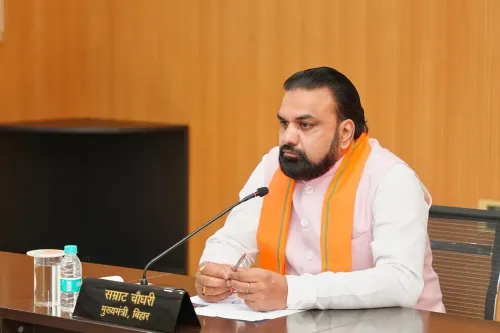
Who is Samrat Choudhary?
Samrat Choudhary is the Chief Minister of Bihar and a senior leader of the Bharatiya Janata Party (BJP).