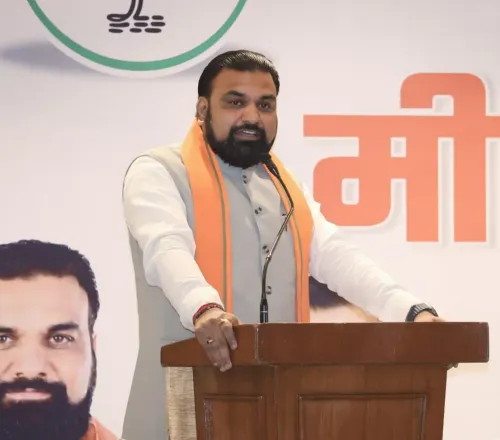
CM Samrat Choudhary Highlights 12 Years of Rural Growth Under Modi
Synopsis
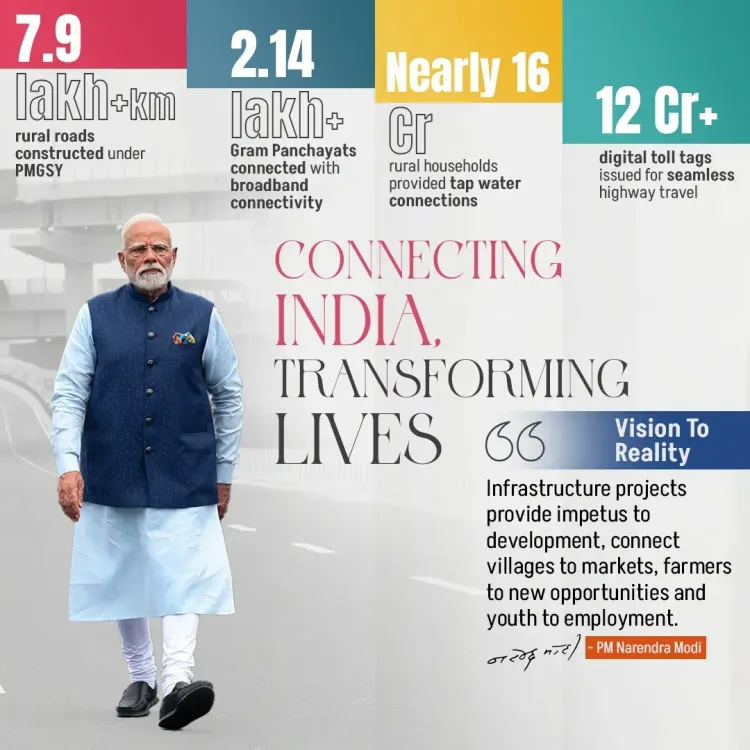
Bihar Chief Minister Samrat Choudhary marked 12 years of the Modi government on 16 June 2026, citing 7.9 lakh km of rural roads, broadband access to 2.14 lakh Gram Panchayats, 16 crore tap water connections and 12 crore FasTags as proof of inclusive rural development, with Bihar named as an active partner.
Key Takeaways
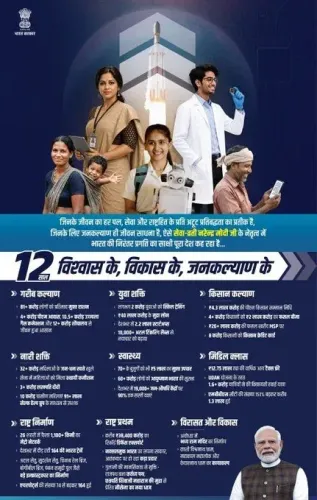
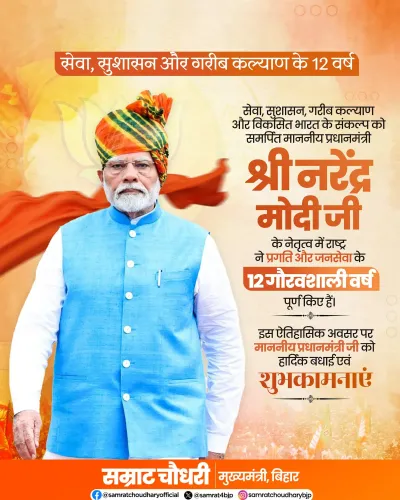
Bihar CM Samrat Choudhary posted on 16 June 2026 to mark 12 years of the Modi government under the hashtag #12YearsOfNayaBharatNirman .
The post cites over 7.9 lakh km of rural roads built under central schemes including PMGSY .
Broadband connectivity has been extended to more than 2.14 lakh Gram Panchayats through BharatNet .
Nearly 16 crore rural households have received tap water connections under the Jal Jeevan Mission .
Over 12 crore digital toll tags (FasTags) have been issued, reflecting the scale of digital highway infrastructure.
Choudhary reaffirmed Bihar's commitment to ensuring development benefits reach 'the last person in society.'
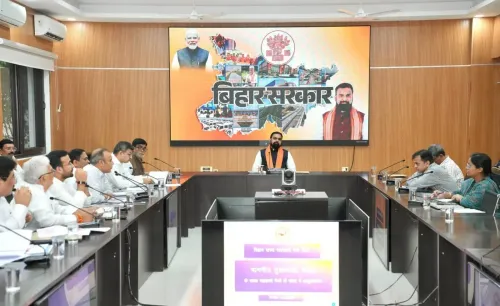
Bihar Chief Minister Samrat Choudhary on Tuesday, 16 June 2026, took to X to mark 12 years of the Modi government, citing sweeping gains in rural roads, tap water access, broadband connectivity and digital toll infrastructure as evidence of inclusive national development — and reaffirming Bihar's active role in this transformation.
Context
Choudhary's post, tagged #12YearsOfNayaBharatNirman ('12 Years of Building a New India'), lists four headline figures attributed to the Narendra Modi-led central government: more than 7.9 lakh km of rural roads built, broadband connectivity extended to over 2.14 lakh Gram Panchayats, tap water connections provided to nearly 16 crore rural households, and over 12 crore digital toll tags issued. The Chief Minister wrote that 'India's villages are becoming integral partners in the nation's growth story,' and affirmed that Bihar's 'commitment remains unwavering to ensure that the benefits of development reach the last person in society.'
Policy Backdrop
The figures cited span four flagship central schemes. Rural road construction has been driven primarily by the Pradhan Mantri Gram Sadak Yojana (PMGSY), which received significant funding boosts and revised targets after 2014 to accelerate all-weather connectivity to unconnected habitations. Tap water access is the mandate of the Jal Jeevan Mission, launched in August 2019 with the stated goal of providing a functional household tap connection to every rural family.
Digital connectivity to villages has been pursued through BharatNet, a project that began in 2011 and was restructured in 2017–18 to link all Gram Panchayats via optical fibre. The FASTag electronic toll collection system, referenced through the digital toll tag figure, was made mandatory on national highways from December 2019 under the National Highways Authority of India. Together, these programmes represent the central government's multi-sector rural infrastructure push over the past decade-plus.
Stakeholders and Impact
The primary beneficiaries of these schemes are rural households and Gram Panchayats across India — institutions at the lowest rung of the federal governance structure that serve as delivery points for both physical and digital services. For Bihar, one of India's most populous and historically underserved states, participation in centrally sponsored programmes is particularly significant given its large rural population and ongoing infrastructure deficit.
Choudhary's explicit mention of Bihar as 'an active participant' signals the state government's intent to align publicly with central development metrics, a pattern common among BJP-governed states ahead of electoral cycles. The broader narrative positions villages not merely as recipients of welfare but as active nodes in national supply chains and service networks.
What's Next
Attention will now turn to the next Union Budget allocations for rural development ministries and any revised physical targets for road, water and broadband schemes that could extend or accelerate current momentum. For Bihar specifically, state-level implementation reports on PMGSY, Jal Jeevan Mission and BharatNet will be closely watched as benchmarks of on-ground delivery. As the #12YearsOfNayaBharatNirman campaign gains traction across BJP leaders' social media, it is likely to serve as a coordinated messaging framework leading into upcoming political cycles.
Point of View
Reinforcing party unity while staking a claim to shared credit for federal scheme delivery. The aggregation of four distinct infrastructure metrics — roads, water, broadband, FasTags — reflects a deliberate strategy to present rural development as a comprehensive, multi-sector achievement rather than a single-scheme success. Bihar's explicit inclusion is politically significant: the state has historically lagged on development indices and its leaders have strong incentives to associate with positive national narratives ahead of electoral cycles. The broader arc suggests the 'Naya Bharat' framing will intensify as a BJP campaign motif through 2026 and beyond.
NationPress
20 Sept 2026
Frequently Asked Questions
What is #12YearsOfNayaBharatNirman?
#12YearsOfNayaBharatNirman is a hashtag campaign used by BJP leaders to mark 12 years of the Narendra Modi government, highlighting rural infrastructure and development achievements since 2014.
How many rural roads have been built under the Modi government?
Bihar CM Samrat Choudhary's post states that over 7.9 lakh km of rural roads have been built, primarily under the Pradhan Mantri Gram Sadak Yojana .
What is the Jal Jeevan Mission and how many households has it covered?
The Jal Jeevan Mission is a central government scheme launched in August 2019 to provide functional tap water connections to every rural household; the post cites nearly 16 crore rural households connected so far.
How many Gram Panchayats have broadband connectivity in India?
According to CM Choudhary's post, broadband connectivity has reached more than 2.14 lakh Gram Panchayats through the BharatNet programme.
What is Bihar's role in central rural development schemes?
Bihar, under Chief Minister Samrat Choudhary , participates actively in centrally sponsored schemes like PMGSY, Jal Jeevan Mission and BharatNet, with the state government publicly committing to deliver development benefits to the last person in society.