CM Samrat Choudhary Invites Google to Set Up GCC in Bihar
Synopsis
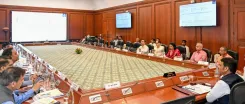
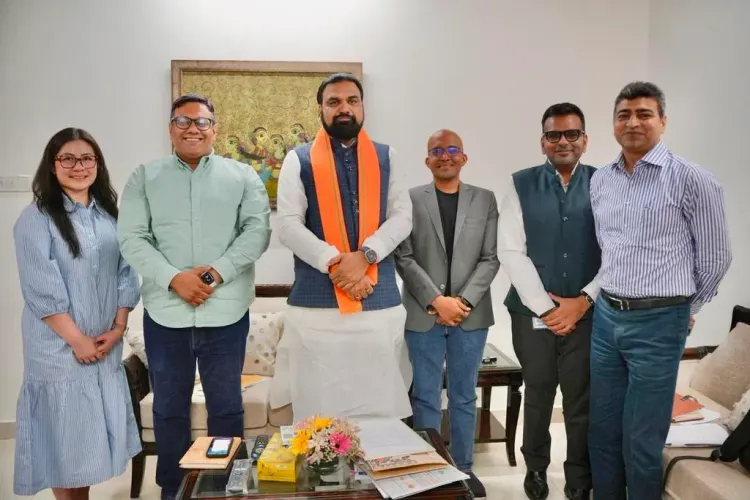
Bihar Chief Minister Samrat Choudhary met Google India VP Chandu Thota at Bihar Bhawan, New Delhi on 10 June 2026. Talks covered tech, education, health and agriculture collaboration. Google was formally invited to establish a Global Capability Centre in Bihar under the state's GCC Policy-2026.
Key Takeaways
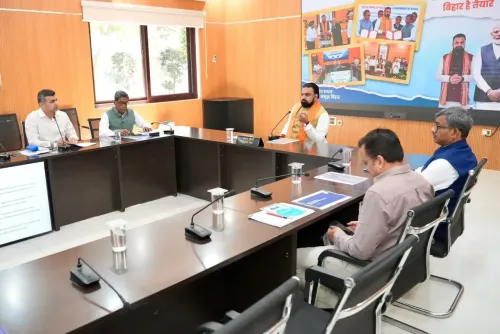
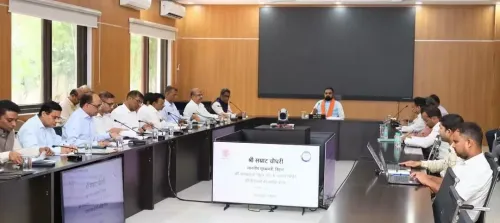
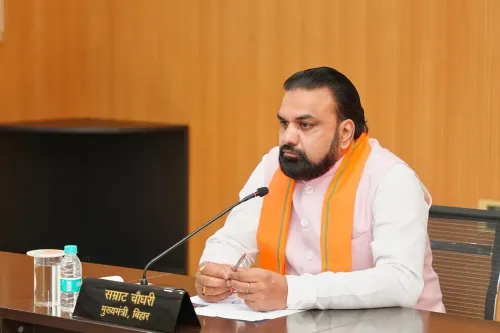
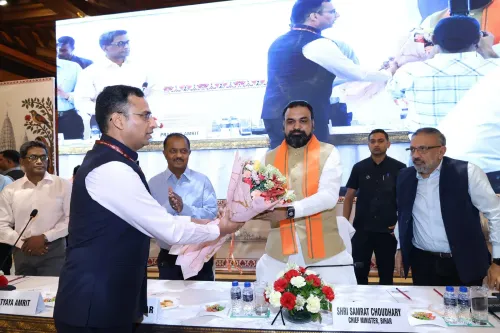
Bihar CM Samrat Choudhary hosted a high-level Google India delegation at Bihar Bhawan, New Delhi on 10 June 2026 .
The delegation was led by Google India Vice President Chandu Thota , who heads government partnerships for the company.
Discussions covered collaboration in technology, education, health, and agriculture .
Google was formally invited to set up a Global Capability Centre (GCC) in Bihar under the Bihar GCC Policy-2026 .
No MoU or formal commitment from Google has been announced following the meeting.
Bihar's outreach mirrors similar GCC-focused drives by Uttar Pradesh, Madhya Pradesh and Odisha since 2022.
Bihar Chief Minister Samrat Choudhary met a high-level delegation from Google India, led by Vice President Chandu Thota, at Bihar Bhawan, New Delhi, on 10 June 2026. The meeting centred on opportunities for collaboration in technology, education, health, and agriculture, and culminated in a formal invitation to Google to establish a Global Capability Centre (GCC) in Bihar under the state's Bihar GCC Policy-2026.
Context
Chief Minister Choudhary posted about the meeting on X, writing in Hindi: 'बैठक में तकनीक, शिक्षा, स्वास्थ्य एवं कृषि क्षेत्रों में सहयोग की संभावनाओं पर विस्तृत चर्चा हुई' ('Detailed discussions were held on the possibilities of cooperation in the fields of technology, education, health and agriculture'). He added that Google was formally invited to set up a Global Capability Centre in the state under the Bihar GCC Policy-2026. The delegation was led by Chandu Thota, Vice President at Google India, who heads the company's government partnerships and policy engagement in the country.
Bihar Bhawan in New Delhi serves as the official liaison office and guest house of the Bihar government, and has increasingly become a venue for high-profile investment-related discussions as the state seeks to attract private-sector interest.
Policy Backdrop
The Bihar GCC Policy-2026 is a state-level framework designed to attract multinational corporations to set up Global Capability Centres — large back-office and technology hubs — within Bihar. The policy is part of a broader effort to position the state as a destination for high-value technology employment, building on earlier frameworks such as the Bihar Industrial Investment Promotion Policy 2020, which offered incentives for IT and electronics units.
The national push for GCCs gained momentum after the Government of India's 2020 guidelines encouraged states to create their own policies to host such facilities. Since 2022, multiple Indian states — including Uttar Pradesh, Madhya Pradesh, and Odisha — have rolled out GCC-specific incentive packages, seeking to diversify the country's technology employment map beyond Bengaluru and Hyderabad. Bihar's outreach to Google fits squarely within this national pattern and aligns with the Digital India and Production-Linked Incentive frameworks championed by the central government.
Stakeholders and Impact
A Google GCC in Bihar would have direct implications for IT professionals and Bihar's youth, who currently migrate to metros for technology jobs. The discussions also covered agri-tech and healthtech — sectors where Google's AI and cloud capabilities could support state-run programmes in a largely rural economy.
Agri-tech startups and healthtech firms operating in Bihar could benefit from integration with Google's platforms if a GCC were established, potentially creating an ecosystem effect beyond direct employment at the centre itself. The state government's hashtags #विकसित_भारत #समृद्ध_बिहार ('Developed India, Prosperous Bihar') signal that this outreach is being framed as part of the wider national development narrative ahead of the 2025-26 investment cycle.
What's Next
No memorandum of understanding or formal commitment from Google has been announced following the 10 June meeting. The next indicators to watch are any follow-up statements from Google India on its interest in the Bihar GCC Policy-2026, and whether the state government extends similar invitations to other global technology firms under the same framework.
If Bihar succeeds in attracting a major global technology firm like Google, it could sharpen competition among eastern Indian states vying for high-value investment — and set a precedent for how state-level GCC policies translate into on-ground commitments from Silicon Valley majors.
Point of View
Not merely a bureaucratic exercise. The choice of Bihar Bhawan in New Delhi as the venue — rather than a formal industry summit — suggests the government is pursuing technology investment through executive diplomacy alongside its policy framework. This mirrors a broader pattern of non-metro states competing aggressively for high-value tech employment as India's GCC geography begins to shift eastward. Whether Google converts this invitation into an on-ground commitment will be a key test of how credible Bihar's GCC Policy-2026 is perceived to be by global technology majors.
NationPress
26 Oct 2026
Frequently Asked Questions
What did Bihar CM Samrat Choudhary discuss with Google India?
Bihar CM Samrat Choudhary met Google India VP Chandu Thota on 10 June 2026 at Bihar Bhawan, New Delhi, to discuss collaboration in technology, education, health and agriculture, and formally invited Google to set up a Global Capability Centre in Bihar.
What is Bihar GCC Policy-2026?
Bihar GCC Policy-2026 is a state government framework designed to attract multinational companies to establish Global Capability Centres in Bihar, offering incentives to bring high-value technology employment to the state.
Who is Chandu Thota of Google India?
Chandu Thota is the Vice President at Google India responsible for government partnerships and policy engagement, and he led the delegation that met Bihar CM Samrat Choudhary on 10 June 2026.
Has Google agreed to open a centre in Bihar?
No formal commitment or memorandum of understanding from Google has been announced following the 10 June 2026 meeting; the invitation has been extended but Google's response is yet to be made public.
Which other states are competing with Bihar for GCC investment?
States such as Uttar Pradesh, Madhya Pradesh and Odisha have also rolled out GCC-specific incentive policies since 2022, competing with Bihar to attract technology investment beyond Bengaluru and Hyderabad.