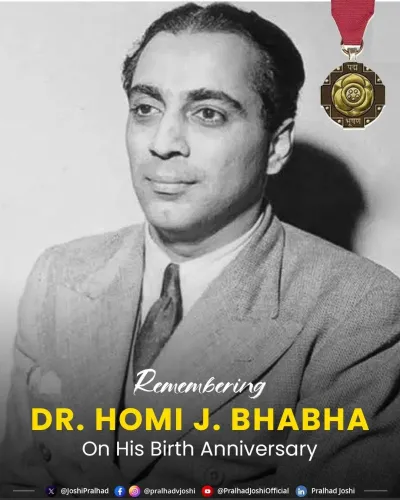
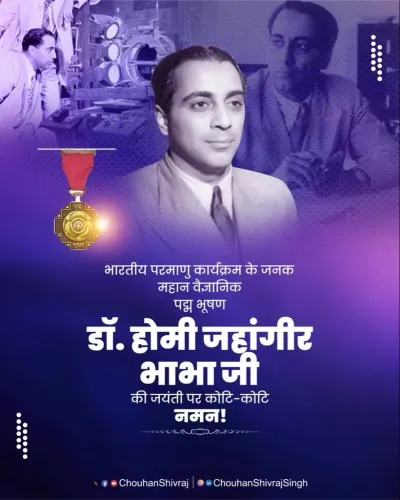
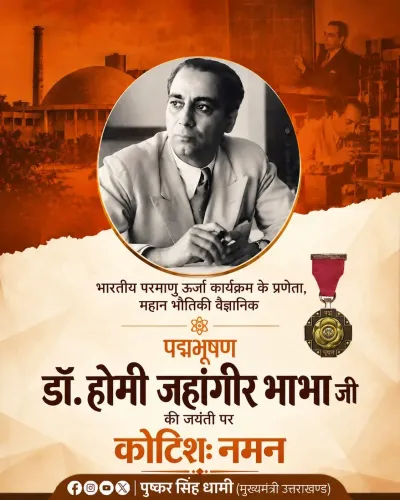
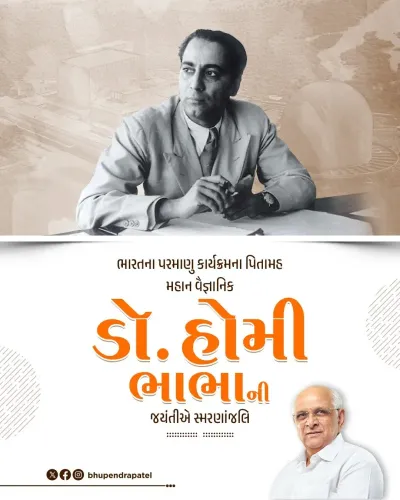
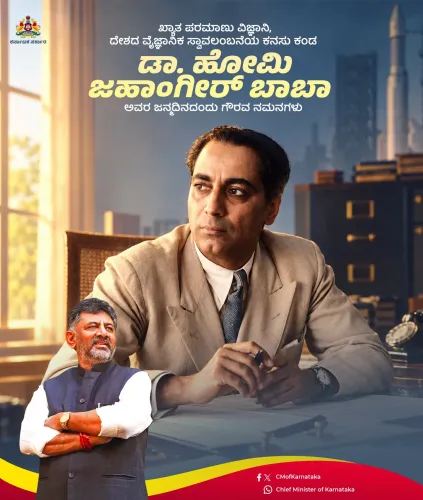
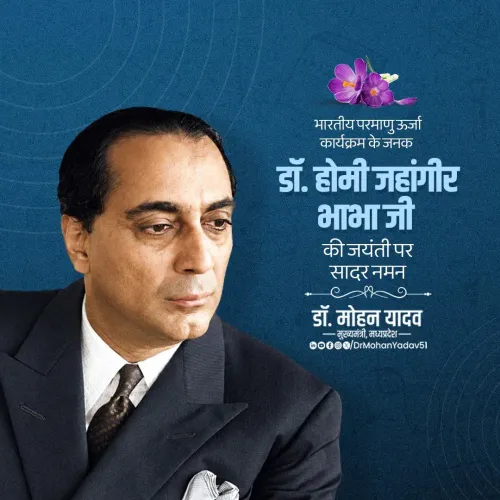
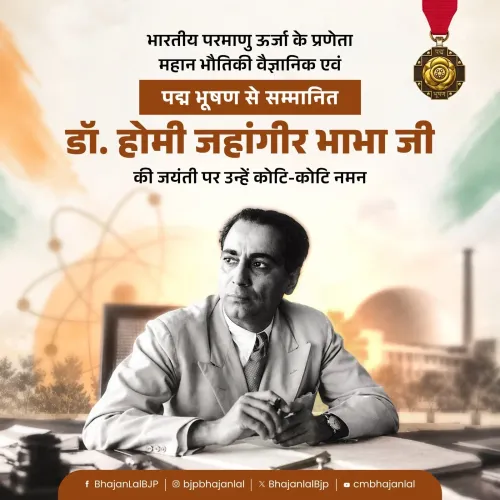
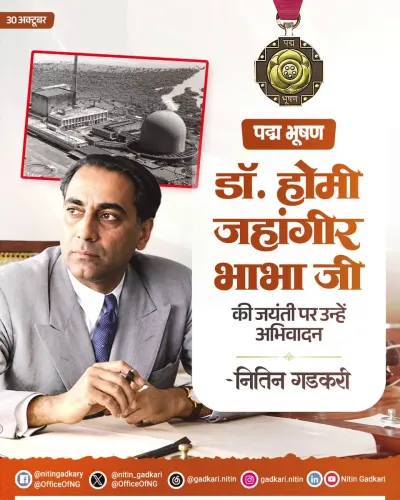
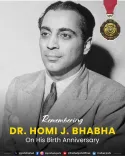
CM Samrat Choudhary pays tribute to Dr. Homi Bhabha on his birth anniversary
Synopsis
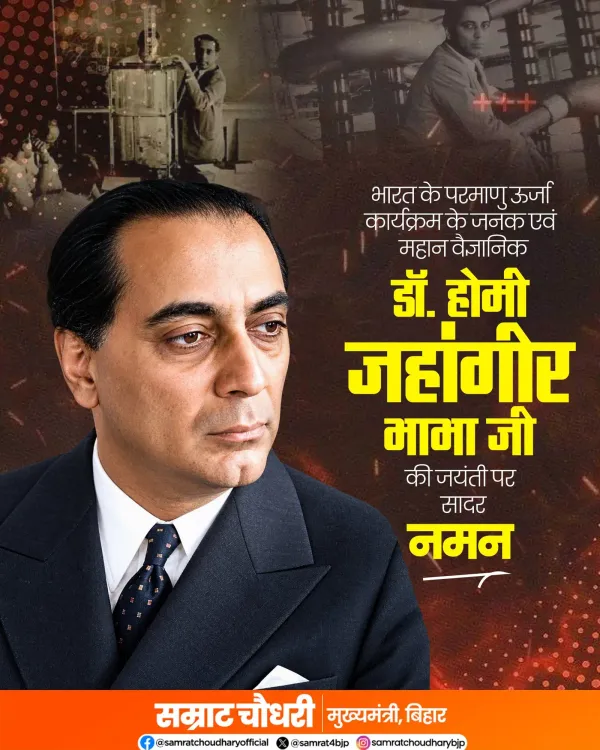
Bihar Chief Minister Samrat Choudhary marked the birth anniversary of Dr. Homi Jahangir Bhabha on October 30, honouring the founder of India's nuclear programme and TIFR as a visionary whose legacy continues to inspire generations.
Key Takeaways
Bihar CM Samrat Choudhary paid tribute to Dr.
Homi Jahangir Bhabha on his birth anniversary, October 30 .
Bhabha is widely regarded as the father of India's nuclear programme and founded the Tata Institute of Fundamental Research in 1945 .
He chaired the Atomic Energy Commission of India and his research base at Trombay was renamed Bhabha Atomic Research Centre (BARC) in his honour.
CM Choudhary called Bhabha's contribution 'unparalleled' and said his visionary thinking would inspire generations to come.
Annual tributes to Bhabha reflect a broad political consensus on honouring India's scientific heritage, particularly within BJP's public messaging.
On the birth anniversary of the man who gave India its nuclear ambition, Bihar Chief Minister Samrat Choudhary on Friday, October 30 paid tribute to Dr. Homi Jahangir Bhabha, saluting the physicist as the father of India's atomic energy programme and an irreplaceable pillar of the nation's scientific legacy.
In his post, CM Choudhary wrote: 'कोटि-कोटि नमन' — a million salutes — to Bhabha, adding that 'his unparalleled contribution in the field of science will always be remembered' and that 'his visionary thinking and scientific achievements will continue to inspire generations to come.'
The architect India's nuclear age left behind
Dr. Homi Jahangir Bhabha is not merely a name in a textbook — he is the reason India has a civilian nuclear capability at all. In 1945, he founded the Tata Institute of Fundamental Research (TIFR) in Bombay, laying the intellectual bedrock for high-energy physics in post-colonial India. He went on to chair the Atomic Energy Commission of India, steering the country's first forays into nuclear science at a moment when the technology was barely a decade old globally.
His vision was straightforward and audacious in equal measure: that a newly independent India could not afford to be a spectator in the atomic age. The institutions he built — TIFR and the Atomic Energy Establishment at Trombay, later renamed Bhabha Atomic Research Centre (BARC) in his honour — remain the twin engines of India's nuclear and research enterprise more than six decades after his death.
An annual ritual with enduring resonance
October 30 has become a fixed point in India's public calendar. Each year, political leaders across the spectrum pause to acknowledge Bhabha's birth anniversary, a practice that reflects a rare cross-party consensus: that the foundations of India's scientific sovereignty deserve public reverence. State-level leaders from the BJP, in particular, have woven tributes to India's scientific pioneers into a broader political narrative about the country's civilisational and intellectual heritage.
CM Choudhary's message fits squarely within that tradition — a reminder that the conversation about India's nuclear and scientific ambitions is never purely technical. It is also a story about national identity, and about the shoulders every generation stands on.
With the Department of Atomic Energy eyeing expanded nuclear capacity targets in the coming years, Bhabha's founding vision is as live a reference point as ever — not just a historical tribute, but a standing challenge to match what he started.
Point of View
Framing them as proof of the nation's intellectual ambition. Paying homage to Bhabha at the state-chief-minister level signals that nuclear and scientific heritage are not just central-government talking points — they are embedded in the party's grassroots political identity. With India's Department of Atomic Energy pursuing expanded nuclear capacity, invoking Bhabha annually also quietly reinforces the legitimacy of the country's continued investment in atomic energy. The ritual tribute, repeated across party ranks each October 30, functions as both commemoration and political positioning.
NationPress
30 Oct 2026
Frequently Asked Questions
Who was Dr. Homi Jahangir Bhabha?
Dr. Homi Jahangir Bhabha was an Indian physicist widely regarded as the father of India's nuclear programme. He founded the Tata Institute of Fundamental Research in 1945 and chaired the Atomic Energy Commission of India, laying the foundation for the country's civilian atomic energy sector.
When is Homi Bhabha's birth anniversary?
Homi Bhabha's birth anniversary falls on October 30. Indian leaders and scientific institutions mark the day annually with tributes to his contributions to nuclear science and research.
What did Samrat Choudhary say about Homi Bhabha?
Bihar Chief Minister Samrat Choudhary called Bhabha the father of India's nuclear energy programme and a great scientist, saying his unparalleled contribution in science will always be remembered and his visionary thinking will continue to inspire future generations.
What is BARC and what is its connection to Homi Bhabha?
BARC — the Bhabha Atomic Research Centre in Trombay, Mumbai — is India's premier nuclear research facility. It was originally established as the Atomic Energy Establishment and was renamed in Bhabha's honour after his death in 1966.
Why do Indian politicians pay tribute to Homi Bhabha every year?
Homi Bhabha is credited with building the institutional and intellectual foundations of India's atomic energy programme after independence. Paying tribute on his birth anniversary has become an annual practice reflecting cross-party recognition of his role in shaping India's scientific sovereignty.