CM Conrad Sangma flags off 55 e-buses under PM e-Bus Sewa in Meghalaya
Synopsis
Meghalaya Chief Minister Conrad Sangma flagged off 55 electric buses under the PM e-Bus Sewa scheme on June 9, 2026, comprising 9-metre and 7-metre variants with wheelchair accessibility and a 150-plus km range. A dedicated depot at Umsawli, New Shillong is also being developed, advancing green urban transport in the northeast.
Key Takeaways
55 electric buses flagged off under PM e-Bus Sewa in Meghalaya on June 9, 2026 .
Fleet includes 25 buses (9-metre, 27-seater) and 30 buses (7-metre, 22-seater) with a range of over 150 km .
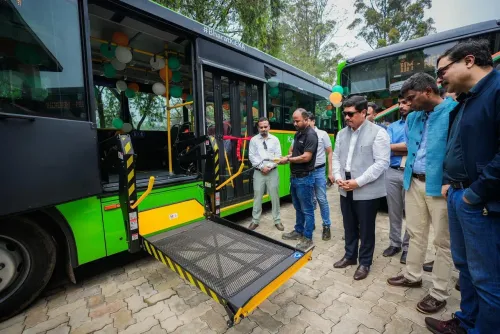
All buses are wheelchair accessible , ensuring inclusive mobility for persons with disabilities.
A dedicated e-bus depot is being developed at Umsawli, New Shillong under the scheme.
The PM e-Bus Sewa scheme, approved in 2023 , targets deployment of 10,000 electric buses across 169 cities nationwide.
Union Minister Manohar Lal Khattar and MoHUA are coordinating the central support for the initiative.
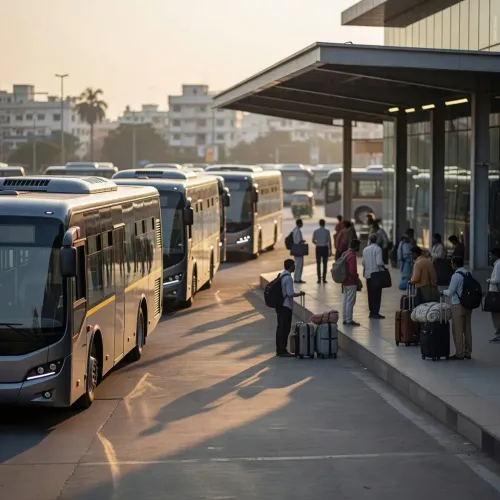
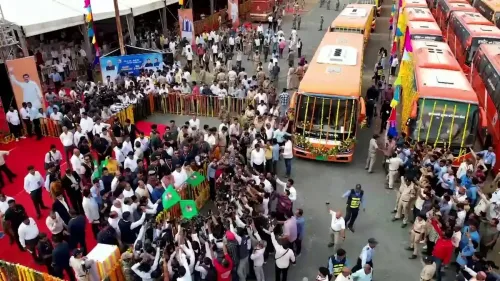
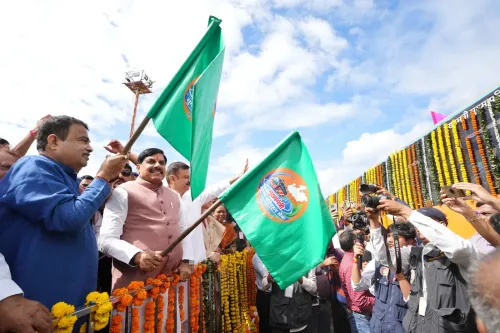
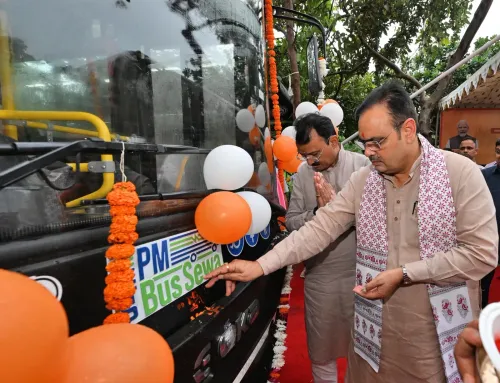
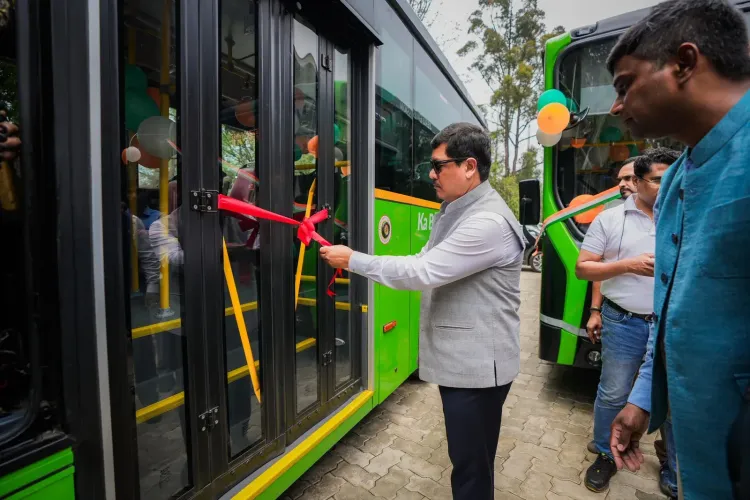
Meghalaya Chief Minister Conrad Sangma on Tuesday, June 9, 2026, flagged off a fleet of 55 electric buses under the PM e-Bus Sewa scheme, marking a significant push toward green public transport in the northeastern state. The deployment includes buses with wheelchair accessibility and a range of over 150 km, aimed at making urban mobility more inclusive and sustainable across Meghalaya.
Context
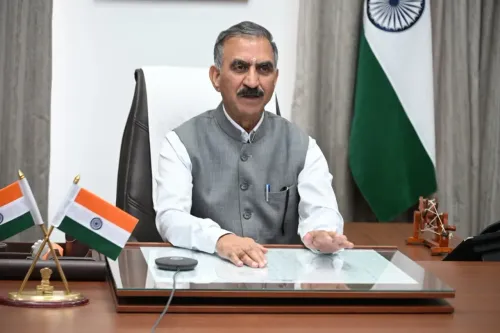
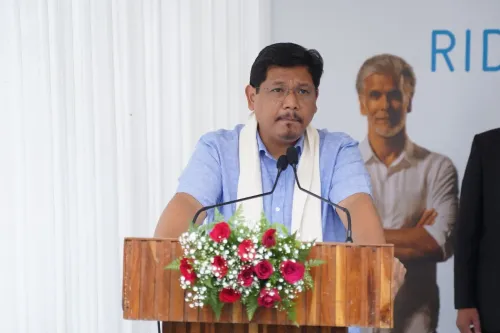
Conrad Sangma announced the flag-off on social media, stating: 'This is a major step towards sustainable, accessible, and modern public transport for Meghalaya.' The fleet comprises 25 buses of the 9-metre, 27-seater variant and 30 buses of the 7-metre, 22-seater variant, designed to navigate varying urban and semi-urban terrain. The Chief Minister tagged Union Minister Manohar Lal Khattar and the Ministry of Housing and Urban Affairs (MoHUA) and the Prime Minister's Office in the post, reflecting the central-state coordination behind the initiative.
Policy Backdrop
The PM e-Bus Sewa scheme was approved by the Union Cabinet in 2023 to deploy 10,000 electric buses across 169 cities nationwide, backed by viability gap funding to make operations commercially viable for state agencies. The programme builds on earlier electric mobility efforts under the FAME (Faster Adoption and Manufacturing of Hybrid and Electric Vehicles) schemes, shifting focus toward dedicated public bus fleets to reduce urban emissions and fossil fuel dependence. Northeastern states have received increasing attention under such programmes, given their terrain-specific transport challenges and the need to strengthen last-mile connectivity in hilly and remote areas.
The integration of wheelchair-accessible features into the new fleet reflects a broader policy direction of embedding accessibility norms within green infrastructure projects, aligning with national urban mobility guidelines.
Infrastructure and Depot Development
Alongside the bus fleet, a dedicated e-bus depot is being developed at Umsawli, New Shillong — the planned urban extension area of the state capital — under the same scheme. The depot is intended to serve as the operational and maintenance hub for the electric fleet, underpinning the long-term viability of the programme. New Shillong has been identified as a key zone for new urban infrastructure investment in Meghalaya, making it a natural anchor for the state's green transport corridor.
Stakeholders and Impact
Urban commuters and residents of Meghalaya, particularly those in and around Shillong, stand to benefit most directly from the expanded fleet. The inclusion of wheelchair-accessible buses addresses a longstanding gap in public transport options for persons with disabilities in the region. For the state government, the deployment signals alignment with national sustainability targets while also responding to local demand for reliable, affordable, and modern transit options.
What's Next
Attention will now turn to the pace of construction at the Umsawli depot and whether the operational rollout of all 55 buses proceeds on schedule. The success of this initial deployment could set the stage for expansion of the PM e-Bus Sewa to additional routes within Meghalaya or to other northeastern cities in subsequent phases of the national programme. The state's experience navigating hilly terrain with electric buses may also offer a replicable model for other hill states seeking to transition to green public transport.
Point of View
The Chief Minister reinforces the NPP's alignment with the ruling alliance at the national level, a dynamic that has consistently shaped infrastructure flows to the region. The inclusion of wheelchair-accessible buses and the depot investment in New Shillong also positions Meghalaya as a model for inclusive green infrastructure in hill states, a narrative the state government is clearly keen to project. Whether the operational rollout matches the ceremonial momentum will be the real test of the programme's impact on daily commuters.
NationPress
25 Oct 2026
Frequently Asked Questions
What is PM e-Bus Sewa and how does it work?
PM e-Bus Sewa is a central government scheme approved in 2023 to deploy 10,000 electric buses across 169 cities in India, with viability gap funding provided to state agencies to make operations financially sustainable. States receive buses and infrastructure support, while operators manage day-to-day services.
How many electric buses has Meghalaya received under PM e-Bus Sewa?
Meghalaya has received a fleet of 55 electric buses under the scheme — 25 buses of the 9-metre, 27-seater type and 30 buses of the 7-metre, 22-seater type, both with a range of over 150 km .
Where is the new e-bus depot in Meghalaya being built?
A dedicated e-bus depot is being developed at Umsawli in New Shillong , the planned urban extension of the state capital, to serve as the operational and maintenance hub for the new electric fleet.
Are the new electric buses in Meghalaya wheelchair accessible?
Yes, all buses deployed under the PM e-Bus Sewa in Meghalaya are equipped with wheelchair accessibility features, in line with national norms for inclusive public transport.
What is Conrad Sangma's role in the PM e-Bus Sewa launch?
Conrad Sangma , as Chief Minister of Meghalaya , personally flagged off the fleet on June 9, 2026 , coordinating with the Union Ministry of Housing and Urban Affairs and Union Minister Manohar Lal Khattar for the central support component of the scheme.