CM Conrad Sangma Hails SSA Teacher Pay Reform in Meghalaya
Synopsis
Meghalaya Chief Minister Conrad Sangma on 23 May 2026 welcomed a gratitude gesture from the All Garo Hills SSA School Teachers' Association after the state streamlined SSA teacher salaries through a Structured Pay Framework, calling it a step toward dignity and stability for educators across the state.
Key Takeaways
Meghalaya CM Conrad Sangma acknowledged the All Garo Hills SSA School Teachers' Association (AGHSSATA-CB) for expressing gratitude over the new payment reform on 23 May 2026 .
The Structured Pay Framework is designed to streamline and regularise salary disbursement for Sarva Shiksha Abhiyan (SSA) contractual teachers in Meghalaya .
SSA , launched in 2001 , has employed large numbers of contractual teachers; payment delays have been a long-standing grievance in multiple states including Meghalaya .
The reform aligns with National Education Policy 2020 recommendations for better service conditions for contractual educators.
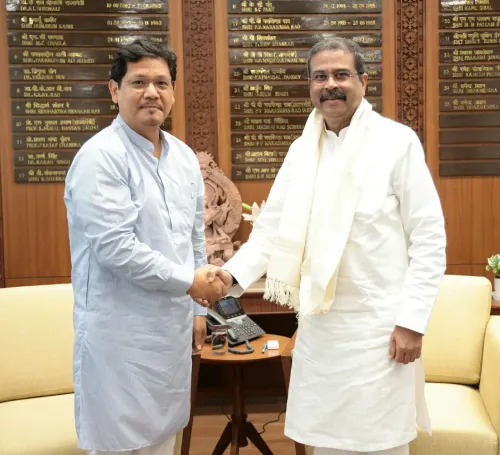
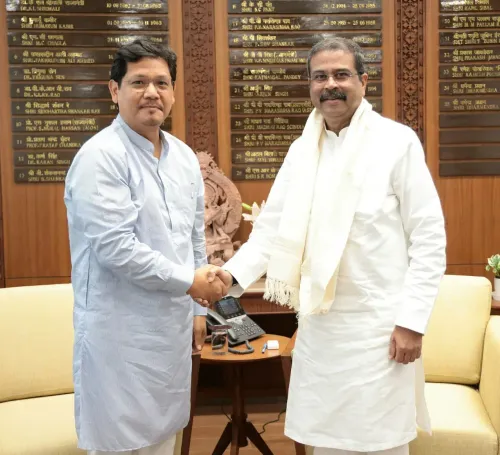
Union Education Minister Dharmendra Pradhan was tagged in the post, indicating central-level acknowledgement of the initiative.
The state-wide rollout of the framework and future budgetary provisions remain key indicators of the reform's full impact.
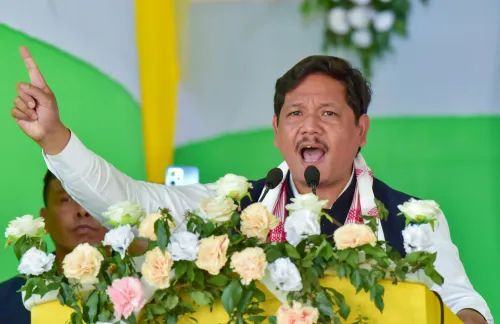
Meghalaya Chief Minister Conrad Sangma on Saturday, 23 May 2026 acknowledged a gratitude gesture from the All Garo Hills SSA School Teachers' Association (AGHSSATA-CB), calling the state government's newly implemented Structured Pay Framework for Sarva Shiksha Abhiyan (SSA) teachers a step toward 'dignity, stability, and renewed hope' for thousands of educators across the state.
Context
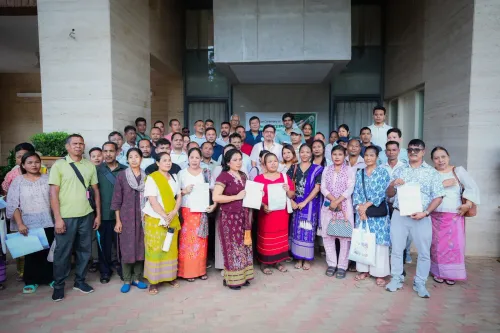
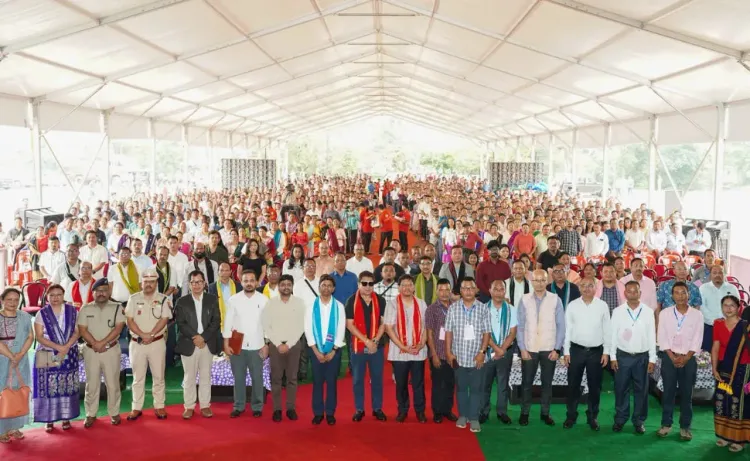
The AGHSSATA-CB, a body representing contractual SSA teachers in the Garo Hills districts of Meghalaya, met with officials to formally express gratitude to the government for streamlining the payment system under the newly introduced Structured Pay Framework. CM Sangma described the teachers' smiles as 'the greatest reward,' underscoring the personal significance he attaches to the reform. His post also tagged Union Education Minister Dharmendra Pradhan, signalling central coordination in the effort.
Policy Backdrop
Sarva Shiksha Abhiyan, launched in 2001, universalised elementary education across India through large-scale contractual teacher recruitment. It was subsumed into the integrated Samagra Shiksha Abhiyan in 2018, which consolidated SSA, the Rashtriya Madhyamik Shiksha Abhiyan, and teacher education under a single framework. Despite this integration, timely and structured payment for SSA-contracted teachers has remained a persistent challenge across several states, including Meghalaya.
Multiple states have introduced structured pay matrices and direct-benefit-transfer mechanisms for SSA teachers to reduce arrears and improve retention. These efforts align broadly with the National Education Policy 2020, which recommends improved service conditions for contractual educators. In the Northeast, such reforms carry additional weight given regional disparities in teacher deployment and school functioning.
Stakeholders and Impact
The immediate beneficiaries are SSA-contracted teachers in Meghalaya, particularly those in the Garo Hills region, who have historically faced delays and irregularities in salary disbursement. A predictable, structured pay system directly affects their financial stability and, by extension, classroom continuity for elementary school students. Teacher associations across the Northeast have long demanded such reforms, making this development a marker for similar advocacy efforts in neighbouring states.
The tagging of Union Minister Dharmendra Pradhan in CM Sangma's post suggests the reform has at least partial backing or acknowledgement at the central level, reinforcing the cooperative federalism dimension of education policy implementation.
What's Next
The state-wide rollout of the Structured Pay Framework beyond the Garo Hills districts, and any supplementary budgetary provisions in the next Meghalaya budget session, will determine the reform's full scale. CM Sangma urged teachers to 'continue placing our children at the heart of everything we do,' framing classroom impact as the ultimate measure of the policy's success. If the framework delivers on its promise of payment regularity, it could serve as a model for other northeastern states grappling with similar SSA teacher grievances.
Point of View
CM Sangma is simultaneously signalling administrative delivery and reinforcing the NPP's governance credentials ahead of future electoral cycles in the Northeast. The move fits a broader national pattern where state governments are racing to align with NEP 2020's service-condition mandates, using structured pay matrices as both a welfare measure and a political dividend. Whether the framework extends beyond Garo Hills to the rest of Meghalaya will be the real test of its ambition.
NationPress
7 Oct 2026
Frequently Asked Questions
What is the Structured Pay Framework for SSA teachers in Meghalaya?
The Structured Pay Framework is a payment reform introduced by the Meghalaya government to streamline and regularise salary disbursement for contractual teachers employed under the Sarva Shiksha Abhiyan scheme, addressing long-standing delays and irregularities in their pay.
Who are SSA teachers and why have they been protesting?
SSA teachers are contractual educators recruited under the Sarva Shiksha Abhiyan, India's flagship elementary education scheme launched in 2001. Across multiple states, including Meghalaya, they have demanded regular and structured salaries, better service conditions, and job security.
What is the AGHSSATA-CB?
The All Garo Hills SSA School Teachers' Association (AGHSSATA-CB) is a body representing SSA-contracted teachers in the Garo Hills districts of Meghalaya. It recently expressed formal gratitude to the state government for the new pay reform.
Why did Conrad Sangma tag Dharmendra Pradhan in his post?
CM Sangma tagged Union Education Minister Dharmendra Pradhan in his post, suggesting central-level coordination or acknowledgement in implementing the Structured Pay Framework for SSA teachers in Meghalaya.
How does the SSA teacher pay reform relate to the National Education Policy 2020?
The National Education Policy 2020 recommends improved service conditions, including structured and timely pay, for contractual teachers. The Meghalaya Structured Pay Framework aligns with these recommendations and reflects a broader national push to regularise the employment conditions of SSA educators.