CM Sawant champions Goa's Kunbi Handloom on National Handloom Day
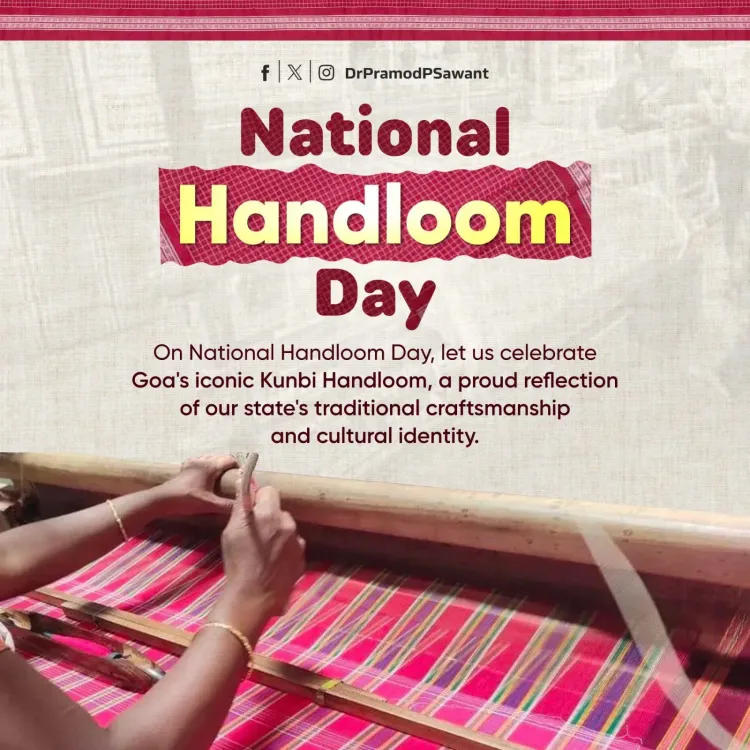
Synopsis
On National Handloom Day 2026, Goa Chief Minister Pramod Sawant called for celebrating and sustaining the Kunbi tribal handloom tradition, linking indigenous craft preservation to the Vocal for Local and Atmanirbhar Bharat frameworks to empower weavers and build sustainable livelihoods.
Key Takeaways
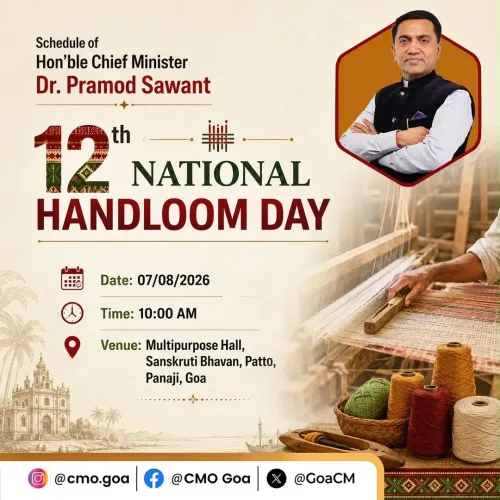
Goa CM Pramod Sawant posted on National Handloom Day, 7 August 2026 , spotlighting the state's Kunbi handloom tradition.
The Kunbi sari is woven by Goa's indigenous Kunbi tribal community and is a distinct marker of the state's cultural identity.
Sawant linked craft preservation to the Atmanirbhar Bharat and Vocal for Local campaigns launched nationally in 2020 .
National Handloom Day has been observed every 7 August since 2015 , commemorating the 1905 Swadeshi Movement anniversary.
A potential GI tag for Kunbi textiles and upcoming central handloom budget provisions are key policy developments to watch.
Goa's ancient Kunbi weave — worn for centuries by the state's tribal community — stepped into the national spotlight on 7 August 2026, as Goa Chief Minister Pramod Sawant used National Handloom Day to call for renewed pride in the state's most distinctive textile tradition.
Sawant's message framed the Kunbi handloom not merely as a cultural artefact but as an economic lifeline, urging citizens to embrace the 'Vocal for Local' philosophy and the broader Atmanirbhar Bharat vision. 'By embracing Vocal for Local and advancing the vision of Atmanirbhar Bharat, we can empower our talented weavers, preserve indigenous crafts and create sustainable livelihoods,' he wrote.
What makes the Kunbi weave Goa's cultural signature
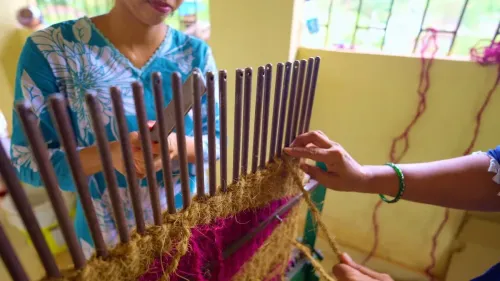
The Kunbi sari is woven by the Kunbi tribal community, one of Goa's oldest indigenous groups. Characterised by its distinctive check pattern and earthy tones, the fabric has long served as everyday ceremonial dress — and more recently as a marker of Goan identity that cuts across the state's better-known Portuguese colonial aesthetic. The weave's survival depends almost entirely on a small cluster of artisans who have kept the craft alive through generations, largely without the industrial infrastructure that supports larger textile belts elsewhere in India.National Handloom Day and the self-reliance frame
National Handloom Day has been observed every 7 August since 2015, chosen to mark the anniversary of the Swadeshi Movement launched on that date in 1905 — a moment when homespun cloth became an act of political defiance. The day is now used by central and state governments alike to spotlight regional textile traditions and connect heritage preservation to livelihood policy. Since 2020, that policy conversation has been anchored by the Atmanirbhar Bharat campaign, launched by Prime Minister Narendra Modi to reduce import dependence and energise domestic production. For handloom clusters, the framework has opened avenues for branding, e-commerce linkages, and state-level promotion — though the reach of such initiatives to smaller, tribal-community-led clusters like the Kunbi weavers varies.GI recognition and what comes next for Kunbi weavers
The broader policy pattern across India points toward Geographical Indication tagging as a key tool for protecting and commercialising regional weaves — a route that has benefited clusters in other states. Whether Goa pursues a formal GI tag for Kunbi textiles, and how central handloom support packages in the coming budget cycle reach the state's artisans, will determine whether today's rhetorical spotlight translates into measurable change on the loom. For Goa's weavers, the Chief Minister's post is a signal of political attention. The question now is whether that attention arrives with a scheme, a budget line, or a market linkage behind it.Point of View
Produced by a small tribal community with limited market access, presents a test case for whether such rhetorical alignment produces concrete interventions like GI tagging, e-commerce integration, or dedicated budget allocations. Goa's small handloom footprint means the political cost of inaction is low, but so is the investment required to make a visible difference — which is precisely why a follow-through scheme would carry outsized symbolic weight for the community.
NationPress
7 Aug 2026
Frequently Asked Questions
What is the Kunbi handloom of Goa?
The Kunbi handloom is a traditional textile woven by the Kunbi tribal community of Goa, known for its distinctive check pattern and earthy colours. It is one of the oldest indigenous craft traditions in the state and is closely tied to Kunbi cultural and ceremonial life.
When is National Handloom Day celebrated in India?
National Handloom Day is celebrated every year on 7 August . It has been observed since 2015 and marks the anniversary of the Swadeshi Movement launched on 7 August 1905, when homespun cloth became a symbol of resistance to colonial rule.
What is the Vocal for Local campaign?
Vocal for Local is a consumer-awareness initiative promoted by the Indian government, encouraging citizens to prefer domestically made products over imports. It is closely linked to the broader Atmanirbhar Bharat (self-reliant India) campaign launched by Prime Minister Modi in 2020 .
What did Goa CM Pramod Sawant say on National Handloom Day 2026?
CM Sawant called for celebrating the Kunbi handloom as a reflection of Goa's traditional craftsmanship and cultural identity. He urged adoption of the Vocal for Local philosophy and the Atmanirbhar Bharat vision to empower weavers, preserve indigenous crafts and create sustainable livelihoods.
Could Goa's Kunbi handloom get a GI tag?
A Geographical Indication tag for Kunbi textiles is a policy possibility being watched by observers. GI recognition would legally protect the craft's regional identity and open commercial opportunities, though no formal application has been confirmed in the public record.