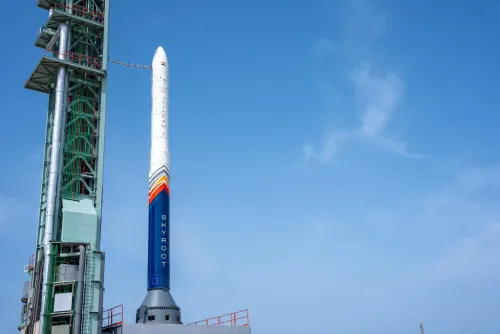
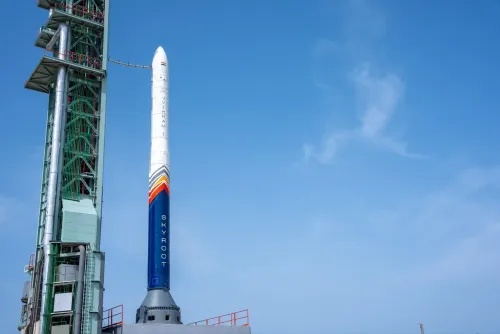
CM Sawant Hails Vikram-1 as Historic Leap for India's Private Space Sector

Synopsis
Goa Chief Minister Pramod Sawant hailed the maiden orbital launch of Skyroot Aerospace's Vikram-1 on 18 July 2026 as a historic milestone for India's private space sector, crediting Modi-era reforms that opened space activities to non-governmental players since 2020.
Key Takeaways
Vikram-1 , developed by Skyroot Aerospace , is described as India's first privately developed orbital launch vehicle .
Goa CM Pramod Sawant publicly congratulated Skyroot on 18 July 2026 , framing the launch as a 'historic milestone' for India's aerospace sector.
India's private space reforms date to June 2020 , when the government permitted end-to-end private participation in launch vehicle development.
IN-SPACe , constituted in 2020 , serves as the single-window regulatory authority for non-governmental space activities in India.
The launch advances India's goal of expanding its share of the global small-satellite market under the Atmanirbhar Bharat and Viksit Bharat frameworks.
A proposed Space Activities Bill remains a key pending legislative step to further formalise India's private space commerce regime.
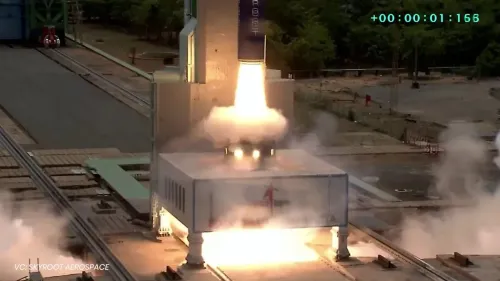
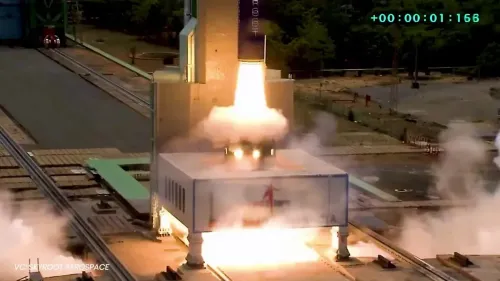
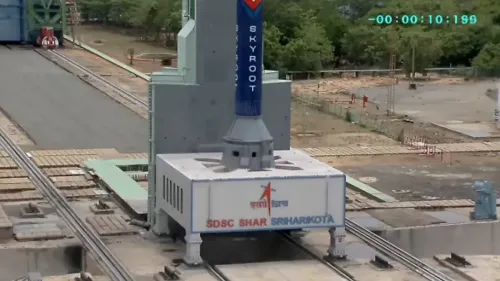
Goa Chief Minister Pramod Sawant on Saturday, 18 July 2026 congratulated Skyroot Aerospace on the successful maiden orbital launch of Vikram-1, calling it a landmark moment for India's aerospace sector and a new era in the country's space journey.
Context
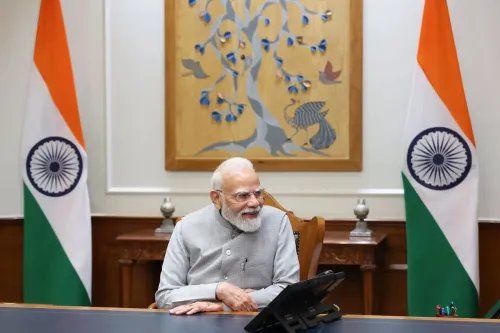
In his post on X, CM Sawant described the Vikram-1 launch as a 'historic milestone' that demonstrates 'the strength of indigenous innovation, technological excellence, and the transformative vision of opening the space sector to private enterprise.' He credited the achievement to the policy direction set by Prime Minister Narendra Modi, saying space-sector reforms have 'empowered startups to dream bigger, innovate faster, and compete globally.'
Vikram-1, developed by Hyderabad-based Skyroot Aerospace, is India's first privately developed orbital launch vehicle — a distinction that makes this launch a structural first, not merely a technical one. It signals the arrival of a genuinely commercial launch industry in a country where orbital access was previously the exclusive domain of a government agency.
Policy Backdrop
The Vikram-1 launch is a direct product of policy reforms initiated in June 2020, when the Government of India approved end-to-end private participation in space activities, including the design, development, and operation of launch vehicles. Shortly after, the Indian National Space Promotion and Authorisation Centre (IN-SPACe) was constituted as a single-window regulatory body to grant clearances to non-governmental space firms.
These reforms were framed under the broader Atmanirbhar Bharat initiative and positioned India to compete in the fast-growing global small-satellite launch market. Skyroot Aerospace, founded in 2018, was among the earliest startups to benefit from this opening, developing the Vikram series of rockets with the explicit goal of providing affordable, dedicated launch services to small satellite operators worldwide.
The Indian Space Research Organisation (ISRO) historically held a monopoly on all Indian orbital launches. The entry of private players like Skyroot is designed to complement ISRO's programme rather than replace it, expanding national launch capacity while freeing the agency to focus on deeper science and exploration missions.
Stakeholders and Impact
The immediate beneficiaries of a successful Vikram-1 orbital debut are India's private aerospace startups, which now have a proven domestic precedent to attract investment, talent, and commercial contracts. Satellite operators — particularly those deploying small satellites for earth observation, communications, and IoT applications — gain a new, indigenous launch option.
For the broader startup ecosystem, the milestone reinforces the viability of deep-technology ventures in capital-intensive sectors. CM Sawant noted that the achievement 'inspires a new generation of entrepreneurs and scientists to contribute towards the vision of Viksit Bharat' — the government's framework for a developed India by 2047.
Peer private launch startups and the global small-satellite launch industry will also be watching closely, as a commercially operational Indian private launcher increases competitive pressure on established international providers.
What's Next
The successful maiden orbital flight typically triggers a sequence of follow-on developmental and commercial launches to build flight heritage and attract paying customers. Industry watchers will track whether Skyroot Aerospace announces commercial mission contracts in the near term and how quickly it can achieve launch cadence.
On the regulatory front, a proposed Space Activities Bill — which would provide a comprehensive statutory framework for private space commerce in India — remains a key legislative milestone. Its passage would further consolidate the legal certainty that investors and operators need to scale up. India's ambition to capture a significantly larger share of the global space economy over the next decade now has a concrete private-sector milestone to build upon.
Point of View
And the chorus of political endorsements it has drawn, underscores how space has become a prestige arena for India's governance narrative — a domain where Atmanirbhar Bharat rhetoric meets measurable, verifiable technological output. CM Sawant's post is part of a broader BJP pattern of amplifying private-sector space achievements as validation of the 2020 liberalisation, tying startup success directly to Prime Minister Modi's policy legacy. The milestone also signals that India's private space ecosystem has moved beyond suborbital demonstration flights into the commercially consequential orbital tier, which is where launch contracts and revenue actually reside. Whether Skyroot can now convert flight heritage into a sustainable launch cadence will determine whether this moment is a turning point or a celebrated one-off.
NationPress
18 Jul 2026
Frequently Asked Questions
What is Vikram-1 and who made it?
Vikram-1 is India's first privately developed orbital launch vehicle, built by Hyderabad-based startup Skyroot Aerospace, which was founded in 2018 to provide small-satellite launch services.
Why is the Vikram-1 launch historically significant for India?
It marks the first time a privately developed Indian rocket has reached orbit, ending the government agency ISRO's historical monopoly on Indian orbital launches and opening a new commercial chapter in the country's space programme.
What reforms enabled private companies like Skyroot to build rockets in India?
In June 2020, the Indian government approved end-to-end private participation in space activities, and IN-SPACe was constituted as a single-window regulatory body to grant clearances to non-governmental space firms.
What is IN-SPACe and what role does it play?
IN-SPACe, or the Indian National Space Promotion and Authorisation Centre, was established in 2020 to regulate and promote private space activities in India, providing a single-window clearance mechanism for startups and companies.
What comes next for India's private space sector after Vikram-1?
Industry observers are watching for follow-on commercial launches by Skyroot and peer startups, as well as potential parliamentary action on a proposed Space Activities Bill that would provide a full statutory framework for private space commerce.