CM Fadnavis unveils Pune-Shirur elevated highway plan

Synopsis
The Chief Minister's Office of Maharashtra has unveiled details of the Pune-Shirur Elevated Expressway on NH 753F, covering 54 km with a 31-km six-lane elevated highway, a parallel four-lane local road, a future metro corridor provision, and a target travel time of 45–50 minutes between Pune and Shirur.
Key Takeaways
The Pune-Shirur Elevated Expressway Project will develop approximately 54 km of National Highway 753F using advanced construction methods.
A 6-lane elevated highway will run for 31 km to carry high-speed through-traffic.
A 4-lane parallel service road will handle local traffic alongside the elevated section.
The first 7 km of the corridor includes a structural provision for a future metro rail line .
The project aims to cut Pune-Shirur travel time to 45–50 minutes .
CM Devendra Fadnavis and PM Narendra Modi were both tagged in the official CMO announcement, indicating central-state coordination.
The Chief Minister's Office of Maharashtra announced on Saturday, 18 July 2026 that National Highway 753F will be developed under the Pune-Shirur Elevated Expressway Project, upgrading approximately 54 kilometres of corridor using state-of-the-art construction methods to dramatically cut travel times between Pune and Shirur.
What the project entails
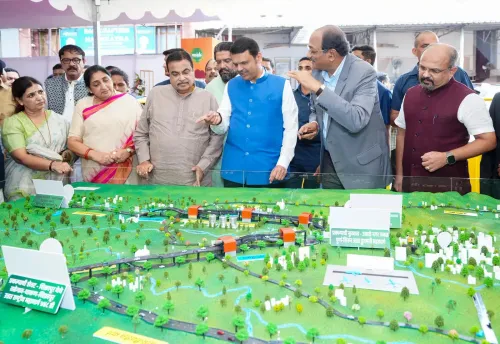
According to the CMO's post, the project's centrepiece is a 6-lane elevated highway stretching 31 kilometres, designed to carry high-speed through-traffic above ground level. Running parallel to it will be a 4-lane service road dedicated to local traffic, ensuring that commuters accessing roadside areas are not forced onto the main carriageway. The CMO stated that the project will reduce the Pune-Shirur travel time to 45–50 minutes, a significant improvement over current congested conditions on the route.
A notable forward-looking element is a provision within the first 7 kilometres of the corridor for a future metro rail alignment. By building this reservation into the elevated structure now, the project avoids costly retrofitting later and signals an intent to integrate road and rail in one multimodal spine.
Context
Pune is Maharashtra's second-largest urban agglomeration and faces severe traffic pressure on arterial routes leading to its eastern districts, of which the Shirur corridor is among the most strained. NH 753F connects Pune's urban core with Shirur in Pune district, passing through densely populated and industrially active zones. The route carries a heavy mix of inter-city vehicles, freight, and daily commuters, making grade-separation a long-standing demand from residents and industry alike.
Policy backdrop
The project fits within India's broader highway modernisation drive, anchored nationally by the Bharatmala Pariyojana programme approved in 2015, which prioritised economic corridors and ring roads across states including Maharashtra. Chief Minister Devendra Fadnavis, who has consistently positioned road connectivity as a pillar of his administration's infrastructure agenda, tagged Prime Minister Narendra Modi in the post, underscoring the central-state coordination that characterises large national highway upgrades. Such projects typically involve the National Highways Authority of India (NHAI) for funding and oversight alongside state execution agencies.
Maharashtra has seen a pattern of elevated-corridor proposals on congested urban-fringe highways, with the dual-deck or elevated-plus-service-road model increasingly favoured to separate traffic streams without requiring prohibitively wide land acquisition.
Stakeholders and impact
The most direct beneficiaries are the daily commuters — estimated to be in the hundreds of thousands — who travel between Pune and Shirur for work, commerce, and education. Local traffic users along the corridor stand to gain from the dedicated 4-lane parallel road, which should prevent the elevated highway from bypassing roadside businesses and settlements entirely. Freight operators and logistics firms serving Pune's industrial hinterland are also expected to benefit from reduced transit times and more predictable journey durations.
The metro provision in the initial 7-kilometre section could, if realised, extend Pune's expanding metro network eastward, with long-term implications for land use and real-estate development along the alignment.
What's next
The CMO's announcement frames this as a detailed project disclosure rather than a foundation-stone laying or contract award, suggesting the project is in an advanced planning or pre-tender stage. Watchers will look for formal tender issuance by NHAI or the state public works department, land acquisition notifications, and inclusion of funding allocations in upcoming state budget cycles. The tagging of PM Modi in the official post may also signal that a central government announcement or joint inauguration is being planned.
Point of View
Chief Minister Fadnavis is visibly aligning a state infrastructure win with the central government's Bharatmala narrative ahead of what is likely to be a high-profile groundbreaking. The dual-carriageway model — elevated for through-traffic, surface for local access — has become the preferred template for urban-fringe highways in Maharashtra, reflecting hard lessons from earlier elevated roads that isolated adjacent communities. If tenders and land acquisition proceed without major delays, this project could become a showcase for the central-state coordination model that both BJP-led governments have been keen to demonstrate.
NationPress
18 Jul 2026
Frequently Asked Questions
What is the Pune-Shirur Elevated Expressway Project?
It is a proposed upgrade of approximately 54 km of National Highway 753F between Pune and Shirur in Maharashtra, featuring a 31-km six-lane elevated highway, a parallel four-lane local road, and a future metro rail provision in the first 7 km of the corridor.
How much will the Pune-Shirur travel time reduce after the highway is built?
According to the Chief Minister's Office of Maharashtra, the project aims to bring the Pune-to-Shirur travel time down to 45–50 minutes.
What is National Highway 753F?
NH 753F is a national highway corridor that connects Pune eastward to Shirur within Maharashtra's road network, currently a congested route carrying heavy commuter and freight traffic.
Will the Pune-Shirur highway have a metro line?
The project includes a structural provision for a future metro rail alignment within the first 7 kilometres of the elevated corridor, though no metro construction timeline has been announced yet.
Is the Pune-Shirur highway part of Bharatmala Pariyojana?
The project aligns with the broader Bharatmala Pariyojana framework, India's national highway acceleration programme approved in 2015, which covers economic corridors and connectivity upgrades across Maharashtra. The CMO post tagged Prime Minister Modi, indicating central-state coordination.