CM Fadnavis, Gadkari break ground on 3 Pune elevated highways
Synopsis
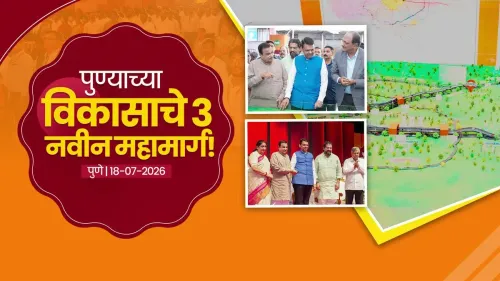
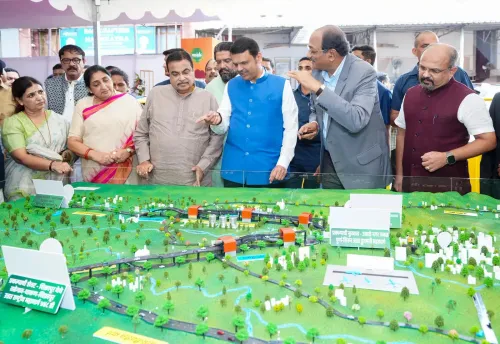
Chief Minister Devendra Fadnavis and Union Minister Nitin Gadkari jointly performed the ground-breaking ceremony for three elevated highways in Pune on 18 July 2026 — the Pune–Shirur, Talegaon–Chakan–Shikrapur, and Hadapsar–Yavat corridors — in a move to tackle the city's deepening traffic crisis.
Key Takeaways
Three elevated highways received their ground-breaking ceremony in Pune on 18 July 2026 .
The corridors are the Pune–Shirur Elevated Expressway , the Talegaon–Chakan–Shikrapur Elevated Highway , and the Hadapsar–Yavat Elevated Highway .
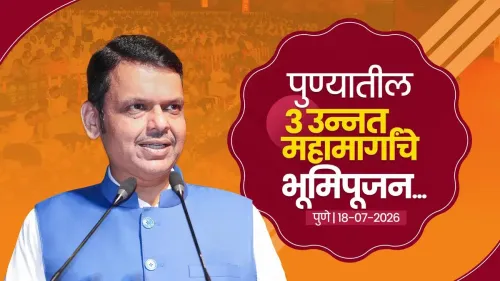
CM Devendra Fadnavis and Union Minister Nitin Gadkari jointly performed the bhoomipujan .
Deputy CM Sunetra Ajit Pawar , senior ministers, MP Shrirang Appa Barne , and Pune Mayor Manjusha Nagpure were present.
The projects align with the Central government's Bharatmala Pariyojana and Maharashtra's State Highway Development Programme .
Next steps include detailed project reports, land acquisition notifications, and environmental clearances.
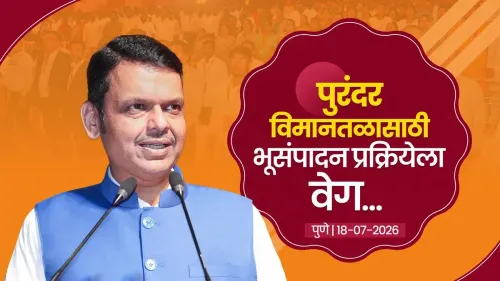
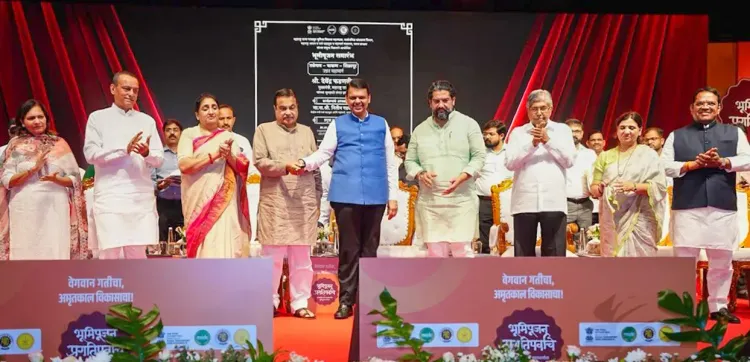
The Chief Minister's Office of Maharashtra announced on 18 July 2026 that Chief Minister Devendra Fadnavis and Union Minister for Road Transport and Highways Nitin Gadkari jointly performed the bhoomipujan (ground-breaking ceremony) for three elevated highway projects in Pune, marking a significant push to ease the city's chronic traffic congestion.
What was inaugurated
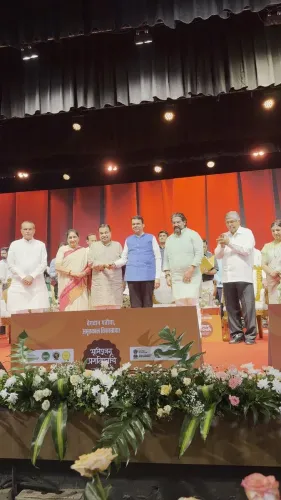
The ceremony, held at 3:10 PM on 18 July 2026 in Pune, covered the ground-breaking of three distinct elevated corridors: the Pune–Shirur Elevated Expressway, the Talegaon–Chakan–Shikrapur Elevated Highway, and the Hadapsar–Yavat Elevated Highway. The CMO described the occasion as 'Bhoomipujan Pragatiparvache' — 'a ground-breaking that marks progress.'
Senior political figures joined the ceremony, including Deputy Chief Minister Sunetra Ajit Pawar, Minister Chandrakant Patil, Minister ShivendraSinh Raje Bhonsle, Minister of State Madhuri Misal, MP Shrirang Appa Barne, and Pune Mayor Manjusha Nagpure.
Context
Pune is one of Maharashtra's fastest-growing urban centres, functioning as a hub for the IT, manufacturing, and logistics sectors. Rapid population growth and expanding industrial zones — particularly along the Chakan and Talegaon corridors — have placed severe strain on the city's existing road network.
Elevated highways are designed to separate high-speed inter-city traffic from local movement, reducing bottlenecks at grade-level intersections. The Hadapsar–Yavat stretch addresses the city's southeastern fringe, which has seen dense residential and industrial growth.
Policy backdrop
The projects align with the Central government's Bharatmala Pariyojana, launched in 2015, which identified elevated and expressway corridors around Pune as part of its Phase-I national highway development network. Maharashtra's own State Highway Development Programme (2018) further prioritised multi-level grade separators and elevated roads within the Pune Metropolitan Region.
Central–state coordination on highway projects has accelerated since 2019 under expanded Bharatmala funding and state co-financing arrangements. Gadkari's ministry has been the primary driver of expressway construction across Maharashtra, with the state contributing land acquisition and local approvals.
Stakeholders and impact
Daily commuters between Pune and satellite towns such as Shirur, Chakan, Shikrapur, and Yavat stand to benefit most directly, as elevated corridors are expected to reduce travel time and improve road safety. Logistics operators serving the Chakan Industrial Area — one of Maharashtra's largest auto-manufacturing clusters — have long sought better connectivity to national highway networks.
Local businesses along the proposed alignments, as well as residents in peri-urban zones, will be key stakeholders in land acquisition and resettlement processes that typically precede construction.
What's next
Following a bhoomipujan, the standard procedural pipeline includes the release of detailed project reports, land acquisition notifications under the relevant land laws, and environmental clearances from the concerned authorities. These steps are expected to unfold over the coming months as the projects move from ceremonial launch to active implementation.
The three corridors, taken together, represent Maharashtra's continued bet on elevated infrastructure as the primary tool for managing urban-fringe traffic — a model the state has applied in Mumbai and Nagpur and is now extending to Pune.
Point of View
With Gadkari's presence lending national highway credibility to what might otherwise be read as a state-level project. For CM Fadnavis, the ceremony reinforces his government's infrastructure-first narrative ahead of future electoral cycles in a city that has grown increasingly vocal about traffic and urban planning. The choice of the Chakan corridor is particularly pointed — it directly serves Maharashtra's auto-manufacturing heartland, signalling that the Mahayuti government is attentive to industrial competitiveness. Whether the projects move swiftly through land acquisition and environmental clearance will be the real test of this political momentum.
NationPress
18 Jul 2026
Frequently Asked Questions
What are the three elevated highways inaugurated in Pune in July 2026?
The three elevated highways are the Pune–Shirur Elevated Expressway , the Talegaon–Chakan–Shikrapur Elevated Highway , and the Hadapsar–Yavat Elevated Highway . Their ground-breaking ceremony was held on 18 July 2026 .
Who performed the bhoomipujan of Pune's elevated highways?
Chief Minister Devendra Fadnavis and Union Minister Nitin Gadkari jointly performed the bhoomipujan (ground-breaking) on 18 July 2026 in Pune.
Which scheme funds the Pune elevated highway projects?
The projects are aligned with the Central government's Bharatmala Pariyojana , a national highway development programme launched in 2015, along with Maharashtra's own State Highway Development Programme.
How will the Pune elevated highways help commuters?
The elevated corridors are designed to separate high-speed inter-city traffic from local road movement, reducing travel time and congestion for commuters travelling between Pune and satellite towns like Shirur , Chakan , Shikrapur , and Yavat .
What happens after the bhoomipujan of the Pune highways?
After the ground-breaking, the standard process involves release of detailed project reports, land acquisition notifications, and environmental clearances before construction can begin.