CM Sawant Highlights Goa's Community Farming Push
Synopsis
Goa CM Pramod Sawant on October 31 promoted the state's Assistance for Community Farming scheme, which supports groups of 10 or more farmers with shared fencing, irrigation, compost units, and infrastructure via PWD and WRD, citing the Bicholim Progressive Farmers Producer Company as a model collective.
Key Takeaways
The Assistance for Community Farming scheme requires groups of 10 or more farmers to qualify for shared infrastructure support.
Support includes shared fencing, irrigation facilities, compost units, farm road work via PWD , and bund repairs via WRD .
The Bicholim Progressive Farmers Producer Company Limited brings together 45 farmers cultivating across 25 hectares .
The scheme is positioned under the broader Swayampurna Goa self-reliance initiative.
India has promoted Farmer Producer Organisations since 2013 to address fragmented landholdings and improve market access for small farmers.
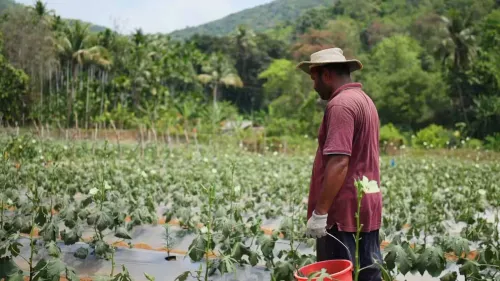
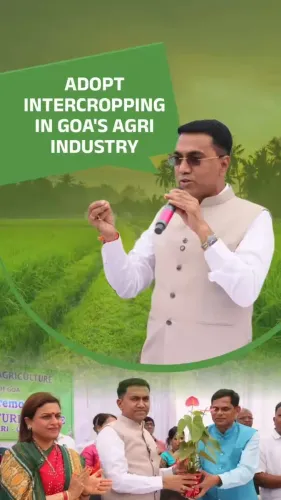
Forty-five farmers. Twenty-five hectares. One shared vision. Goa Chief Minister Pramod Sawant on Saturday, October 31 spotlighted how the state's Assistance for Community Farming scheme is quietly reshaping agriculture in Goa — pulling small farmers out of isolation and into collective strength.
What the Scheme Actually Puts on the Ground
The Assistance for Community Farming scheme targets groups of 10 or more farmers, offering shared infrastructure — fencing, irrigation facilities, and compost units — rather than scattering support across individual plots. Crucially, it also pulls in two state departments: the Public Works Department (PWD) and the Water Resources Department (WRD) provide assistance for farm roads and bund repairs, turning an agricultural scheme into an integrated rural infrastructure intervention.
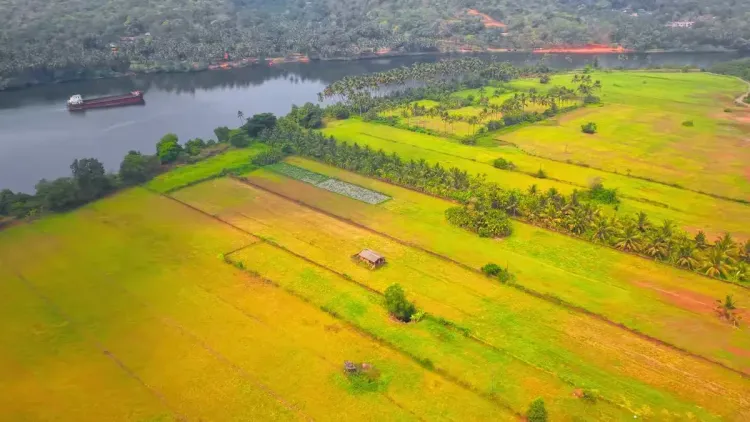
CM Sawant pointed to the Bicholim Progressive Farmers Producer Company Limited as a live example — a collective bringing together 45 farmers cultivating across 25 hectares of land in Bicholim taluka. 'By working together, sharing resources, and adopting collective farming practices, Goa's farmers are building more sustainable agricultural communities,' Sawant wrote.
Bicholim's Collective and the FPO Playbook
The Bicholim company fits a well-worn national template. India has actively promoted Farmer Producer Organisations (FPOs) since the early 2010s to address a persistent structural problem: fragmented landholdings that leave small and marginal farmers with weak bargaining power, limited access to quality inputs, and thin margins. The central government's FPO promotion scheme, launched in 2013, seeded this model across states.
Goa's version adds a layer the national template often lacks — direct departmental coordination for physical infrastructure. By routing PWD and WRD support through the same scheme, the state is trying to solve the 'last kilometre' problem: a farmer collective is only as productive as the roads that move its produce and the bunds that hold its water.
Swayampurna Goa: The Bigger Frame
Sawant tied Saturday's announcement to Swayampurna Goa, the state's flagship self-reliance initiative spanning agriculture, employment, and sustainable development. Community farming sits at the heart of that vision — if Goa can reduce dependence on food imports and strengthen local agricultural supply chains, the state moves measurably closer to the self-sufficiency the scheme promises.
The next test is scale. The Bicholim collective is one data point. Whether the scheme expands to additional talukas — and whether it eventually links with central PMFPO funding — will determine if this is a model or merely a moment.
Point of View
Since infrastructure gaps routinely hobble FPO success nationally. Framing it under 'Swayampurna Goa' also serves a political function, reinforcing the BJP-led state government's self-reliance branding ahead of any future electoral cycle. The real test is whether scheme coverage expands meaningfully beyond early-adopter collectives like Bicholim.
NationPress
31 Oct 2026
Frequently Asked Questions
What is the Assistance for Community Farming scheme in Goa?
The Assistance for Community Farming is a Goa government scheme that provides groups of 10 or more farmers with support for shared fencing, irrigation facilities, compost units, farm road construction via PWD, and bund repairs via WRD.
What is the Bicholim Progressive Farmers Producer Company Limited?
It is a farmer producer company in Goa's Bicholim taluka cited by CM Pramod Sawant as a model collective, bringing together 45 farmers who cultivate across 25 hectares of land using shared resources.
What is Swayampurna Goa?
Swayampurna Goa is the Goa state government's flagship self-reliance initiative aimed at achieving sustainable development across sectors including agriculture, employment, and local supply chains.
How does Goa's community farming scheme relate to central FPO policy?
India has promoted Farmer Producer Organisations since 2013 to help small and marginal farmers pool resources and improve market access. Goa's scheme mirrors this national model while adding direct departmental coordination for physical infrastructure through PWD and WRD.
Who oversees Goa's community farming initiatives?
The scheme involves the Goa state agriculture department along with the Public Works Department and Water Resources Department for infrastructure components, under the overall policy direction of Chief Minister Pramod Sawant.