CM Sawant hosts state-level FTA workshop in Goa

Synopsis
Goa Chief Minister Pramod Sawant hosted a live state-level workshop on 19 October 2026 to help local exporters and MSMEs unlock benefits under India's expanding free trade agreements, reflecting a broader push by state governments to translate national trade deals into ground-level business gains.
Key Takeaways
Goa CM Pramod Sawant hosted a state-level workshop on leveraging Free Trade Agreements (FTAs) on 19 October 2026 , streamed live.
The workshop targets exporters and MSMEs in Goa, helping them navigate rules of origin, tariff concessions and compliance under India's FTAs.
India signed the India-UAE Comprehensive Economic Partnership Agreement in 2022 , one of several bilateral deals creating new export opportunities.
Goa's economy — spanning tourism, mining, pharmaceuticals and small-scale manufacturing — stands to benefit from better FTA utilisation.
State governments are increasingly taking ownership of FTA capacity building as national agreements multiply but ground-level awareness lags.
Follow-up actions such as sector-specific training and export promotion cells will determine the workshop's lasting impact.
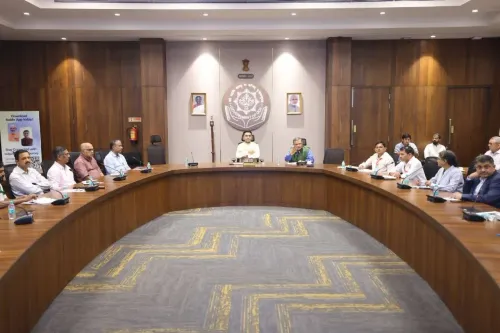
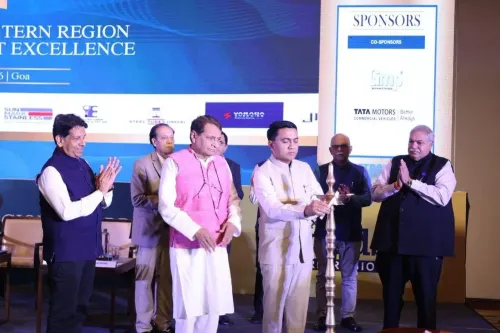
With India's bilateral trade agreements multiplying fast, Goa Chief Minister Pramod Sawant stepped in front of the room on Monday, 19 October 2026, to personally anchor a state-level workshop designed to turn national policy into local opportunity — streaming the session live for exporters and businesses across the state.
Why Goa's exporters need a seat at the FTA table
India's trade agreement pipeline has accelerated sharply since 2020, with landmark deals such as the India-UAE Comprehensive Economic Partnership Agreement (signed 2022) unlocking preferential tariffs on hundreds of product lines. The problem, for most small and mid-sized businesses, is translation — not of language, but of legalese. Rules of origin, tariff concession schedules, and compliance procedures are notoriously opaque terrain, and a business that cannot navigate them simply leaves the benefit on the table.
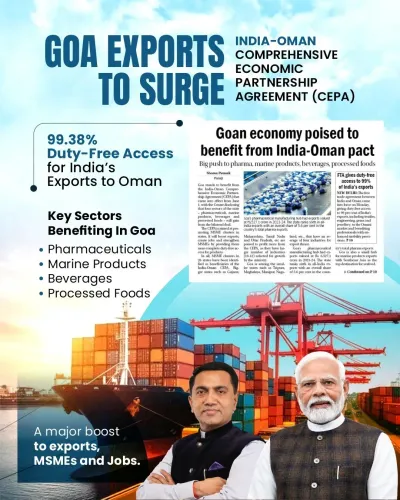
Goa's economic mix — tourism services, mining, pharmaceuticals, and small-scale manufacturing — gives local exporters a tangible stake in getting this right. A pharma unit supplying the UAE market, or a food processor targeting ASEAN, can materially reduce its cost base if it correctly claims FTA concessions. The workshop is aimed squarely at closing that knowledge gap.
State governments step in where the centre's outreach ends
The broader pattern here is deliberate and growing: as the Government of India signs more free trade and comprehensive economic partnership agreements, the load of ground-level capacity building is falling on state administrations. A national agreement means little without state-level export promotion cells, sector-specific training sessions, and accessible compliance guidance for MSMEs.
By hosting the session as a livestreamed state-level event — rather than delegating it to a chamber of commerce — the Sawant government is signalling that trade facilitation is now a direct executive priority in Panaji, not just a central-government talking point.
What comes next for Goan trade facilitation
The real measure of Monday's workshop will come in the follow-through: whether Goa establishes standing export-advisory infrastructure, rolls out sector-specific training for its pharmaceutical and manufacturing clusters, or deploys dedicated FTA compliance cells within the state's industry directorate. A single workshop, however well-attended, is a starting gun — not a finish line.
For the businesses in that room today, the ask is straightforward: walk out knowing which markets are now cheaper to reach, which product lines qualify, and who to call when the paperwork gets complicated. That, ultimately, is what transforms a signed agreement into a filled export order.
Point of View
Not just a slogan. For Goa specifically, whose industrial base is narrow and whose pharma and processing units have under-utilised export capacity, FTA literacy could open a meaningful second economic lane alongside tourism. The test, as always, will be institutional follow-through beyond a single event.
NationPress
19 Oct 2026
Frequently Asked Questions
What is the state-level FTA workshop organised by Goa CM Pramod Sawant?
It is a capacity-building workshop hosted by Goa Chief Minister Pramod Sawant on 19 October 2026 to help local exporters, MSMEs and businesses understand how to use India's Free Trade Agreements — including rules of origin, tariff concessions and compliance procedures — to expand into foreign markets.
Which Free Trade Agreements is India currently leveraging for exports?
India has signed several bilateral and regional agreements since 2020, including the India-UAE Comprehensive Economic Partnership Agreement (2022), which provides preferential market access for Indian goods and services. Additional FTAs with other partners are at various stages of negotiation or implementation.
How can Goa's businesses benefit from India's FTAs?
Goa's pharmaceutical, small-scale manufacturing and food processing sectors can reduce export costs by correctly claiming tariff concessions available under India's FTAs. The key is understanding eligibility criteria — particularly 'rules of origin' — which workshops like this one are designed to explain.
Why are state governments holding their own FTA workshops?
National trade agreements create policy frameworks, but ground-level implementation requires localised outreach. State governments are stepping in to run sector-specific training and advisory sessions so that MSMEs — which often lack dedicated trade-compliance teams — can actually access the benefits their central government has negotiated.
What follow-up actions should Goa take after the FTA workshop?
Policy analysts suggest Goa should consider establishing export promotion cells within its industry directorate, running sector-specific training for pharmaceutical and manufacturing clusters, and providing ongoing compliance advisory services so that the momentum from a single workshop is institutionalised.