Owaisi Blasts Modi Govt Over Youth Unemployment, Inflation
Synopsis
AIMIM president Asaduddin Owaisi accused the Modi government of misgovernance on 19 October 2026, saying its failures have left India's youth jobless and common households burdened by rising prices — a recurring opposition refrain ahead of Parliament's winter session.
Key Takeaways
Asaduddin Owaisi posted a sharp attack on the Modi government on 19 October 2026 , citing youth unemployment and rising inflation as products of misgovernance.
The post, in Hindi, targeted the 'aam janta' (common public) as the primary victims of price rises and joblessness.
AIMIM has consistently used parliamentary and social-media platforms to amplify national economic grievances alongside other opposition parties.
The Periodic Labour Force Survey (PLFS) , running since 2017 , has been a key data source opposition parties cite on youth unemployment trends.
The criticism arrives ahead of the winter session of Parliament , when economic accountability typically intensifies in public debate.
Owaisi's statement offers no counter-policy proposal — consistent with opposition interventions that prioritise critique over alternative frameworks.
Two issues — jobs and prices — have shadowed Indian politics for a decade, and on Monday, 19 October 2026, AIMIM president and Hyderabad MP Asaduddin Owaisi put them squarely back on the national agenda, accusing the Modi government of economic mismanagement that has left the country's youth jobless and ordinary households crushed under rising prices.
In a post on X, Owaisi wrote: 'Modi sarkar ki Misgovernance ki vajah se aaj desh ka yuva berozgari aur aam janta badhti mehangai se pareshan hai' — 'Because of the Modi government's misgovernance, the country's youth today is troubled by unemployment and the common public by rising inflation.'
Unemployment and Inflation as Opposition Battlegrounds
The twin themes are anything but new in Indian political discourse. Since the government's Periodic Labour Force Survey (PLFS) began releasing annual estimates from 2017 onward, opposition parties have used the data to build a sustained case against the Bharatiya Janata Party's economic stewardship. Youth unemployment — particularly among educated job-seekers — and consumer price inflation have recurred as central planks in every electoral cycle the BJP has fought since 2019.
Owaisi's statement fits squarely within that opposition pattern. AIMIM, while a regional force based in Hyderabad, has consistently used its parliamentary platform to amplify national economic grievances — often targeting constituencies that feel underserved by mainstream economic policies.
What the Data Has Long Said
PLFS findings have repeatedly flagged elevated youth joblessness as a structural challenge, separate from cyclical economic swings. On the price front, Reserve Bank of India inflation data has, across multiple quarters, shown food and fuel costs outpacing wage growth for lower-income households — precisely the 'aam janta' Owaisi invokes. Neither problem is unique to the current government, but both have proved politically radioactive, intensifying ahead of every major state election and budget session.
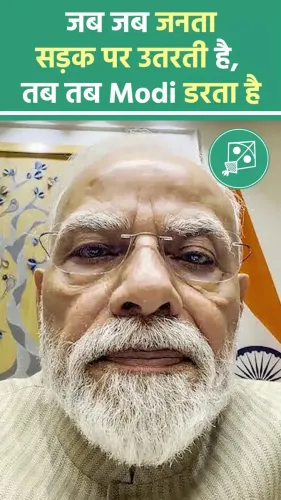
The post includes a video — the contents of which carry Owaisi's broader argument visually — and arrives as Parliament's winter session approaches, a period when opposition parties traditionally sharpen their economic critique for the public record.
The Larger Opposition Calculus
Statements like this serve multiple purposes: they stake out ideological ground, feed into broader coalition narratives among non-BJP parties, and keep economic accountability in the news cycle. Notably, Owaisi's post stops short of proposing an alternative economic framework — a pattern common across opposition interventions on inflation and employment that prioritize critique over counter-policy. Whether that changes as the winter session nears will be worth watching.
The unemployment queue and the grocery bill: two numbers Indians feel before any economist measures them. Owaisi's message is a reminder that data may be disputed, but lived experience is not.
Point of View
A regional party punching above its national weight, such statements expand ideological reach well beyond Hyderabad without requiring the legislative muscle to drive an alternative agenda. The real test is whether these critiques crystallise into coordinated opposition numbers when the winter session opens.
NationPress
19 Oct 2026
Frequently Asked Questions
What did Asaduddin Owaisi say about the Modi government on 19 October 2026?
Owaisi accused the Modi government of misgovernance, stating that its failures have left India's youth plagued by unemployment and the common public suffering under rising inflation.
What is AIMIM's stance on youth unemployment in India?
AIMIM, led by Owaisi, has consistently used parliamentary and public platforms to highlight youth unemployment as a governance failure under the BJP-led central government, often citing official PLFS data.
What is the Periodic Labour Force Survey (PLFS) and why does it matter?
The PLFS is a government survey that has tracked employment and unemployment trends in India since 2017, and opposition parties regularly cite its findings on youth joblessness to challenge the ruling government's economic record.
Is inflation a major political issue in India ahead of Parliament's winter session?
Yes. Rising consumer prices and food inflation have been recurring political flashpoints, with opposition parties using RBI and government data to argue that ordinary households bear a disproportionate burden.
Does AIMIM hold significant national political power in India?
AIMIM is primarily a regional party based in Hyderabad with limited Lok Sabha seats, but it amplifies national economic and minority-interest issues through Owaisi's high-profile parliamentary presence and active social media communication.