CM Sawant launches Goa Special Courts, opens revenue offices on Saturdays
Synopsis
Goa CM Pramod Sawant launched the Goa Special Courts initiative and directed all Collector, Deputy Collector, Mamlatdar and ISLR offices to open every Saturday to fast-track Mhaje Ghar, tenancy, mutation, partition and Mundkar purchase cases, targeting a people-centric clearance of pending revenue disputes.
Key Takeaways
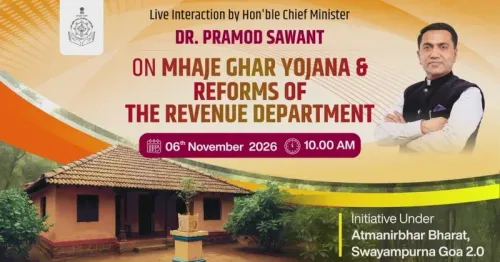
Goa Special Courts formally launched by CM Pramod Sawant on 6 November 2026 to expedite revenue and land cases.
All Collector, Deputy Collector, Mamlatdar and ISLR offices ordered to remain open every Saturday for case hearings.
Saturday sittings will cover Mhaje Ghar, mutations, partition, tenancy and Mundkar purchase cases.
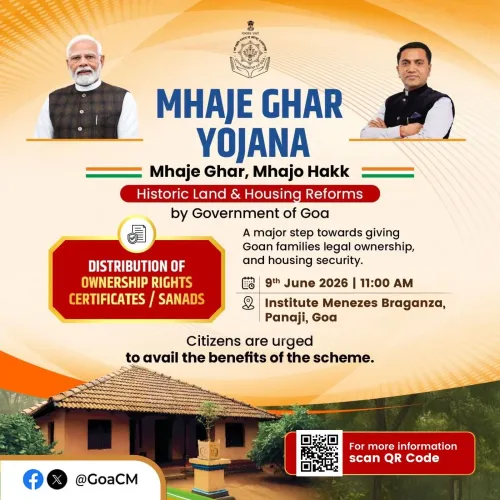
The Mhaje Ghar Scheme addresses housing and land ownership rights for protected tenants and mundkars under Goa's specific land laws.
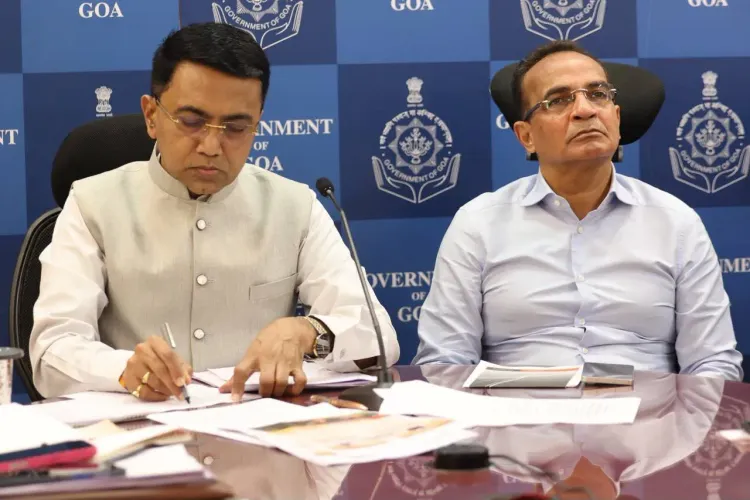
CM Sawant chaired a virtual review with Collectors, Deputy Collectors and Mamlatdars from Mahalaxmi, Panaji .
Directive emphasises time-bound, coordinated implementation for faster resolution and efficient service delivery.
A land dispute in Goa can outlast a generation. Goa Chief Minister Pramod Sawant moved on Friday, 6 November 2026 to change that, virtually reviewing the Mhaje Ghar Scheme and Special Adalat progress with Collectors, Deputy Collectors, Mamlatdars and other senior officials from Mahalaxmi, Panaji — and formally launching the Goa Special Courts initiative.
Saturday windows for land cases across Goa
The centrepiece of the directive: every Collector, Deputy Collector, Mamlatdar and ISLR office in Goa must now remain open on Saturdays to hear cases tied to Mhaje Ghar, mutations, partition, tenancy and Mundkar purchase. The instruction is explicit — these are not optional sittings but a structured mechanism to attack the backlog of pending revenue court cases. For thousands of tenants and mundkars waiting on paperwork that determines whether they own the walls around them, Saturday just became the most important day of the week.
What the Mhaje Ghar Scheme and Mundkar Act mean for ordinary Goans
Goa's land landscape is shaped by two specific statutes — the Mundkar Act and the Tenancy Act — which give protected tenants and mundkars (resident occupants) the right to purchase the land they live on. The Mhaje Ghar Scheme (literally 'My Home' in Konkani) is a state initiative designed to operationalise those rights, clearing the mutation and partition hurdles that keep beneficiaries in legal limbo. Without a resolved mutation entry, a family cannot formally own, sell, or inherit their home — making revenue-court delays a material hardship, not an administrative inconvenience.
Special Courts and the push for time-bound resolution
The newly launched Goa Special Courts add a formal institutional layer to what has until now been an administrative drive. Sawant emphasised 'effective coordination and time-bound implementation' as the governing principle — language that signals measurable targets rather than open-ended reviews. The virtual interaction format, linking the Chief Minister directly with ground-level Mamlatdars, itself signals the administration's intent to compress the feedback loop between policy and delivery.
India's states periodically deploy weekend hearings and adalat-style drives to cut land-mutation pendency — Goa's move fits that established pattern, but the simultaneous launch of a dedicated Special Courts framework gives it a sharper institutional spine. Whether clearance rates reflect that ambition will be the real test when Saturday sittings get underway.
Point of View
Whose BJP government has repeatedly pitched administrative efficiency as a governance differentiator, visibly attacking land-mutation pendency — which affects the most ordinary, most politically salient asset Goans hold — is both a policy necessity and an electoral signal. The Mhaje Ghar framing ('My Home') personalises what is otherwise a dry revenue-law exercise, amplifying its public resonance. The real policy test, however, lies in whether the Special Courts are backed by dedicated judicial or quasi-judicial manpower, or whether they remain an administrative rebrand of existing forums.
NationPress
6 Nov 2026
Frequently Asked Questions
What is the Mhaje Ghar Scheme in Goa?
Mhaje Ghar — meaning 'My Home' in Konkani — is a Goa government initiative to resolve land ownership rights for protected tenants and mundkars, helping them clear mutation, partition and tenancy hurdles so they can formally own their homes under the Mundkar Act and Tenancy Act.
What are the new Goa Special Courts?
Goa Special Courts is an initiative launched by CM Pramod Sawant on 6 November 2026 to create a dedicated forum for the faster disposal of pending revenue court cases, including land mutations, partition, tenancy and Mundkar purchase disputes.
Will Goa government offices be open on Saturdays for land cases?
Yes. CM Sawant has directed all Collector, Deputy Collector, Mamlatdar and ISLR offices across Goa to remain open every Saturday specifically to hear cases relating to Mhaje Ghar, mutations, partition, tenancy and Mundkar purchase.
What is the Mundkar Act in Goa?
The Mundkar Act is a Goa-specific law that gives mundkars — people who occupy and reside in a 'mundk' (dwelling on another's land) — the legal right to purchase that property. It is one of several state-specific statutes shaping land rights in Goa.
Why are land mutation cases pending in Goa?
Revenue court cases involving mutations, partition and tenancy in Goa are complex because they are governed by state-specific laws like the Mundkar Act and Tenancy Act. Limited hearing days and high case volumes have historically created a backlog, which the new Saturday sittings and Special Courts aim to reduce.