CM Sawant Launches Sanskrit Heritage Catalogue at Kalidas Din Event
Synopsis
Goa Chief Minister Pramod Sawant launched the 'Sanskrit Sahityachi Suchi' catalogue at a Kalidas Din event in Panaji on 15 July 2026, felicitated scholar Mahesh Kapde, and called on Goans to deposit old manuscripts with the Department of Archives under the Gyan Bharatam Mission's public-participation framework.
Key Takeaways
CM Pramod Sawant attended the valedictory of Kalidas Din celebrations and a Sanskrit symposium in Panaji on 15 July 2026 .
The 'Sanskrit Sahityachi Suchi' , a catalogue of Goa's Sanskrit literary heritage, was formally launched at the event.
Guruji Mahesh Kapde was felicitated for his contributions to Sanskrit scholarship and archival preservation.
Sawant appealed to Goans holding old manuscripts and hastalikhitas to deposit them with the Department of Archives for scientific conservation.
The initiative is aligned with the central government's Gyan Bharatam Mission and PM Modi's 'Virasat Bhi, Vikas Bhi' framework.
Institutions Partagali Math and Tapobhoomi were highlighted as active custodians of Goa's Sanskrit and manuscript tradition.
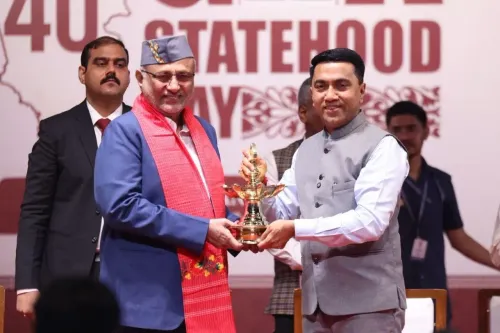
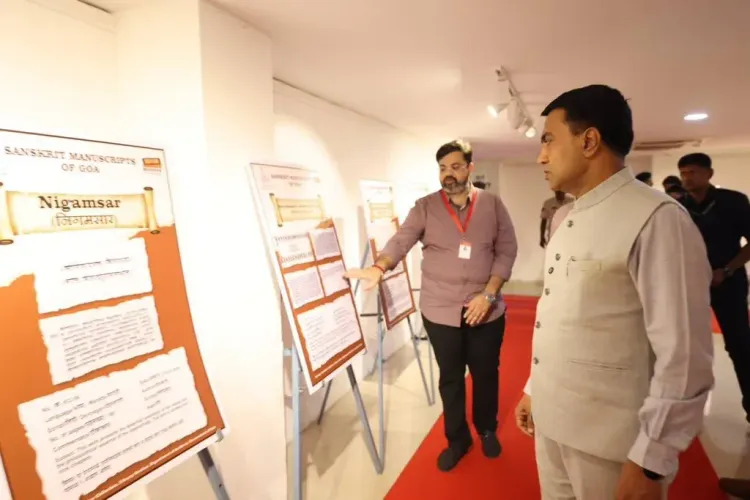
Goa Chief Minister Pramod Sawant on Wednesday, 15 July 2026, attended the valedictory function of Aashadasya Pratham Divase (Kalidas Din) celebrations and a one-day symposium on the 'History of Sanskrit in Goa', organised by the Department of Archives, Government of Goa, at Panaji. At the event, he launched the 'Sanskrit Sahityachi Suchi', a catalogue documenting Goa's Sanskrit literary heritage, and appealed to residents holding old manuscripts to deposit them with the Department of Archives for scientific preservation.
Context
The event marked Kalidas Din, an annual observance dedicated to the classical Sanskrit poet Kalidasa, celebrated on the first day of the Hindu month of Ashadha. CM Sawant felicitated Guruji Mahesh Kapde, a Sanskrit scholar recognised for his contributions to archival preservation in Goa. The symposium brought together scholars and archivists to examine the state's deep-rooted Sanskrit tradition, spanning ancient inscriptions, manuscripts, and hastalikhitas (handwritten texts).
Addressing attendees, Sawant underlined that Goa's civilisational identity is embedded in its manuscript tradition. 'Our manuscripts are not merely records of the past; they are repositories of timeless knowledge and our civilisational legacy,' he stated, urging Goans possessing old manuscripts and hastalikhitas to come forward and entrust them to the Department of Archives.
Policy Backdrop
The event connects directly to the Gyan Bharatam Mission, a central government initiative aimed at manuscript preservation through public participation and scientific conservation. Sawant invoked Prime Minister Narendra Modi's guiding principle of 'Virasat Bhi, Vikas Bhi' — preserving civilisational heritage alongside pursuing development — as the framework for Goa's archival efforts.
India's manuscript preservation drive has a longer lineage: the National Mission for Manuscripts, established in 2003, laid the groundwork for surveying and conserving the country's manuscript wealth. The National Education Policy 2020 further emphasised Sanskrit and Indian knowledge traditions as pillars of the education system, lending institutional momentum to state-level efforts like Goa's.
The Department of Archives, Government of Goa has previously conducted archival digitisation drives and Sanskrit symposiums, making the current event part of a sustained, multi-year effort rather than a standalone initiative.
Stakeholders and Impact
Institutions such as Partagali Math — a Goan religious institution known for housing collections of ancient Sanskrit manuscripts — and Tapobhoomi, which carries forward Sanskrit and Gurukul education, were cited by Sawant as living examples of Goa's knowledge tradition. Their role underscores that preservation in the state is not confined to government archives but is distributed across religious and educational institutions.
The direct appeal to ordinary Goans to deposit manuscripts with the Department of Archives signals a shift toward citizen-driven conservation, consistent with the Gyan Bharatam Mission's emphasis on Jan Bhagidari (public participation). Sanskrit scholars, heritage researchers, and manuscript-holding families across Goa are the primary stakeholders who stand to shape the success of this outreach.
What's Next
The immediate follow-up will be collection drives by the Goa Department of Archives to gather manuscripts submitted by residents in response to Sawant's appeal. How effectively the state integrates these submissions into the Gyan Bharatam Mission framework — including scientific conservation and public cataloguing — will determine the long-term impact of the initiative.
With the 'Sanskrit Sahityachi Suchi' now launched as a reference document of Goa's Sanskrit literary output, scholars and researchers gain a new tool to trace the state's contribution to classical Indian literature. If the catalogue and the manuscript collection drive gain traction, Goa could emerge as a model for how smaller states can link local archival efforts to national heritage missions.
Point of View
Which has been operationalised through central missions like Gyan Bharatam and the NEP 2020's emphasis on classical languages. By anchoring a state-level archival event to PM Modi's 'Virasat Bhi, Vikas Bhi' slogan, the Chief Minister reinforces ideological continuity between Panaji and Delhi on cultural policy. The direct appeal to citizens to surrender manuscripts is a practical extension of the Jan Bhagidari model, which shifts conservation responsibility from institutions alone to the wider public. Whether this translates into measurable accessions for the Goa Department of Archives will be the real test of the initiative's reach beyond the ceremonial.
NationPress
15 Jul 2026
Frequently Asked Questions
What is the 'Sanskrit Sahityachi Suchi' launched by CM Sawant?
'Sanskrit Sahityachi Suchi' is a catalogue documenting Goa's Sanskrit literary heritage, launched by Chief Minister Pramod Sawant at the Kalidas Din valedictory event in Panaji on 15 July 2026. It is intended to serve as a reference document of the state's contribution to classical Sanskrit literature.
What is Kalidas Din and why is it celebrated?
Kalidas Din is an annual observance dedicated to the classical Sanskrit poet Kalidasa, marked on the first day of the Hindu month of Ashadha. It is celebrated to honour the legacy of Sanskrit literature and Kalidasa's enduring contribution to Indian classical culture.
What is the Gyan Bharatam Mission?
The Gyan Bharatam Mission is a central government initiative focused on the preservation of India's manuscript heritage through scientific conservation and public participation, or Jan Bhagidari. It encourages citizens and institutions to contribute manuscripts to authorised archives for documentation and conservation.
Who is Mahesh Kapde and why was he felicitated in Goa?
Mahesh Kapde is a Sanskrit scholar recognised for his valuable contributions to Sanskrit scholarship and archival preservation in Goa. He was felicitated by Chief Minister Pramod Sawant at the Kalidas Din event on 15 July 2026.
How can Goans contribute their old manuscripts for preservation?
Chief Minister Pramod Sawant has appealed to Goans possessing old manuscripts and hastalikhitas (handwritten texts) to come forward and entrust them to the Department of Archives, Government of Goa, where they will undergo scientific preservation and conservation under the Gyan Bharatam Mission framework.