CM Sawant Launches Unified Digital Portal for Goa MSMEs
Synopsis
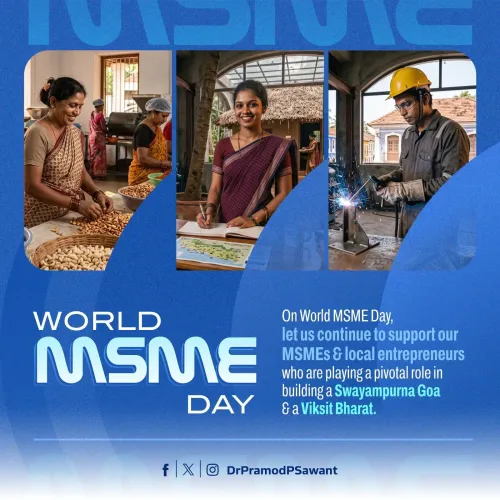
Goa Chief Minister Pramod Sawant launched the Unified Digital Portal for MSMEs on World MSME Day 2026, consolidating registrations and innovation support onto a single state platform under the Swayampurna Goa banner, aligning with the national Viksit Bharat 2047 vision.
Key Takeaways
Goa Chief Minister Pramod Sawant launched the Unified Digital Portal (UDP) for MSMEs on 1 July 2026 , marking World MSME Day.
The UDP is designed to consolidate MSME registrations, approvals and innovation support onto a single state-run digital platform.
The launch is framed as an extension of the state's Swayampurna Goa self-reliance initiative, first introduced in 2020 .
Goa's move aligns with the national Viksit Bharat 2047 vision and follows similar portals launched in Maharashtra , Karnataka and Tamil Nadu .
Integration with the national Udyam Registration portal and state single-window clearance systems will determine the UDP's practical impact.
Key beneficiaries include entrepreneurs in Goa's tourism, pharmaceuticals and manufacturing MSME clusters.
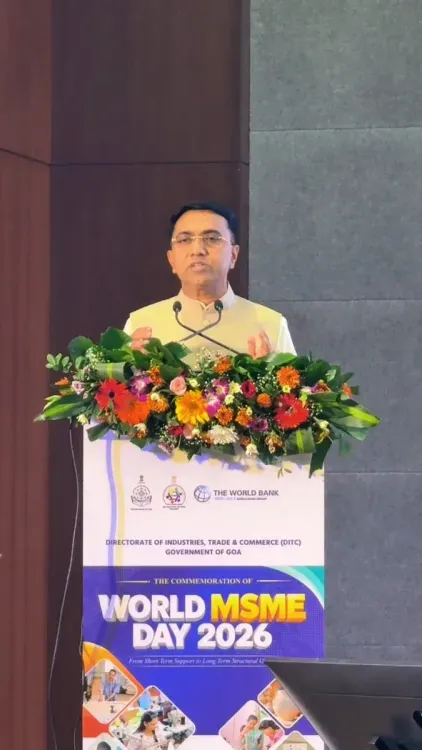
Goa Chief Minister Pramod Sawant on Wednesday, 1 July 2026 announced the launch of the Unified Digital Portal (UDP) for micro, small and medium enterprises in the state, marking World MSME Day 2026 with a push to streamline entrepreneurship and ease of doing business in Goa.
Context
Posting on X, CM Sawant said the UDP was aimed at 'empowering MSMEs' and 'accelerating innovation', framing the launch as 'another step towards strengthening entrepreneurship, ease of doing business, and building a Swayampurna Goa for a Viksit Bharat.' The announcement coincides with World MSME Day, observed annually on 27 June, with Goa marking it on 1 July with the formal portal rollout.
The UDP is designed to consolidate MSME services — including registrations, approvals and innovation support — onto a single state-run digital platform, reducing friction for small business owners across Goa's tourism, pharmaceuticals and manufacturing sectors.
Policy Backdrop
The launch builds on a layered policy architecture. At the national level, the Udyam Registration portal, introduced in 2020, simplified MSME formalisation and credit access. The central government's MSME Champions scheme, unveiled in 2021, further encouraged technology upgradation and innovation support for smaller enterprises.
At the state level, Goa introduced the Swayampurna Goa initiative in 2020 to promote local self-employment and economic self-sufficiency. The UDP is positioned as a digital extension of that broader self-reliance agenda, aligning it with the national Viksit Bharat 2047 vision — the central government's roadmap for a developed India by the centenary of independence.
Goa's move mirrors similar state-level single-window digital platforms rolled out in Maharashtra, Karnataka and Tamil Nadu over the past five years, as states compete on ease-of-doing-business indices and seek to attract MSME investment.
Stakeholders and Impact
The primary beneficiaries are Goa's MSME entrepreneurs and startups, who have historically navigated fragmented approval and registration processes across multiple state departments. A unified portal, if effectively integrated, could reduce compliance timelines and improve access to credit facilitation schemes.
Industry bodies such as the Goa Chamber of Commerce and Industry will be closely watched for feedback on registration volumes and the portal's practical utility. Tourism-linked micro-enterprises and pharmaceutical manufacturers — two significant MSME clusters in the state — stand to gain from streamlined digital access to government services.
What's Next
The critical test for the UDP will be its integration with the national Udyam portal and Goa's existing single-window clearance systems. Seamless data exchange between state and central platforms would determine whether the portal delivers meaningful relief to entrepreneurs or adds another layer to an already complex compliance landscape.
As India's MSME sector — which contributes roughly 30 per cent of GDP and employs hundreds of millions — continues its post-pandemic digital transition, Goa's UDP will be watched as a potential model for smaller states seeking to punch above their weight on business-friendliness metrics.
Point of View
A small state with an outsized tourism economy, has limited fiscal headroom, making digital infrastructure a cost-effective way to improve business rankings without heavy capital expenditure. The real test will be adoption: single-window portals across India have often struggled with backend integration, and Goa's MSME community will judge the UDP by processing speed and credit access, not its launch optics. If the portal delivers measurable reductions in compliance timelines, it could strengthen Sawant's economic credentials ahead of the next state electoral cycle.
NationPress
1 Jul 2026
Frequently Asked Questions
What is the Unified Digital Portal launched by Goa CM Pramod Sawant?
The Unified Digital Portal (UDP) is a Goa government digital platform launched on World MSME Day 2026 to consolidate MSME services — including registrations, approvals and innovation support — onto a single interface, reducing compliance complexity for small business owners in the state.
What is Swayampurna Goa?
Swayampurna Goa is a state self-reliance programme introduced by the Goa government in 2020, aimed at promoting local entrepreneurship, self-employment and economic self-sufficiency among Goan residents.
How does Goa's UDP relate to the national Udyam portal?
The Udyam Registration portal is a central government platform launched in 2020 to simplify MSME formalisation and credit access. Goa's UDP is a state-level complement; its effectiveness will depend on how well it integrates with Udyam and other national systems.
What is Viksit Bharat and why is it mentioned in the MSME portal launch?
Viksit Bharat is the central government's vision for a fully developed India by 2047, the centenary of independence. State governments, including Goa, routinely frame local schemes within this national narrative to signal policy alignment with the BJP-led central government.
Which sectors in Goa will benefit most from the Unified Digital Portal?
Tourism-linked micro-enterprises, pharmaceutical manufacturers and general manufacturing MSMEs are the primary clusters in Goa likely to benefit from streamlined digital registrations and approvals through the UDP.