CM Sawant Marks World Fisheries Day, Backs Goa's Fishing Communities
Synopsis
Goa Chief Minister Pramod Sawant marked World Fisheries Day on 21 November by calling for innovation, sustainable practices, and continued support for traditional fishing communities, echoing India's national blue economy priorities.
Key Takeaways
World Fisheries Day is observed on 21 November each year to highlight sustainable fisheries management globally.
Goa CM Pramod Sawant called for empowering traditional fishermen while preserving marine resources for future generations.
Goa's coastline-dependent economy makes fisheries central to both livelihoods and food security in the state.
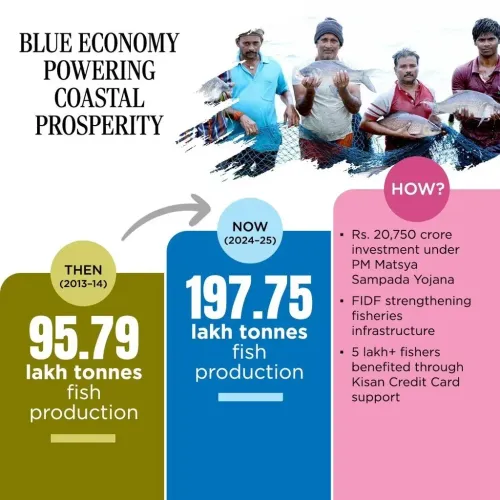
The national Pradhan Mantri Matsya Sampada Yojana (2020) aims to modernise fisheries infrastructure across coastal states including Goa.
No new state scheme or budget allocation was announced; policy follow-through is expected to surface in the next legislative session.
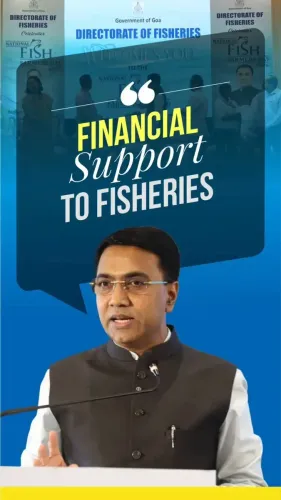
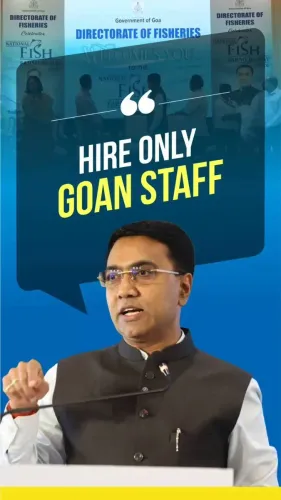
On World Fisheries Day, 21 November, Goa Chief Minister Pramod Sawant called for sustained support to the state's traditional fishing communities, linking their livelihoods to Goa's broader maritime identity and food security.
Goa's Coastline and the Communities It Sustains
Sawant's message acknowledged the fishing sector's twin role — as an economic contributor and a custodian of cultural heritage. 'Goa's rich maritime heritage is deeply rooted in its fishing traditions,' he wrote, urging a path that balances innovation with responsible resource management.
The appeal is not merely ceremonial. Goa's coastline-dependent economy means that the health of its fisheries directly shapes the livelihoods of thousands of coastal families. Successive state administrations have walked the line between enabling commercial growth and protecting artisanal fishing traditions that predate statehood.
PM Matsya Sampada Yojana and the National Blue Economy Push
At the national level, the Pradhan Mantri Matsya Sampada Yojana, launched in 2020, set out to modernise fisheries infrastructure, expand credit access for fishers, and improve cold-chain logistics across coastal states — including Goa. Sawant's call for 'innovation and responsible resource management' aligns squarely with that framework, even as the state awaits concrete budget allocations in its next legislative session.
World Fisheries Day, observed every 21 November, was established to raise global awareness about the importance of sustainable fisheries management. For a coastal state like Goa, the occasion carries practical weight beyond symbolism.
Sustainability at the Centre of Sawant's Message
The Chief Minister's emphasis on 'preserving marine resources for future generations' signals the tension every fishing-dependent state must navigate: growing demand, shrinking fish stocks, and the need to keep traditional fishermen economically viable without exhausting the resource base. Sawant's framing places empowerment and conservation as complementary goals — a position that mirrors India's broader blue economy priorities but stops short of announcing any new state-level scheme or allocation.
Whether the sentiment translates into policy — in the form of updated fisheries regulations or enhanced welfare measures — will likely become clear when Goa's legislature next convenes.
Point of View
The optics of being seen as a protector of traditional livelihoods matter as much as the policy itself. The real test will be whether Goa's next budget translates this rhetoric into measurable allocations for fisheries welfare and marine conservation.
NationPress
21 Nov 2026
Frequently Asked Questions
What is World Fisheries Day and when is it observed?
World Fisheries Day is an annual global observance held on 21 November to highlight the importance of sustainable fisheries management and the role of fishing communities in food security and livelihoods.
What did Goa CM Pramod Sawant say on World Fisheries Day?
CM Sawant called for continued support to traditional fishermen, promotion of sustainable fishing practices, and innovation in resource management, emphasising that Goa's maritime heritage is rooted in its fishing traditions.
What is the Pradhan Mantri Matsya Sampada Yojana?
The Pradhan Mantri Matsya Sampada Yojana , launched in 2020 , is a central government scheme aimed at modernising fisheries infrastructure, improving credit access for fishers, and boosting cold-chain logistics across India's coastal states.
How important is the fisheries sector to Goa's economy?
Fisheries are a significant part of Goa's coastline-dependent economy, supporting thousands of livelihoods in coastal communities and contributing to the state's food security and cultural identity.
Has Goa announced any new fisheries scheme recently?
As of CM Sawant's World Fisheries Day statement, no new state-level scheme or budget allocation was announced; observers are watching Goa's upcoming legislative session for concrete policy updates.