CM Sawant attends NITI Aayog meet, pitches Goa's 90:10 CSS funding
Synopsis
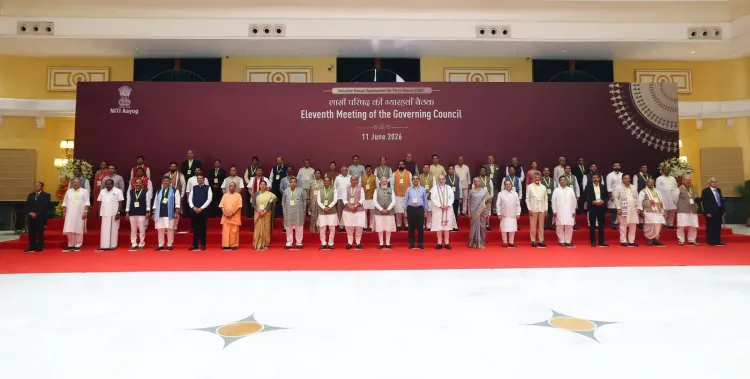
Goa Chief Minister Pramod Sawant attended the 11th NITI Aayog Governing Council Meeting chaired by PM Modi on 11 June 2026, showcasing state human capital programmes and formally demanding a 90:10 CSS funding ratio to account for Goa's unique geographic and demographic constraints.
Key Takeaways
CM Pramod Sawant represented Goa at the 11th NITI Aayog Governing Council Meeting on 11 June 2026 , chaired by PM Narendra Modi .
The meeting was themed on Human Capital for Viksit Bharat , aligning state plans with the national Viksit Bharat@2047 framework.
Sawant cited state initiatives including CARES , Samarth , AI Data Labs , and integrative healthcare as evidence of Goa's human capital push.
He formally urged a 90:10 CSS funding split (Centre:State), recognising Goa's unique geographical and demographic realities.
Goa has set its own localised target, Viksit Goa@2037 , a decade ahead of the national 2047 goal.
Any revision to CSS norms for Goa could set a precedent for other small states seeking similar concessions.
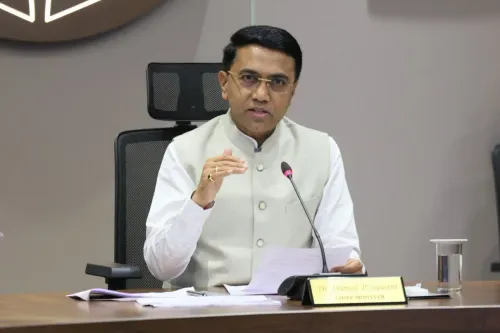
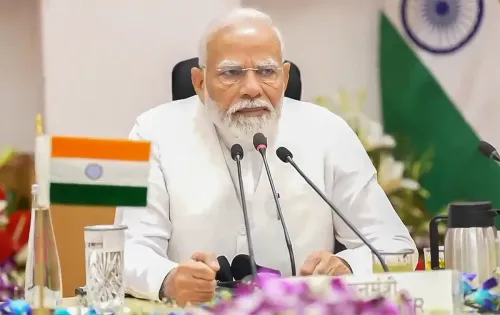
Goa Chief Minister Pramod Sawant attended the 11th NITI Aayog Governing Council Meeting on Thursday, 11 June 2026, chaired by Prime Minister Narendra Modi and themed on Human Capital for Viksit Bharat. Sawant used the platform to highlight Goa's state-level human capital initiatives and urge revised funding terms for Centrally Sponsored Schemes.
Context
At the meeting, CM Sawant argued that Goa, despite being India's smallest state by area, is not constrained by its size. He cited a cluster of state-run programmes — including CARES, Samarth, AI Data Labs, and integrative healthcare initiatives — as evidence that the state is actively building human capital with relevance beyond its borders. 'Goa, India's smallest State, is proving that size is no constraint,' he wrote, adding that these efforts serve 'not just Goa, but the nation.'
Sawant also formally urged the council to recognise Goa's 'unique geographical and demographic realities' by extending CSS funding on a 90:10 basis — meaning the Centre would bear 90 per cent of scheme costs against Goa's 10 per cent. This demand reflects a long-standing concern that standard funding formulas disadvantage smaller, high-cost states.
Policy Backdrop
NITI Aayog was established in January 2015 to replace the Planning Commission and institutionalise cooperative federalism, with the Governing Council — comprising all Chief Ministers and Lieutenant Governors — as its apex deliberative body. The council has become the principal forum for states to align their development agendas with central priorities.
The Viksit Bharat@2047 framework, articulated by PM Modi as a roadmap for India to become a developed nation by the centenary of independence, has been progressively adopted by states as a structuring goal. Goa has localised this as Viksit Goa@2037, setting its own ten-year-earlier target horizon. Sawant noted that NITI Aayog's continued support is 'vital' as Goa operationalises this vision.
Smaller states have periodically sought modifications to CSS cost-sharing norms, arguing that per-capita costs are higher and revenue bases narrower than in larger states. A 90:10 split — currently available to special-category hill and northeastern states — would represent a significant departure from the standard 60:40 or 75:25 formulas applied to general-category states like Goa.
Stakeholders and Impact
A favourable revision to CSS funding norms would directly benefit Goa's state exchequer, freeing fiscal space for the schemes Sawant outlined. Citizens enrolled in programmes such as CARES and Samarth would be the immediate beneficiaries if those initiatives receive enhanced central support.
The demand also carries implications for other small or geographically constrained states that have made similar arguments. Any precedent set for Goa at the NITI Aayog level could feed into broader negotiations over CSS architecture in upcoming Union Budget cycles.
What's Next
The outcome of Sawant's pitch will likely surface in follow-up NITI Aayog consultations or in the CSS funding norms announced alongside the next Union Budget. Whether the Centre accepts the 90:10 formula for Goa will be a key indicator of how the government balances equity considerations for smaller states within the cooperative federalism framework. Progress on Viksit Goa@2037 milestones will also be watched as a measure of how effectively the state translates council-level commitments into on-ground delivery.
Point of View
He aligns a state-interest ask with the Centre's own ideological priorities — a tactic that makes it harder to dismiss. The move also reinforces a broader pattern of smaller states leveraging cooperative federalism forums to push back against one-size-fits-all funding formulas. Whether the Centre acts will test the depth of its commitment to equitable federalism beyond rhetorical endorsement.
NationPress
20 Sept 2026
Frequently Asked Questions
What is the NITI Aayog Governing Council Meeting?
The NITI Aayog Governing Council is the apex body of NITI Aayog, comprising the Prime Minister as chairperson and all state Chief Ministers and Union Territory Lieutenant Governors. It meets periodically to align state and central development priorities.
What is Goa CM Sawant's 90:10 CSS funding demand?
CM Sawant urged the Centre to fund Centrally Sponsored Schemes in Goa on a 90:10 ratio — with the Centre bearing 90 per cent of costs — citing the state's small size, unique geography, and demographic constraints that make standard funding formulas disproportionately burdensome.
What is Viksit Goa 2037?
Viksit Goa@2037 is Goa's state-level adaptation of the national Viksit Bharat@2047 vision, setting a target for the state to achieve developed-nation-equivalent indicators by 2037, a decade ahead of the national deadline.
What schemes did CM Sawant highlight at the NITI Aayog meeting?
Sawant highlighted CARES, Samarth, AI Data Labs, and integrative healthcare as flagship state initiatives building human capital in Goa, positioning them as contributions to national development goals.
Why does Goa seek special CSS funding treatment?
Goa argues that as India's smallest state by area, it faces higher per-capita implementation costs and a narrower revenue base, making the standard CSS cost-sharing formula — typically 60:40 or 75:25 — disproportionately burdensome compared with larger states.