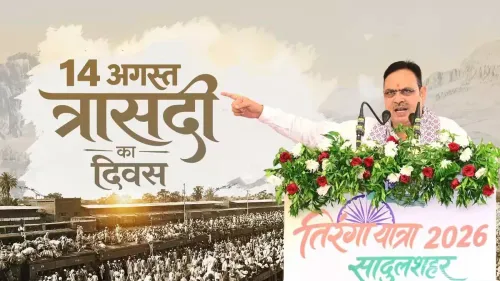
CM Bhajan Lal Sharma marks Partition Horrors Remembrance Day
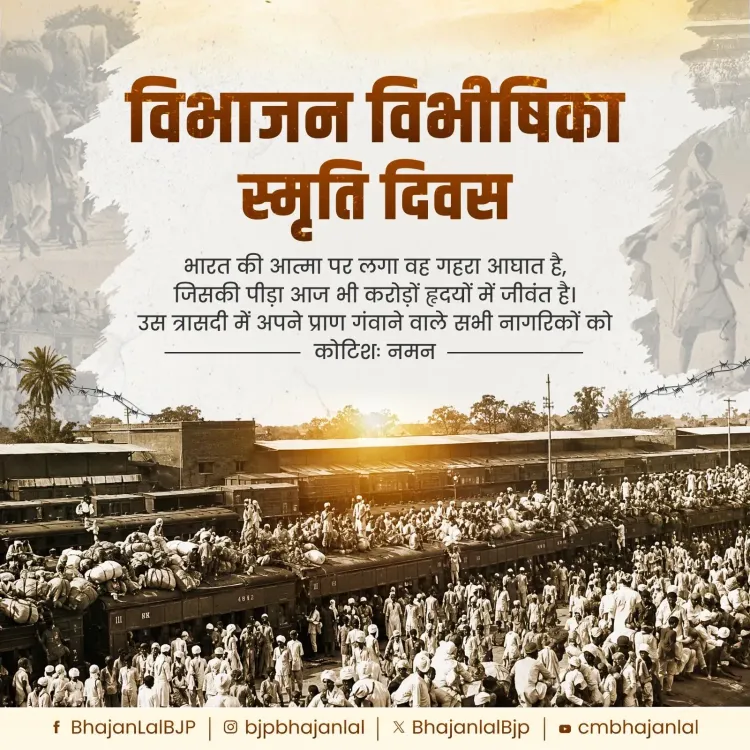
Synopsis
Rajasthan Chief Minister Bhajan Lal Sharma marked Partition Horrors Remembrance Day on 14 August, honouring victims of the 1947 Partition and calling for national unity and social harmony in their memory.
Key Takeaways
Rajasthan CM Bhajan Lal Sharma posted a tribute on Partition Horrors Remembrance Day, 14 August .
He described the day as a memory of 'pain that shakes humanity' and honoured all who lost their lives in the 1947 Partition .
He called on citizens to strengthen national unity, integrity, and social harmony in honour of those sacrifices.
Partition Horrors Remembrance Day was instituted by the Government of India in 2021 under PM Narendra Modi .
The 1947 Partition caused one of history's largest forced migrations, with hundreds of thousands killed and millions displaced.
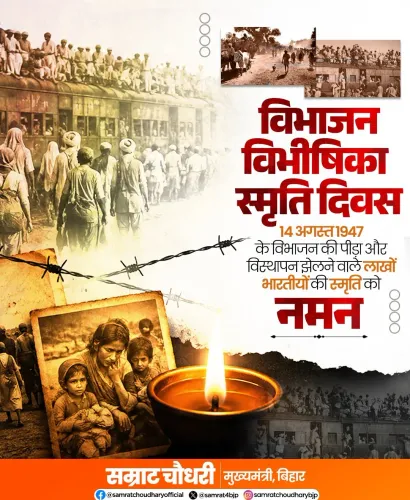
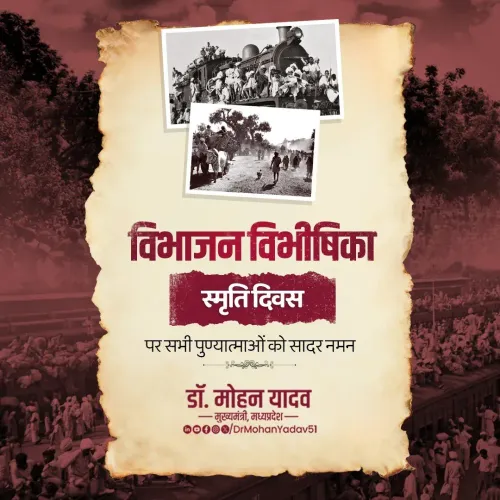
On 14 August, as India stands on the eve of its Independence Day, Rajasthan Chief Minister Bhajan Lal Sharma paused to honour the millions who bore the unbearable cost of the 1947 Partition — paying tribute to those who lost their lives and calling on the nation to renew its commitment to unity and social harmony.
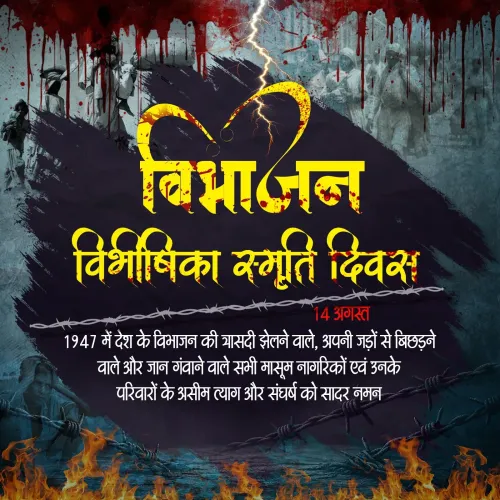
Posting on the occasion of Vibhajan Vibhishika Smriti Diwas (Partition Horrors Remembrance Day), CM Sharma described the day as 'a heartbreaking memory of pain that shakes humanity and the displacement of countless families.' He offered 'a hundred salutes' to every citizen who sacrificed their life in that tragedy, and urged Indians to honour those sacrifices by 'always strengthening the nation's unity, integrity, and social harmony.'
A day born from the wound of 1947
Partition Horrors Remembrance Day is observed every year on 14 August — the date Pakistan came into being — to keep alive the memory of one of history's largest forced migrations. The 1947 Partition of British India triggered mass displacement, communal violence, and deaths estimated in the hundreds of thousands, tearing apart families across what became India and Pakistan.
The observance was instituted in 2021 by the Government of India under Prime Minister Narendra Modi, who announced it on the very eve of Independence Day that year. The intent was to ensure that the human cost of Partition — long overshadowed by the celebrations of 15 August — receives its own solemn, dedicated moment of national reflection.
Rajasthan's voice in a national remembrance
CM Sharma, who has led Rajasthan since December 2023, joins state governments across India in marking the day — a pattern of participation that reflects the BJP's sustained emphasis on historical memory as a pillar of national identity. Rajasthan itself received large numbers of displaced Hindu and Sikh families from Sindh and western Punjab during Partition, making the day's resonance in the state particularly personal for many families.
The tribute is a reminder that behind the political geography of 1947 lay millions of individual stories — of homes abandoned overnight, of journeys made in fear, and of lives rebuilt from nothing. That memory, CM Sharma argues, must translate into a living resolve: a nation that holds together precisely because it remembers the cost of being torn apart.
Point of View
BJP-led state governments seek to channel a painful historical wound into a consolidating national narrative. For Rajasthan, a state with deep Partition-era roots in Sindhi and Punjabi displaced communities, such observances carry genuine grassroots resonance beyond political messaging. The annual cadence of state-level participation signals that Partition Remembrance Day has moved from a central government initiative to an embedded fixture of India's political calendar.
NationPress
28 Sept 2026
Frequently Asked Questions
What is Partition Horrors Remembrance Day?
Partition Horrors Remembrance Day is observed every year on 14 August to honour the victims of the 1947 Partition of India . It was declared by the Government of India in 2021 under Prime Minister Narendra Modi to ensure the human cost of Partition is formally remembered alongside Independence Day celebrations.
Why is 14 August chosen for Partition Remembrance Day?
14 August is the date on which Pakistan came into existence in 1947 , making it directly tied to the Partition event. Observing remembrance on this date places the tragedy in its precise historical moment, just before India's own Independence on 15 August .
What did CM Bhajan Lal Sharma say on Partition Remembrance Day?
CM Bhajan Lal Sharma described the day as a heartbreaking memory of pain that 'shakes humanity' and the displacement of countless families. He offered tribute to all who lost their lives in the Partition and urged citizens to commit to strengthening national unity, integrity, and social harmony.
Who announced Partition Horrors Remembrance Day in India?
Prime Minister Narendra Modi announced the observance of Partition Horrors Remembrance Day on 14 August in 2021 , on the eve of India's 75th Independence Day .
How many people were displaced in the 1947 Partition of India?
The 1947 Partition of British India triggered one of the largest forced migrations in human history, displacing an estimated 10 to 20 million people and resulting in hundreds of thousands of deaths due to communal violence, though precise figures vary across historical accounts.