CM Shivakumar Announces Two Hyperscale Green Data Centres in Karnataka
Synopsis
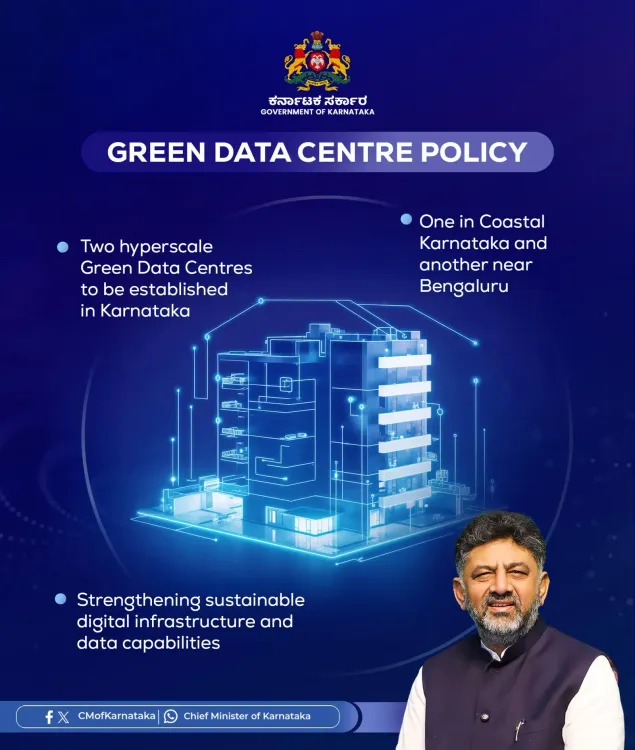
Chief Minister DK Shivakumar has announced the establishment of two hyperscale Green Data Centres in Karnataka, aiming to expand the state's digital infrastructure while embedding environmental sustainability at the core of its technology growth strategy.
Key Takeaways
CM DK Shivakumar announced two hyperscale Green Data Centres in Karnataka on 14 July 2026 .
The facilities are designed to support large-scale cloud, AI, and enterprise digital workloads with low-carbon operations.
The initiative aligns with India's Digital India programme and Karnataka's history as a leading IT hub centred on Bengaluru .
Key stakeholders include IT companies, data centre operators, and environmental groups who will monitor sustainability credentials.
Site locations, investment figures, capacity details, and environmental clearances are yet to be officially disclosed.
The move places Karnataka in competition with other Indian states racing to attract hyperscale data centre investment through green and policy incentives.
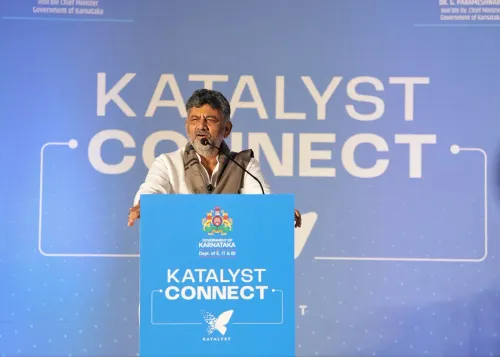
The Chief Minister's Office of Karnataka announced on Tuesday, 14 July 2026 that Chief Minister DK Shivakumar has approved the establishment of two hyperscale Green Data Centres in the state, marking a significant step in advancing sustainable digital infrastructure across Karnataka.
Context
The announcement positions Karnataka as a proactive actor in India's rapidly expanding data centre landscape. The Chief Minister's Office stated that the initiative will 'strengthen the State's technology ecosystem while promoting environmentally responsible technology development,' reflecting a dual mandate of digital growth and ecological accountability.
CM Shivakumar, who has been associated with infrastructure and IT promotion in the state, framed the move as part of Karnataka's broader commitment to sustainable digital advancement. The two facilities are described as hyperscale — a term denoting large-scale, high-capacity infrastructure capable of supporting cloud computing, artificial intelligence workloads, and enterprise data needs.
Policy Backdrop
The announcement builds on India's Digital India programme, launched in 2015, which laid the groundwork for nationwide digital infrastructure expansion including data centres and sustainable technology adoption. Karnataka, anchored by Bengaluru — one of Asia's foremost technology hubs — has historically leveraged its existing IT ecosystem to attract large-scale investments in this sector.
Indian states have increasingly competed to draw hyperscale data centre investments through targeted policy incentives, driven by national data localisation requirements and surging demand from cloud and artificial intelligence workloads. The parallel emphasis on green standards in Karnataka's announcement reflects the growing energy footprint of digital infrastructure and the sustainability commitments that global technology firms now demand of host regions.
Stakeholders and Impact
The primary beneficiaries of the initiative span a wide ecosystem: IT companies, data centre operators, cloud service providers, and startups relying on scalable digital infrastructure stand to gain from expanded local capacity. Environmental groups and sustainability advocates are likely to scrutinise the facilities' actual power sourcing and carbon-reduction credentials as project details emerge.
For Karnataka's technology sector, the establishment of hyperscale Green Data Centres could reduce dependence on data infrastructure located outside the state, improve latency for local digital services, and create direct and ancillary employment in construction, operations, and technology management.
What's Next
Key details — including site selection, private sector partnerships, power sourcing agreements, investment figures, and environmental clearances — are expected to follow in subsequent state budget sessions or dedicated policy announcements. Observers will watch closely for timelines and capacity disclosures that will determine the scale of the state's commitment.
As demand for data infrastructure accelerates across India, Karnataka's move to anchor its expansion in green standards could set a precedent for other states seeking to balance rapid digital growth with environmental responsibility.
Point of View
Particularly as hyperscalers face mounting pressure from shareholders and regulators to decarbonise their supply chains. For Shivakumar, the move also carries political weight: positioning Karnataka as a forward-looking governance model ahead of future electoral cycles. The real test will lie in the transparency and rigour of environmental standards applied once site selection and power sourcing details are disclosed.
NationPress
14 Jul 2026
Frequently Asked Questions
What are the two hyperscale Green Data Centres announced in Karnataka?
Chief Minister DK Shivakumar announced the establishment of two hyperscale Green Data Centres in Karnataka on 14 July 2026 to advance sustainable digital infrastructure in the state. Specific locations, capacity, and investment details have not yet been officially disclosed.
What is a hyperscale Green Data Centre?
A hyperscale data centre is a large-scale facility designed to support massive cloud computing, AI, and enterprise workloads. A 'green' designation indicates it is built and operated with low-carbon standards, including energy-efficient design and potentially renewable power sourcing.
Why is Karnataka building Green Data Centres?
Karnataka aims to strengthen its technology ecosystem — already anchored by Bengaluru — while meeting rising demand for digital infrastructure from cloud and AI sectors, and aligning with global sustainability standards that technology firms increasingly require from host regions.
How does this relate to India's Digital India programme?
India's Digital India programme, launched in 2015, promoted nationwide digital infrastructure including data centres. Karnataka's Green Data Centre initiative builds on that foundation, adding a sustainability dimension driven by current energy and environmental considerations.
When will the Karnataka Green Data Centres be operational?
Timelines for the facilities have not been announced. Details on site selection, private sector partnerships, power sourcing, and environmental clearances are expected to be disclosed in forthcoming state policy or budget announcements.