CM Shivakumar Backs Kerala's Operation Toofan Anti-Drug Drive
Synopsis
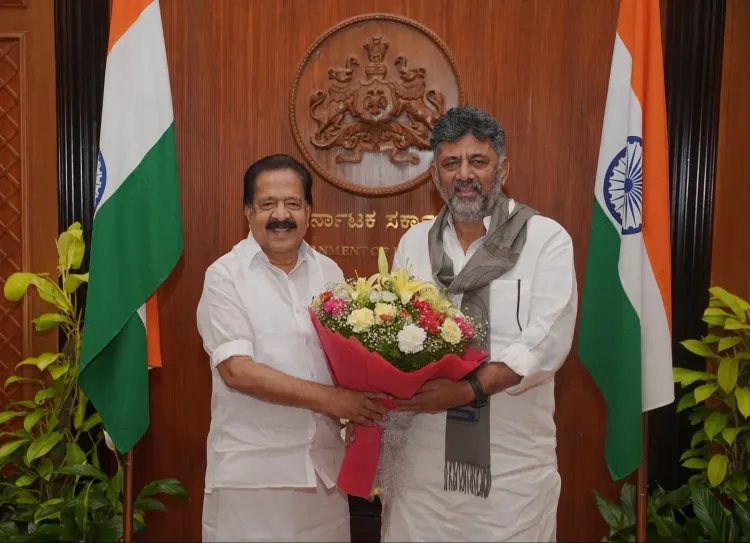
Kerala Home Minister Ramesh Chennithala met Karnataka CM D K Shivakumar at Vidhana Soudha on 8 July 2026 to seek support for Operation Toofan, Kerala's anti-drug mission. Shivakumar assured full cooperation and directed Karnataka Police to intensify border surveillance and intelligence-sharing to dismantle interstate narcotics networks.
Key Takeaways
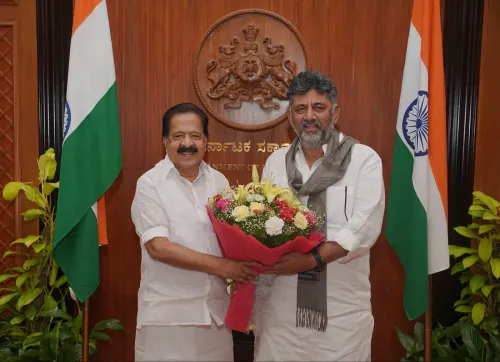
Kerala Home Minister Ramesh Chennithala met Karnataka CM D K Shivakumar at Vidhana Soudha, Bengaluru on 8 July 2026 .
The meeting was called to seek Karnataka's support for Operation Toofan , Kerala's special anti-drug mafia campaign.
CM Shivakumar assured full cooperation and issued a formal directive to Karnataka Police to step up border surveillance and intelligence-sharing.
The cooperation targets dismantling interstate drug networks and protecting youth from narcotics, particularly along the Karnataka-Kerala border .
The engagement fits a broader pattern of southern Indian states building direct bilateral law-enforcement ties, supplementing central agencies like the Narcotics Control Bureau .
The Chief Minister's Office of Karnataka announced on Wednesday, 8 July 2026 that Kerala's Minister for Home and Vigilance, Ramesh Chennithala, met Chief Minister D K Shivakumar at Vidhana Soudha, Bengaluru, seeking Karnataka's cooperation for Operation Toofan, Kerala's ongoing anti-drug campaign targeting interstate narcotics networks.
The CMO's post, issued in Kannada and English, stated that CM Shivakumar 'assured Karnataka's full cooperation and directed the Karnataka Police to intensify surveillance across all routes and modes of transport, strengthen intelligence-sharing, and work in close coordination to curb interstate drug trafficking and protect society from the menace of narcotics.'
Context
Operation Toofan is a special anti-drug mission launched by the Government of Kerala to dismantle drug mafia networks operating within and across state borders. The campaign focuses particularly on protecting the younger generation from narcotics. Minister Chennithala travelled to Bengaluru specifically to enlist Karnataka's support, underscoring the cross-border dimension of the problem.
The Karnataka-Kerala border is a known transit corridor for narcotics moving between southern states. Effective interdiction on this frontier requires coordinated action from both state police forces, making bilateral engagement a practical necessity rather than a ceremonial gesture.
Policy Backdrop
State-level drug enforcement in India operates under the framework of the Narcotic Drugs and Psychotropic Substances (NDPS) Act, 1985, which empowers state governments to investigate, prosecute, and coordinate on narcotics cases. The law also facilitates cooperation with central agencies such as the Narcotics Control Bureau (NCB).
Southern Indian states have a history of periodic intelligence-sharing arrangements and joint patrols to disrupt cross-border narcotics routes. The 8 July 2026 meeting between Chennithala and Shivakumar continues this pattern, elevating it to a ministerial level to signal political commitment from both administrations.
Stakeholders and Impact
The primary beneficiaries of a successful Operation Toofan are Kerala's youth and communities along the Karnataka-Kerala border most exposed to drug trafficking. Both state police forces are directly implicated, as the directive from CM Shivakumar calls for heightened surveillance across 'all routes and modes of transport.'
Strengthened intelligence-sharing between the two states could also feed into wider NCB-led operations, creating a multi-agency pressure on trafficking networks. Civil society groups working on drug rehabilitation in both states stand to benefit if supply routes are disrupted.
What's Next
The immediate outcome of the meeting is a formal directive from CM Shivakumar to Karnataka Police to ramp up border surveillance and intelligence coordination. Whether this translates into a structured bilateral protocol — including joint control rooms, shared databases, or coordinated patrol schedules — will determine the operational depth of Karnataka's support.
Observers will watch for reported seizures and arrests attributable to the expanded coordination in the weeks ahead, as those outcomes will be the clearest measure of whether the political commitment announced on 8 July has been converted into ground-level enforcement action.
Point of View
Signalling that Operation Toofan is being treated as a regional security priority rather than a purely Kerala-internal matter. By directing Karnataka Police to intensify surveillance across 'all routes and modes of transport,' CM Shivakumar has committed state machinery publicly — a move that creates accountability for follow-through. The engagement also fits a broader pattern in which southern states increasingly bypass purely central-agency channels to build direct bilateral enforcement ties, potentially strengthening their negotiating position with the NCB on resource allocation. Whether the political optics translate into measurable seizures along the Karnataka-Kerala corridor will be the real test of this cooperation.
NationPress
8 Jul 2026
Frequently Asked Questions
What is Operation Toofan?
Operation Toofan is a special anti-drug campaign launched by the Government of Kerala to dismantle drug mafia networks, disrupt interstate narcotics trafficking, and protect the state's youth from substance abuse.
Why did Kerala's Home Minister visit Karnataka?
Kerala Home and Vigilance Minister Ramesh Chennithala visited Bengaluru on 8 July 2026 to seek Karnataka's cooperation in Operation Toofan, specifically requesting joint operations and enhanced security along the shared border to curb interstate drug trafficking.
What did Karnataka CM D K Shivakumar agree to?
CM D K Shivakumar assured Kerala of Karnataka's full cooperation and directed Karnataka Police to intensify surveillance across all routes and modes of transport, strengthen intelligence-sharing, and coordinate closely to curb interstate drug trafficking.
How does the Karnataka-Kerala border relate to drug trafficking?
The Karnataka-Kerala border is a known transit corridor for narcotics moving between southern states. Coordinated patrolling and intelligence-sharing between the two state police forces are considered essential to intercepting drug consignments along this frontier.
What law governs interstate drug enforcement cooperation in India?
The Narcotic Drugs and Psychotropic Substances (NDPS) Act, 1985, provides the legal framework for state-level drug enforcement and facilitates coordination between state police forces and central agencies such as the Narcotics Control Bureau.