CM Shivakumar Inspects Bengaluru Footpaths at Ashoka Pillar
Synopsis
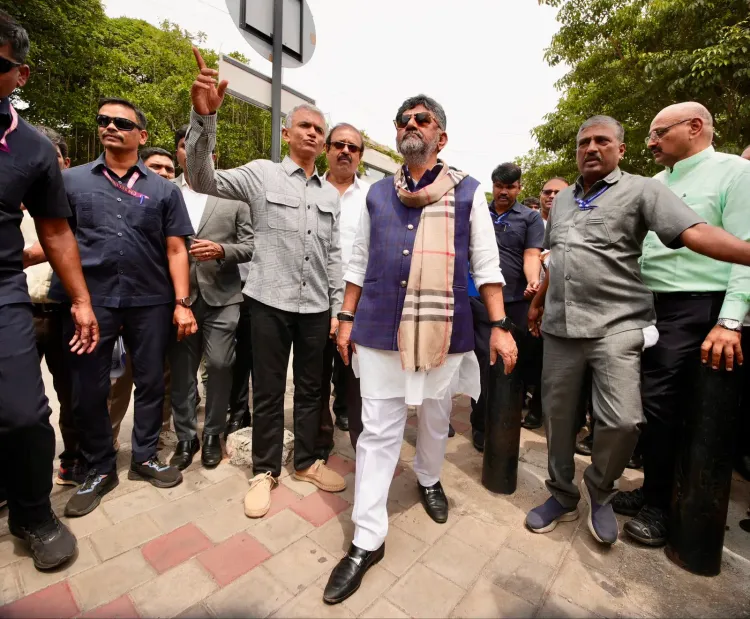
Chief Minister D.K. Shivakumar inspected footpaths at Bengaluru's Ashoka Pillar on 10 July 2026 alongside the Greater Bengaluru Development Minister, reaffirming the Karnataka government's drive to reclaim pedestrian space while protecting registered street vendors under the 2014 Street Vendors Act.
Key Takeaways
Shivakumar personally inspected footpaths at Ashoka Pillar , south Bengaluru, on 10 July 2026 .
Greater Bengaluru Development Minister Krishna B.
Gowda and senior officials accompanied the Chief Minister during the inspection.
The government reiterated its commitment to keeping footpaths safe, accessible and free from encroachments .
The drive explicitly aims to balance pedestrian rights with the needs of registered street vendors , in line with the Street Vendors Act, 2014 .
BBMP and the Greater Bengaluru Development Authority are the key agencies responsible for footpath works and vendor-zone demarcation.
Next steps may include fresh vendor surveys, footpath redevelopment tenders, and possible high-court monitoring of encroachment clearance.
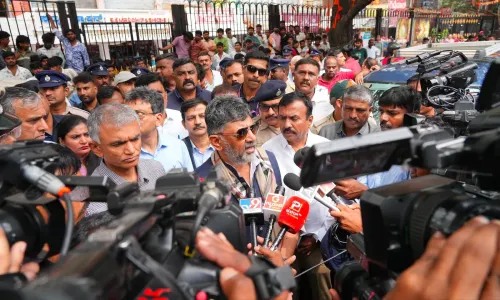
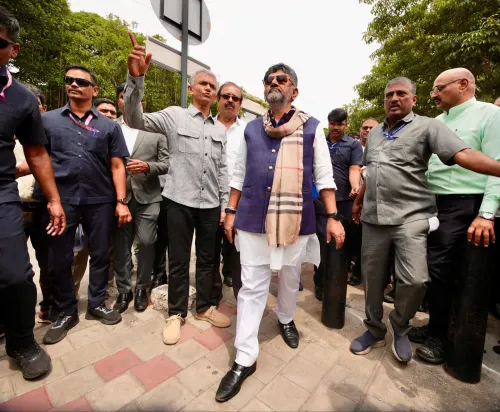
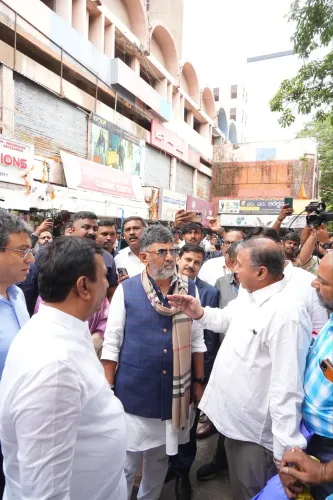
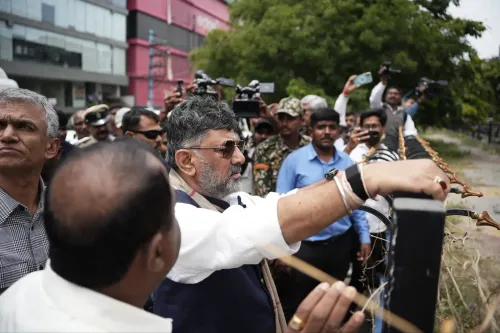
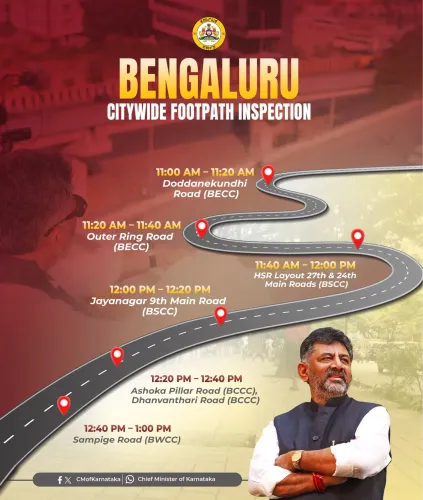
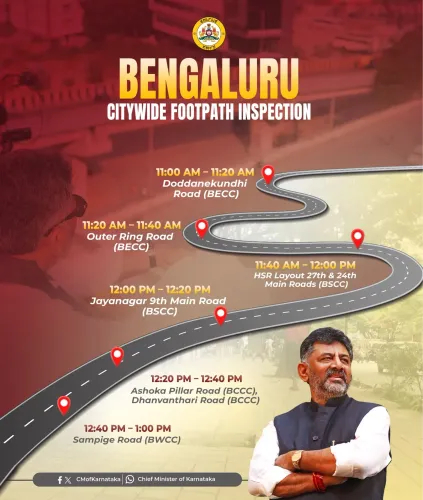
The Chief Minister's Office of Karnataka announced on Friday, 10 July 2026, that Chief Minister Shri D.K. Shivakumar personally inspected footpaths at the Ashoka Pillar junction in south Bengaluru, accompanied by Greater Bengaluru Development Minister Shri Krishna B. Gowda and senior officials, reiterating the government's commitment to reclaiming pedestrian space from encroachments.
Context
The Ashoka Pillar junction is one of south Bengaluru's busiest traffic nodes and has long been flagged as a flashpoint for footpath encroachments, forcing pedestrians onto carriageways. Chief Minister Shivakumar's on-ground inspection signals that the state government is treating pedestrian-infrastructure restoration as a visible, leadership-driven priority rather than a routine civic exercise. The presence of the Greater Bengaluru Development Minister alongside the Chief Minister underscores the inter-departmental coordination the drive demands.
Policy Backdrop
India's Street Vendors (Protection of Livelihood and Regulation of Street Vending) Act, 2014, established a national framework requiring urban local bodies to survey vendors, demarcate vending zones, and protect registered street vendors from arbitrary eviction. Karnataka's current drive explicitly acknowledges this balance: the government stated it aims to keep footpaths 'safe, accessible and free from encroachments, while balancing the needs of both citizens and registered street vendors.' Major Indian cities have pursued similar anti-encroachment campaigns since the 2010s, each grappling with the same tension between pedestrian rights and vendor livelihoods.
The Bruhat Bengaluru Mahanagara Palike (BBMP) and the newly constituted Greater Bengaluru Development Authority are the principal agencies responsible for footpath construction, maintenance, and vendor-zone demarcation in the city. Any large-scale footpath restoration programme typically requires coordinated tendering, civil works, and vendor relocation plans across these bodies.
Stakeholders and Impact
Pedestrians stand to benefit most directly if encroachments are cleared and footpaths are made structurally accessible, particularly for persons with disabilities, the elderly, and schoolchildren who rely on safe walking corridors. Registered street vendors, however, face displacement risk if vending-zone demarcation does not keep pace with clearance operations — a pattern that has triggered litigation and high-court oversight in several Indian cities. The government's explicit mention of 'registered street vendors' suggests an intent to distinguish between legally recognised vendors and unauthorised encroachers, a distinction central to the 2014 Act.
For Bengaluru's broader urban-mobility agenda, restored footpaths can reduce pedestrian fatalities and ease traffic congestion at junctions where walkers are forced onto roads. The Ashoka Pillar site's symbolic prominence also gives the inspection political visibility ahead of any formal policy announcement.
What's Next
Observers will watch for the release of updated vendor surveys, fresh tendering for footpath redevelopment works by BBMP or the Greater Bengaluru Development Authority, and any directions issued by the Karnataka High Court in pending encroachment cases. Whether the inspection translates into a time-bound, city-wide footpath restoration plan — with designated vending zones mapped and notified — will determine the long-term impact of CM Shivakumar's ground-level intervention. The government's ability to hold both pedestrian rights and vendor livelihoods in balance will be the real test of policy execution in the months ahead.
Point of View
Potentially insulating the government from the kind of vendor-community backlash that has derailed similar drives in other cities. This move fits a broader pattern of Congress-led state governments using urban-infrastructure optics to consolidate support among both middle-class residents and organised vendor communities. The real measure of success will be whether ground-level implementation — vending-zone notification, footpath redevelopment tenders, sustained enforcement — follows the inspection or fades after the news cycle.
NationPress
10 Jul 2026
Frequently Asked Questions
Why did CM Shivakumar inspect footpaths at Ashoka Pillar in Bengaluru?
CM D.K. Shivakumar inspected footpaths at Ashoka Pillar on 10 July 2026 to assess encroachment conditions and reaffirm the Karnataka government's commitment to reclaiming pedestrian space while balancing the needs of registered street vendors.
What is the Ashoka Pillar junction in Bengaluru?
Ashoka Pillar is a prominent historic landmark and major traffic junction in south Bengaluru that has long been affected by footpath congestion and encroachments, making it a key focus for urban mobility improvements.
How does the Street Vendors Act 2014 apply to Bengaluru's footpath drives?
The Street Vendors (Protection of Livelihood and Regulation of Street Vending) Act, 2014 requires municipal bodies to survey vendors, create designated vending zones, and protect registered vendors from arbitrary eviction — meaning clearance drives must be paired with proper vendor relocation plans.
Which agencies are responsible for footpath restoration in Bengaluru?
The Bruhat Bengaluru Mahanagara Palike (BBMP) and the Greater Bengaluru Development Authority are the principal agencies responsible for footpath construction, maintenance, and vendor-zone demarcation across the city.
What are the next steps after CM Shivakumar's Ashoka Pillar inspection?
Expected follow-up actions include fresh street-vendor surveys, tendering for footpath redevelopment works by BBMP or the Greater Bengaluru Development Authority, and possible monitoring by the Karnataka High Court in pending encroachment cases.