CM Shivakumar Reviews Karnataka Energy Dept, Issues Key Directives
Synopsis
Chief Minister D. K. Shivakumar on 3 July 2026 chaired a Karnataka Energy Department review with Minister K. J. George, directing officials to counter El Niño hydro risks, fast-track BESS and pumped storage, accelerate RDSS smart metering, and prepare a financing roadmap for projected 38 GW peak demand by 2035.
Key Takeaways
El Niño alert: CM Shivakumar directed a special emergency action plan to offset potential hydroelectric generation losses due to the El Niño climate phenomenon.
Coal security: Officials were asked to operationalise government-allocated coal mines and maintain continuous stockpiles for energy security.
Storage push: Rapid deployment of Battery Energy Storage Systems (BESS) and Pumped Storage Projects (PSPs) was mandated to manage renewable energy variability.
AI and data centres: The state is preparing grid capacity for surging electricity demand from data centres and AI infrastructure as Karnataka targets becoming India's AI capital. ₹22,000 crore subsidy: The government reaffirmed its annual agricultural electricity subsidy and directed faster Feeder Solarisation and Demand Side Management rollout.
2035 roadmap: Officials were asked to draft a capacity expansion plan and financing roadmap to meet projected peak demand of 38 GW by 2035 .
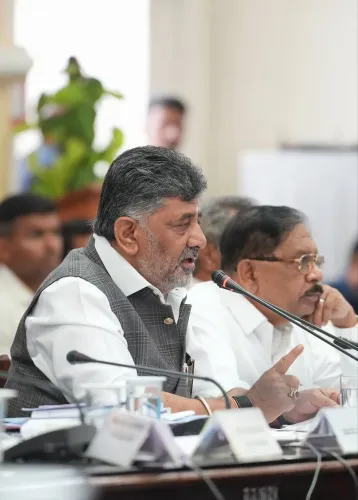
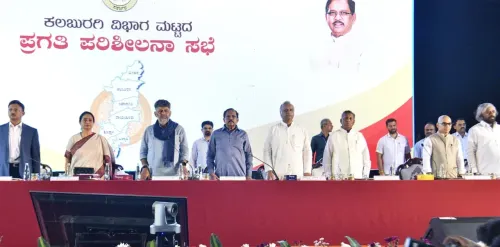
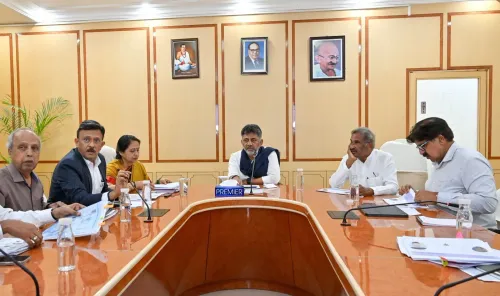
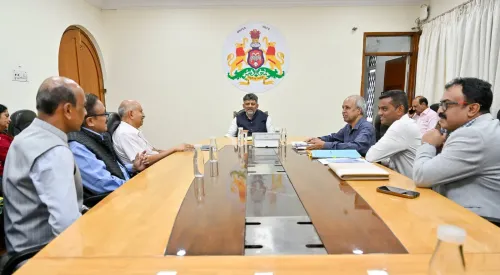
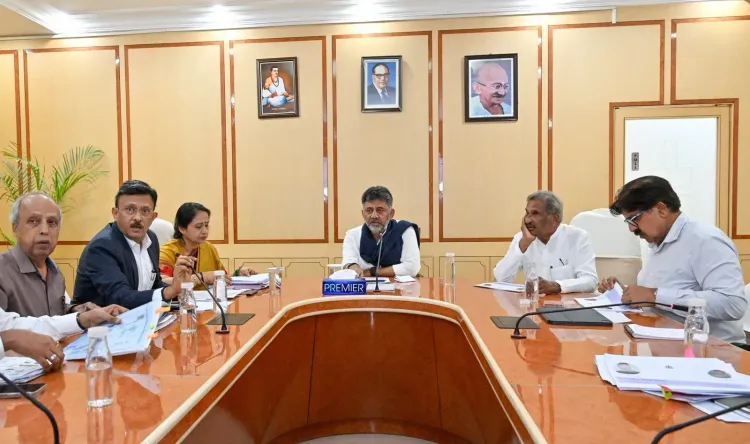
The Chief Minister's Office of Karnataka announced on Friday, 3 July 2026 that Chief Minister D. K. Shivakumar chaired a progress review meeting of the state Energy Department alongside Energy Minister K. J. George, issuing a sweeping set of directives to department officials to future-proof Karnataka's power sector.
Context
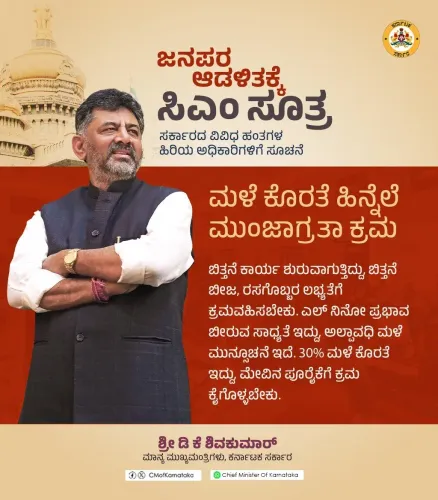
The meeting was convened against a backdrop of growing concern over rainfall deficits and their downstream effect on electricity generation. Shivakumar directed officials to 'take precautionary measures as rainfall shortfall may disrupt power generation' (ಮಳೆ ಕೊರತೆಯಿಂದ ವಿದ್ಯುತ್ ಉತ್ಪಾದನೆಯಲ್ಲಿ ವ್ಯತ್ಯಯ ಆಗಬಹುದು). Specifically, the El Niño climate phenomenon — historically associated with reduced monsoon rainfall across southern India — was flagged as a risk that could suppress hydroelectric output, requiring a special emergency action plan.
Officials were also asked to operationalise government-allocated coal mines and maintain adequate coal stockpiles continuously to ensure energy security, even as the state accelerates its renewable energy transition.
Policy Backdrop
Karnataka's energy review reflects a wider national push to integrate large shares of renewable power while keeping grids resilient. The Chief Minister stressed the rapid deployment of Battery Energy Storage Systems (BESS) and Pumped Storage Projects (PSPs) to manage the variability of renewable generation — a challenge that has grown as the state's solar and wind capacity has expanded sharply since the mid-2010s.
On distribution modernisation, Shivakumar directed officials to fast-track the Revamped Distribution Sector Scheme (RDSS) — the Central Government's flagship programme launched in 2021 to upgrade discom infrastructure and reduce losses — and to install smart meters transparently and within stipulated timelines. Strengthening grid infrastructure to absorb rapidly growing renewable capacity and resolving pending technical issues, land acquisition, right-of-way, and statutory clearances for transmission projects were also mandated.
The government stated it currently provides ₹22,000 crore annually as agricultural electricity subsidy, and directed officials to accelerate Feeder Solarisation, the adoption of energy-efficient pumpsets, and Demand Side Management programmes to contain subsidy pressure and improve efficiency for farmers.
Stakeholders and Impact
Farmers stand to benefit most immediately from the push to solarise agricultural feeders and deploy efficient pumpsets, which could reduce dependence on grid power during deficit periods. Discom consumers across the state would gain from faster smart meter rollout and grid modernisation under RDSS, which is expected to cut distribution losses.
Data centre developers and technology companies also figured prominently in the review. Shivakumar said Karnataka is moving toward becoming the 'capital of Artificial Intelligence' (ಕೃತಕ ಬುದ್ಧಿಮತ್ತೆಯಲ್ಲೂ ನಮ್ಮ ರಾಜ್ಯವು ರಾಜಧಾನಿ ಆಗಬೇಕು) and directed officials to prepare immediately for surging electricity demand from data centres, AI infrastructure, and the broader digital economy.
What's Next
The state government has set a long-range planning target: peak power demand in Karnataka is projected to reach 38 Gigawatts (GW) by 2035, and officials have been asked to prepare both a capacity expansion plan and a corresponding financing roadmap to meet that target. Watchers will track the rollout timelines for sanctioned PSP and BESS projects, state progress on RDSS smart meter deployment, and the resolution of transmission right-of-way bottlenecks that have stalled several projects. Karnataka's ability to balance immediate hydro-risk mitigation with long-term grid investment will serve as a test case for how Indian states navigate the energy transition under climate uncertainty.
Point of View
The Chief Minister is positioning his government as proactive on power security ahead of a monsoon season clouded by El Niño uncertainty. The dual emphasis on immediate crisis preparedness (coal stocks, hydro contingencies) and long-horizon planning (38 GW by 2035, AI infrastructure demand) suggests Karnataka is trying to thread a difficult needle: sustaining its renewable ambitions while guarding against the supply disruptions that have historically damaged incumbent governments. The call to fast-track RDSS and smart meters also signals an intent to leverage Central Government funding more aggressively, which could ease fiscal pressure from the state's substantial ₹22,000 crore annual farm power subsidy.
NationPress
2 Oct 2026
Frequently Asked Questions
Why did CM Shivakumar hold an energy department review in July 2026?
CM Shivakumar convened the review to address risks to power supply from the El Niño climate phenomenon, which could reduce hydroelectric generation, and to issue directives on storage, coal security, smart metering, and long-term capacity planning.
What is El Niño's impact on Karnataka's electricity supply?
El Niño typically reduces monsoon rainfall in southern India, lowering reservoir levels and cutting hydroelectric output. The CM directed officials to prepare an emergency action plan and boost alternative generation and storage to compensate.
What are BESS and PSP and why is Karnataka pushing them?
Battery Energy Storage Systems (BESS) and Pumped Storage Projects (PSPs) store surplus renewable energy and release it when needed. Karnataka is fast-tracking both to manage the variability of its rapidly growing solar and wind capacity.
What is the RDSS scheme and how does it affect Karnataka consumers?
The Revamped Distribution Sector Scheme (RDSS) is a Central Government programme launched in 2021 to modernise electricity distribution infrastructure and deploy smart meters. Karnataka has been directed to implement it faster to reduce losses and improve billing transparency.
What is Karnataka's electricity demand target for 2035?
Karnataka's peak power demand is projected to reach 38 Gigawatts by 2035. The CM has asked officials to prepare both a capacity expansion plan and a financing roadmap to meet this target, accounting for demand from data centres and AI infrastructure.