CM Shivakumar Meets Ramanagara Farmers at Krishna Office
Synopsis
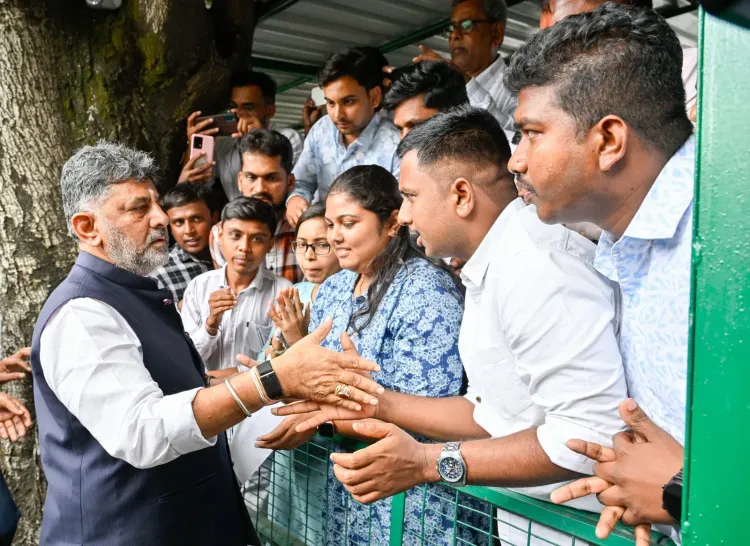
Chief Minister D.K. Shivakumar met farmer leaders and citizens from Ramanagara district at his official residence Krishna in Bengaluru on 1 July 2026, receiving their grievances and holding direct consultations in a standard but significant exercise of administrative outreach.
Key Takeaways
Shivakumar held a direct consultation with farmer leaders and citizens from Ramanagara district on 1 July 2026 .
The meeting took place at the Chief Minister's official home office, Krishna , in Bengaluru .
Ramanagara is a southern Karnataka district with an economy dependent on sericulture, silk, and agriculture.
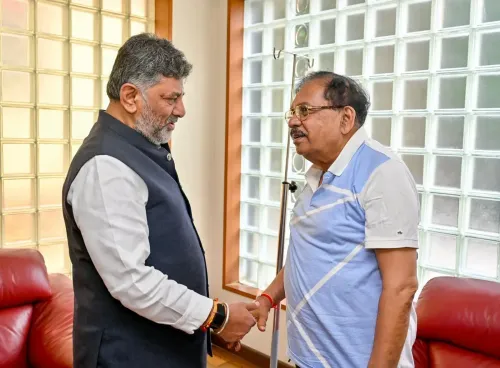
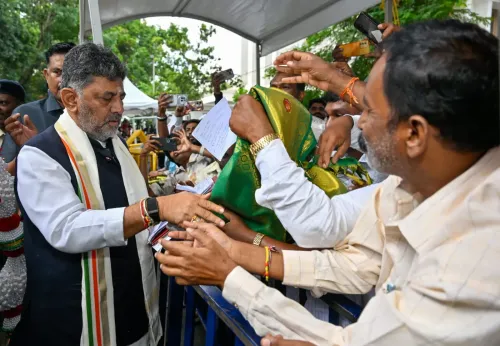
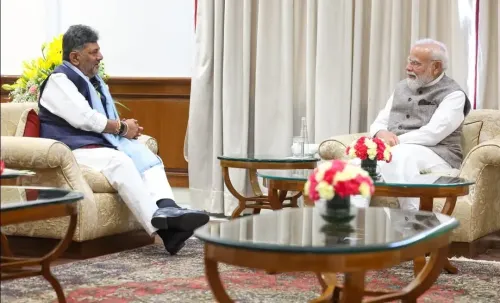
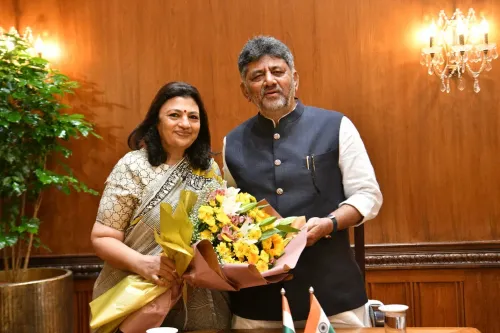
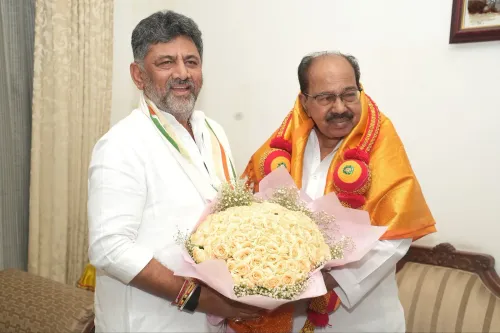
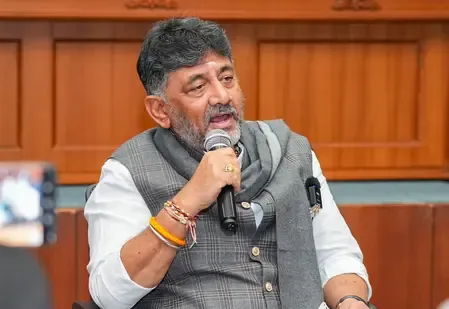
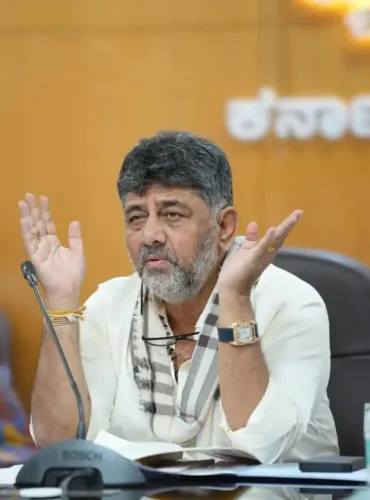
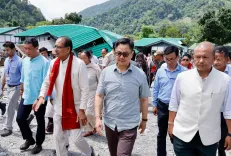
The Chief Minister's Office released four photographs from the meeting alongside the official post.
No specific outcomes or follow-up orders have been announced as of the time of posting.
Karnataka has a documented practice of district-level farmer delegations meeting senior leadership for direct grievance redressal.
The Chief Minister's Office of Karnataka announced on Wednesday, 1 July 2026 that Chief Minister Shri D.K. Shivakumar received farmer leaders and citizens from Ramanagara district at his official residence, Krishna, and held consultations on their grievances.
Context
The post, shared by the official Chief Minister's Office account, states in Kannada: 'ಮುಖ್ಯಮಂತ್ರಿ ಶ್ರೀ ಡಿ.ಕೆ. ಶಿವಕುಮಾರ್ ಅವರು ಇಂದು ತಮ್ಮ ಗೃಹ ಕಚೇರಿ ಕೃಷ್ಣಾಗೆ ಆಗಮಿಸಿದ್ದ ರಾಮನಗರದ ರೈತ ಮುಖಂಡರು ಹಾಗೂ ನಾಗರೀಕರ ಅಹವಾಲುಗಳನ್ನು ಸ್ವೀಕರಿಸಿ, ಅವರೊಂದಿಗೆ ಸಮಾಲೋಚನೆ ನಡೆಸಿದರು' — ('Chief Minister Shri D.K. Shivakumar today received the grievances of farmer leaders and citizens from Ramanagara who arrived at his home office Krishna, and held consultations with them.'). The meeting was accompanied by four photographs released by the office, showing the Chief Minister in discussion with the visiting delegation.
Policy Backdrop
Ramanagara is a district in southern Karnataka with an economy heavily dependent on sericulture, silk production, and agriculture. Farmers and rural citizens in the region have historically raised concerns around irrigation access, crop support prices, and input costs. Karnataka governments across party lines have maintained the practice of district-level farmer delegations meeting senior leadership at official residences as a direct grievance-redressal channel, a mechanism documented in the state's administrative practice since the early 2000s.
Chief Minister Shivakumar's official residence, Krishna, in Bengaluru, serves as a regular venue for such public-interaction sessions. These meetings allow local farmer leaders and citizens to present petitions and concerns directly to the Chief Minister outside the formal bureaucratic pipeline, often resulting in referrals to the relevant departments or targeted district-level interventions.
Stakeholders and Impact
The primary stakeholders in this interaction are Ramanagara's farming community and rural citizens, whose livelihoods are tied to the district's agricultural output. Farmer leaders attending such sessions typically raise issues ranging from drought relief, irrigation infrastructure, and fertiliser supply to compensation for crop damage. Direct access to the Chief Minister is considered a significant channel for communities that may otherwise face delays in the formal grievance system.
For the state government, such meetings serve a dual purpose: gathering on-the-ground feedback on policy implementation and demonstrating administrative responsiveness ahead of ongoing rural welfare programmes. The Karnataka government runs several schemes targeting farmers, and direct consultations help identify gaps in delivery at the district level.
What's Next
The Chief Minister's Office has not yet announced specific outcomes or follow-up actions from the 1 July 2026 consultations. Observers will watch for any targeted interventions, departmental directives, or relief announcements directed at Ramanagara's agricultural sector in the coming days. Such meetings have historically preceded district-specific administrative orders or scheme extensions when grievances are found to be widespread.
Point of View
As a sericulture-dependent district, carries political weight in the state's rural economy, making such a meeting more than routine optics. The absence of announced outcomes, however, means the real test lies in whether departmental follow-through materialises in the days ahead. Across Indian states, the gap between high-visibility grievance meetings and on-ground delivery remains a persistent governance challenge that this interaction will eventually be measured against.
NationPress
1 Jul 2026
Frequently Asked Questions
Why did Ramanagara farmers meet CM Shivakumar at Krishna?
Farmer leaders and citizens from Ramanagara district visited Chief Minister D.K. Shivakumar at his official residence Krishna on 1 July 2026 to present their grievances and hold consultations directly with the Chief Minister.
What is Krishna, the Chief Minister's office in Karnataka?
Krishna is the official home office and residence of the Chief Minister of Karnataka, located in Bengaluru, and serves as a regular venue for public interactions and delegations.
What issues do Ramanagara farmers typically raise with the government?
Ramanagara is known for sericulture and agriculture, and farmers from the district commonly raise concerns around irrigation access, crop support prices, fertiliser supply, drought relief, and compensation for crop damage.
What happens after a farmer grievance meeting with the Karnataka CM?
Such meetings typically result in referrals to relevant state departments, and in some cases lead to targeted district-level interventions, relief announcements, or scheme extensions, though specific outcomes depend on the nature of the grievances raised.
How often does the Karnataka Chief Minister meet farmer delegations?
Karnataka governments have held periodic district-level farmer grievance meetings as part of standard administrative practice, with the Chief Minister's residence serving as a regular venue for such direct public interactions.