Kishan Reddy: Fuel curbs lifted from July 1 as crisis eases
Synopsis
Union Minister G. Kishan Reddy announced on July 1, 2026 that India has withdrawn temporary fuel supply restrictions — including the 200-litre daily HSD cap — and cut the 19-kg commercial LPG price by Rs. 183, citing easing of the West Asia crisis and crediting PM Modi's energy security strategy.
Key Takeaways
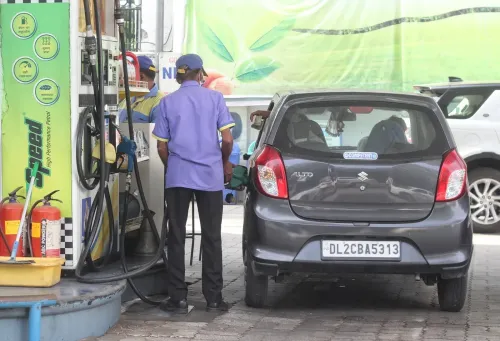
The 200-litre per day cap on High Speed Diesel (HSD) at retail fuel stations has been lifted with effect from July 1, 2026 .
The rule mandating industrial and commercial consumers to buy fuel only through dedicated pumps has been removed.
The 19-kg commercial LPG cylinder price has been cut by Rs.
183 , benefiting hotels, restaurants, and small businesses.
The 14.2-kg domestic LPG cylinder was kept available to households at approximately Rs.
900 even as international prices reached around Rs.
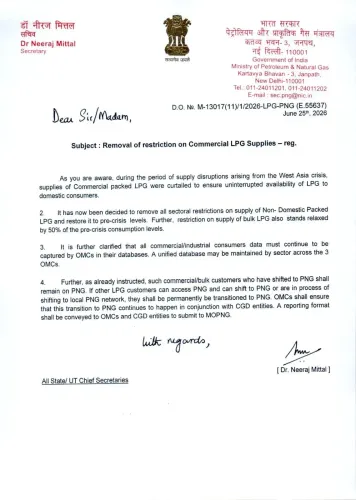
Non-domestic LPG supply has been restored to pre-crisis levels following the easing of West Asia tensions.
Minister Reddy directly countered Rahul Gandhi's parliamentary predictions of fuel queues and economic crisis, citing uninterrupted domestic supply throughout the crisis period.
Union Coal and Mines Minister G. Kishan Reddy announced on Wednesday, July 1, 2026 that the central government has withdrawn temporary fuel supply restrictions imposed during the West Asia crisis, citing improved global energy market conditions and crediting Prime Minister Narendra Modi's long-term energy security strategy for keeping domestic fuel supplies uninterrupted throughout the crisis period.
Context
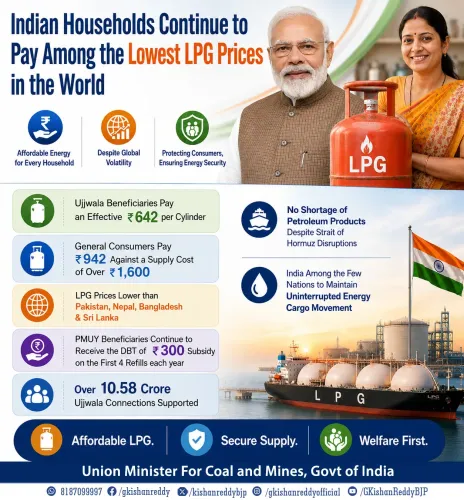
In a detailed post in Telugu, Minister Reddy stated that despite uncertainty gripping global energy markets due to the West Asia crisis — including, as he noted, a period during which the Strait of Hormuz remained effectively disrupted — India faced no shortage of petrol, diesel, or cooking gas cylinders. He credited this outcome to what he described as Modi government's foresighted and proactive strategy, contrasting it with predictions of economic collapse made by opposition leaders.
Reddy specifically noted that the government had prioritised consumer welfare by implementing temporary controls to prevent price shocks and supply shortfalls, and that those controls are now being lifted as conditions normalise.
Policy Backdrop
Among the measures now withdrawn, Reddy listed the cap that restricted supply of High Speed Diesel (HSD) at retail fuel stations to a maximum of 200 litres per consumer or per vehicle per day. The rule requiring industrial, institutional, and commercial consumers to purchase fuel exclusively through dedicated consumer pumps — rather than retail outlets — has also been removed.
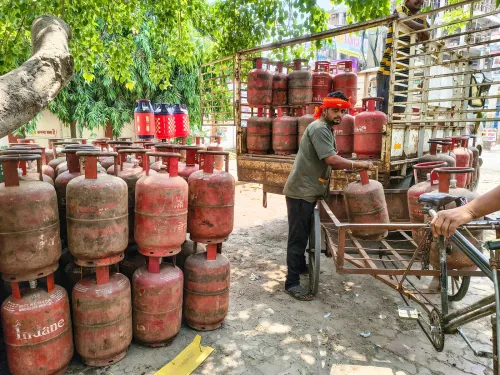
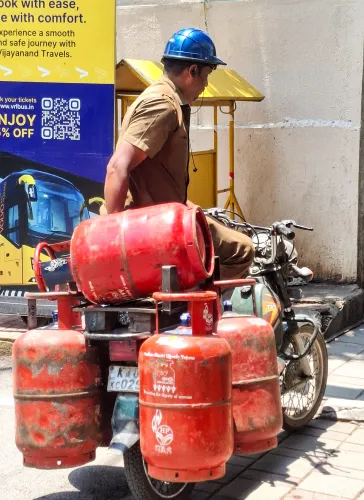
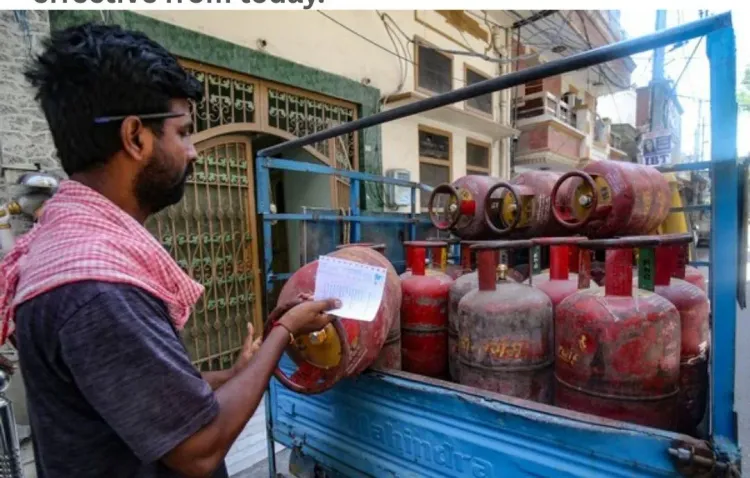
On the LPG front, the minister said supply of non-domestic LPG cylinders has been restored to pre-crisis levels. Significantly, the price of the 19-kg commercial LPG cylinder has been cut by Rs. 183, providing direct relief to small businesses, hotels, and restaurants. Reddy also highlighted that the 14.2-kg domestic LPG cylinder, whose international price had climbed to approximately Rs. 1,600, was kept available to Indian households at around Rs. 900 throughout the crisis.
India's approach draws on a policy lineage of strategic petroleum reserves and import diversification built over the past two decades. Following the 2022 Russia-Ukraine war, India had already expanded its crude import base, a move that provided additional buffer capacity when West Asian supply routes came under stress.
Stakeholders and Impact
The rollback of the 200-litre daily HSD cap directly benefits transport operators, logistics companies, and large-fleet owners who had faced operational constraints. Removing the dedicated-pump requirement eases procurement for factories, hospitals, and commercial establishments that had been rerouted away from regular retail outlets.
The Rs. 183 reduction in the 19-kg commercial cylinder price is expected to lower operating costs for the hospitality sector — hotels, dhabas, and restaurants — which rely heavily on commercial LPG. Small businesses that had absorbed elevated fuel costs during the crisis period stand to benefit most immediately.
In his post, Reddy also took a pointed swipe at Rahul Gandhi, the Leader of the Opposition, recalling that Gandhi had warned during the Winter Session of Parliament that an energy crisis would cause queues at petrol stations, cooking gas shortages, and economic collapse. Reddy argued that the absence of any such disruption was a direct rebuttal of those predictions.
What's Next
With the immediate crisis-era restrictions lifted, attention will turn to whether oil marketing companies announce any further revision in retail petrol and diesel prices, which have been held steady through the turbulence. The Ministry of Petroleum and Natural Gas is expected to issue follow-up advisories on normalised supply schedules for both retail and bulk consumers.
The government's handling of this episode — maintaining supply continuity, absorbing global price spikes through subsidised domestic pricing, and rolling back controls in a calibrated manner — is likely to feature prominently in the next parliamentary session and in the upcoming economic survey as a case study in energy resilience. For BJP, the episode offers a ready political narrative ahead of state elections in Telangana and beyond, with Reddy, as the party's Telangana state president, already framing it in those terms.
Point of View
Where he leads the BJP, framing the government's crisis management as a vindication of Modi-era governance. The direct invocation of Rahul Gandhi's parliamentary remarks transforms a routine supply-chain normalisation into a BJP counter-narrative against the opposition's economic pessimism. The episode also fits a broader pattern: the Modi government has consistently used the contrast between predicted crises and actual outcomes — COVID-19, the Ukraine war, and now West Asia — as a durable political asset. Whether the Rs. 183 LPG cut translates into retail price relief that consumers actually notice will determine how far this narrative travels beyond the party faithful.
NationPress
1 Jul 2026
Frequently Asked Questions
What fuel restrictions has India lifted from July 1 2026?
From July 1, 2026, India removed the 200-litre per day cap on High Speed Diesel at retail fuel stations and ended the rule requiring industrial and commercial consumers to buy fuel only through dedicated pumps, as announced by Union Minister G. Kishan Reddy.
By how much has the commercial LPG cylinder price been reduced?
The price of the 19-kg commercial LPG cylinder has been cut by Rs. 183, providing relief to hotels, restaurants, and small businesses.
Why did India impose fuel supply restrictions in the first place?
The restrictions were temporary measures introduced during the West Asia crisis, which created uncertainty in global energy markets and threatened supply chains, including through the Strait of Hormuz.
What did Rahul Gandhi say about India's fuel situation during the crisis?
According to Minister Reddy's post, Rahul Gandhi had warned during the Winter Session of Parliament that an energy crisis would lead to queues at petrol stations, cooking gas shortages, and broader economic collapse in India.
What was the domestic LPG cylinder price kept at during the West Asia crisis?
Minister Reddy stated that the 14.2-kg domestic LPG cylinder was kept available to Indian households at approximately Rs. 900 even as its international price climbed to around Rs. 1,600.