Govt lifts commercial LPG curbs as West Asia crisis eases, supply restored
Synopsis
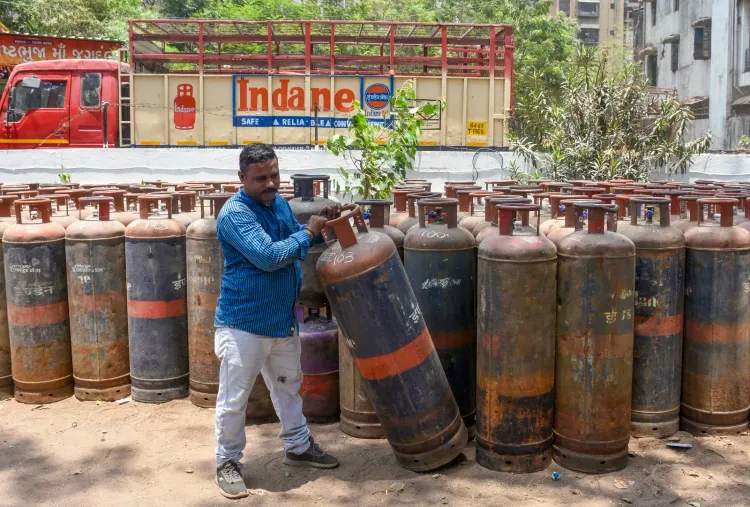
After months of crisis-driven curbs, India has fully lifted commercial LPG supply restrictions following the US-Iran peace deal and reopening of the Strait of Hormuz. Bulk LPG is back at 50% of pre-crisis levels — and the government is using the moment to accelerate a permanent shift toward Piped Natural Gas for commercial consumers.
Key Takeaways
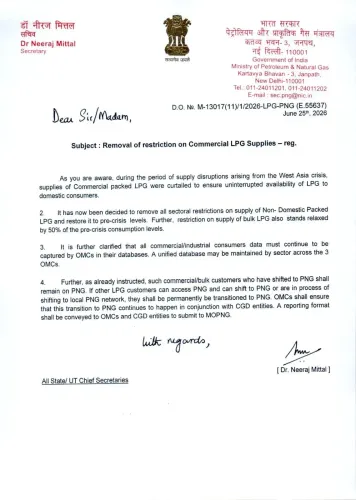
The Ministry of Petroleum and Natural Gas lifted all sectoral restrictions on non-domestic packed LPG on 25 June , restoring pre-crisis supply levels.
Bulk LPG supply, suspended during the crisis, has been restored to 50 per cent of pre-crisis consumption levels.
The easing follows the US-Iran peace agreement and reopening of the Strait of Hormuz , improving LPG import availability.
Mandatory diversion of C3-C4 streams to LPG production under the Essential Commodities Act will be reduced, with indigenous LPG output to be maintained at no less than 40,000 metric tonnes per day .
Commercial consumers with access to PNG networks will be progressively transitioned away from LPG as part of the government's long-term energy strategy.
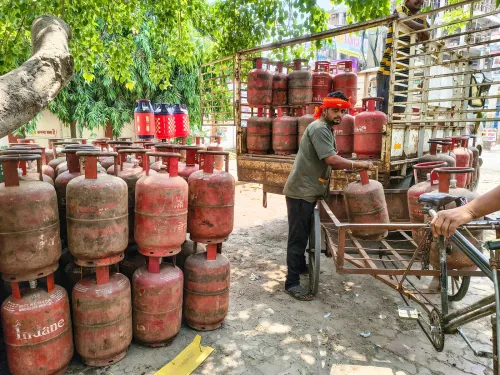
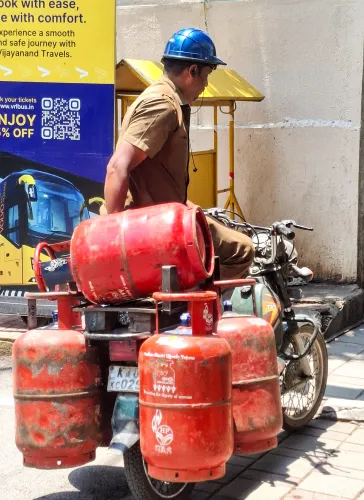
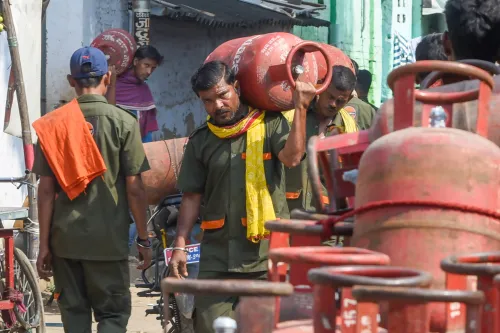
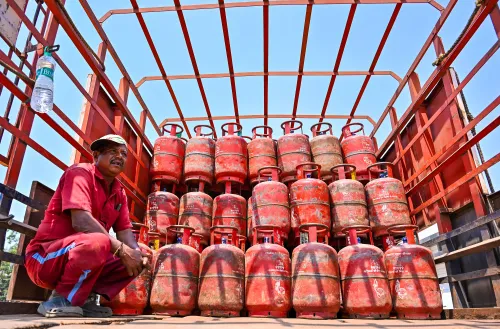
The Ministry of Petroleum and Natural Gas on Thursday, 25 June removed all sectoral restrictions on the supply of non-domestic packed LPG to commercial and industrial consumers, restoring supplies to pre-crisis levels following an improvement in both domestic production and import availability. The easing comes in the wake of the US-Iran peace agreement and the reopening of the Strait of Hormuz, which had been a critical chokepoint during the West Asia crisis.
What Has Been Lifted
The government has fully removed sectoral supply restrictions on non-domestic packed LPG, bringing allocations back to the volumes that prevailed before the West Asia crisis disrupted global energy supply chains. Additionally, bulk LPG supply — which had been suspended entirely at the onset of the crisis — has been partially restored to 50 per cent of pre-crisis consumption levels, according to an official ministry statement.
This provides significant relief to hotels, restaurants, industrial units, and other commercial establishments that had been operating under constrained fuel availability for the duration of the crisis.
C3/C4 Stream Diversion to Be Eased
During the West Asia crisis, the Centre had invoked the Essential Commodities Act to redirect C3-C4 hydrocarbon streams — typically used in petrochemical and downstream industries — exclusively toward LPG production. With supply conditions improving, the government has now decided to reduce this mandatory diversion.
However, the ministry has stipulated that aggregate indigenous LPG production must be maintained at no less than 40,000 metric tonnes per day before enhanced C3/C4 allocations are released to petrochemical and other critical sectors. The Centre of High Technology, operating under the ministry, has been directed to issue organisation-wise allocations and submit regular progress reports.
Domestic Consumers Remained Protected
Throughout the crisis period, the government maintained its stated priority of ensuring uninterrupted LPG access for household consumers. Commercial restrictions were explicitly framed as a protective measure for the domestic segment. Oil marketing companies (OMCs) coordinated supply logistics under challenging global conditions, and the ministry credited their efforts with preventing shortfalls at the retail level.
OMCs have also been directed to maintain comprehensive databases of commercial and industrial LPG consumers, with a unified sectoral database to be established across companies to strengthen monitoring and supply planning.
PNG Transition Push Continues
The government has signalled that the crisis-driven supply management exercise has reinforced its longer-term push toward Piped Natural Gas (PNG) connectivity. Commercial and bulk consumers who shifted to PNG during the crisis will remain on it. Eligible LPG consumers with access to the PNG network — or those in the process of switching — will be progressively transitioned in coordination with City Gas Distribution (CGD) entities.
The Secretary, Ministry of Petroleum and Natural Gas, has written to Chief Secretaries of all states and Union Territories to facilitate smooth implementation of the revised supply arrangements.
What Comes Next
The Centre of High Technology is expected to issue detailed organisation-wise C3/C4 allocations shortly. Industry bodies in the petrochemical sector, which bore the brunt of the mandatory diversion order, are likely to seek clarity on timelines for full restoration. The government's parallel push on PNG expansion suggests that for a segment of commercial consumers, the return to LPG may be transitional rather than permanent.
Point of View
But the fine print reveals a more cautious posture: bulk LPG is only back at 50 per cent, and the government is using the moment to accelerate PNG migration — meaning some commercial consumers may never fully return to LPG. The invocation of the Essential Commodities Act to redirect C3-C4 streams was a blunt instrument that squeezed petrochemical producers for months; their path to full restoration now depends on a ministry-level allocation process with no public timeline. More broadly, the West Asia crisis has exposed India's structural vulnerability to Strait of Hormuz disruptions — a risk that PNG pipelines and domestic production targets alone cannot fully hedge.
NationPress
24 Sept 2026
Frequently Asked Questions
Why did the government lift commercial LPG supply restrictions?
The government lifted restrictions on 25 June because domestic LPG production improved and import availability recovered following the US-Iran peace agreement and the reopening of the Strait of Hormuz. These factors resolved the supply constraints that had necessitated curbs during the West Asia crisis.
What is the current status of bulk LPG supply in India?
Bulk LPG supply, which had been fully suspended at the onset of the West Asia crisis, has been restored to 50 per cent of pre-crisis consumption levels. Full restoration will depend on continued improvement in supply conditions.
How did the Essential Commodities Act factor into LPG supply management?
The Centre had issued orders under the Essential Commodities Act requiring C3-C4 hydrocarbon streams to be diverted exclusively to LPG production, away from petrochemical and downstream uses. With the supply situation easing, this mandatory diversion is now being reduced, subject to maintaining indigenous LPG output at no less than 40,000 metric tonnes per day.
Will commercial consumers be shifted to Piped Natural Gas?
Yes, the government has directed that commercial and bulk consumers who have already shifted to PNG during the crisis will remain on it. Other eligible consumers with access to PNG networks will be progressively transitioned in coordination with City Gas Distribution entities.
Who oversees the allocation of C3-C4 streams now that restrictions are easing?
The Centre of High Technology, under the Ministry of Petroleum and Natural Gas, has been directed to issue organisation-wise allocations of enhanced C3-C4 streams for petrochemical and other critical sectors, and to submit regular reports to the ministry.